Indian Constitution: Borrowed Features from Constitutions Around the World

The Constitution of India is one of the most detailed and thoughtfully written constitutions in the world. It was adopted on 26 November 1949 and came into effect on 26 January 1950. While drafting it, the makers studied many constitutions from different countries and selected the best ideas that suited India’s history, culture, and diversity. This thoughtful mix makes the Indian Constitution unique and practical.

What is a Constitution?

A Constitution is a set of basic rules and laws of a country. It explains how the government works and defines the powers and duties of the legislature, executive, and judiciary. It also protects the rights of citizens and maintains balance between the central and state governments.

What is a Constitution?

A Constitution is the supreme law of a country. It:

  • Explains how the government is formed
  • Defines powers of the Legislature, Executive, and Judiciary
  • Protects the rights of citizens
  • Maintains balance between Centre and States

Why is the Indian Constitution Called a Borrowed Constitution?

Many people say the Indian Constitution is a “bag of borrowings” because it has taken ideas from other countries. This is true to some extent. However, these ideas were not copied blindly. They were carefully modified to match India’s social, political, and cultural needs. Dr. B. R. Ambedkar clearly said that borrowing good ideas is not wrong and no country owns constitutional principles.

Borrowed Features of Indian Constitution

The Indian Constitution includes useful ideas taken from many countries, carefully adapted to suit India’s history, culture, and democratic needs.

Britain

India borrowed the following from Britain:

  • Parliamentary form of government
  • Rule of Law
  • Cabinet system
  • Legislative procedures
  • Parliamentary privileges
  • Bicameral legislature
  • Single citizenship

Ireland

Ireland contributed important democratic ideas:

  • Directive Principles of State Policy
  • Method of election of the President
  • Nomination of members to Rajya Sabha

United States of America

Major democratic features came from the USA:

  • Fundamental Rights
  • Judicial review
  • Independence of judiciary
  • Impeachment of the President
  • Removal of judges
  • Preamble of the Constitution

Canada

From Canada, India adopted:

  • Federal system with a strong Centre
  • Residuary powers with the Centre
  • Appointment of Governors by Centre
  • Advisory jurisdiction of Supreme Court

Australia

Australia inspired:

  • Concurrent List
  • Freedom of trade and commerce
  • Joint sitting of Lok Sabha and Rajya Sabha

Soviet Union

Key social ideas came from USSR:

  • Fundamental Duties
  • Social, economic, and political justice in the Preamble

France

France influenced the Preamble with:

  • Republic
  • Liberty
  • Equality
  • Fraternity

Germany

  • Suspension of Fundamental Rights during Emergency

South Africa

  • Procedure for amendment of the Constitution
  • Election of members of Rajya Sabha

Japan

  • Concept of “Procedure established by law”

Role of the Government of India Act, 1935

The Government of India Act, 1935 deeply influenced India’s Constitution. It provided:

  • Federal structure
  • Office of the Governor
  • Judiciary system
  • Public Service Commissions
  • Emergency provisions
  • Administrative framework

Why the Indian Constitution is Truly Unique?

Even after borrowing ideas, the Indian Constitution stands out because:

  • It is the lengthiest written constitution
  • It respects India’s unity in diversity
  • It balances rights and duties
  • It was carefully drafted after studying many constitutions

Dr. Ambedkar rightly said the Constitution was made after “ransacking the known constitutions of the world.”

Where the First Republic Day Parade Was Actually Held?

Every year on 26 January, India celebrates Republic Day with a grand parade in New Delhi. Today, this parade is held on Kartavya Path and watched by millions across the country. However, many people do not know that the very first Republic Day parade was not organised at this famous location. When India became a republic in 1950, the celebrations were simpler, and the parade took place at a different venue. Knowing about this first location helps us understand the early days of independent India.

First Republic Day Parade of 1950

India celebrated its first Republic Day on 26 January 1950. On this historic day, Dr Rajendra Prasad took oath as the first President of India. To mark this important moment, a Republic Day parade was organised for the first time. This parade symbolised India’s freedom, unity and the birth of a new republic after British rule.

Venue of the First Parade

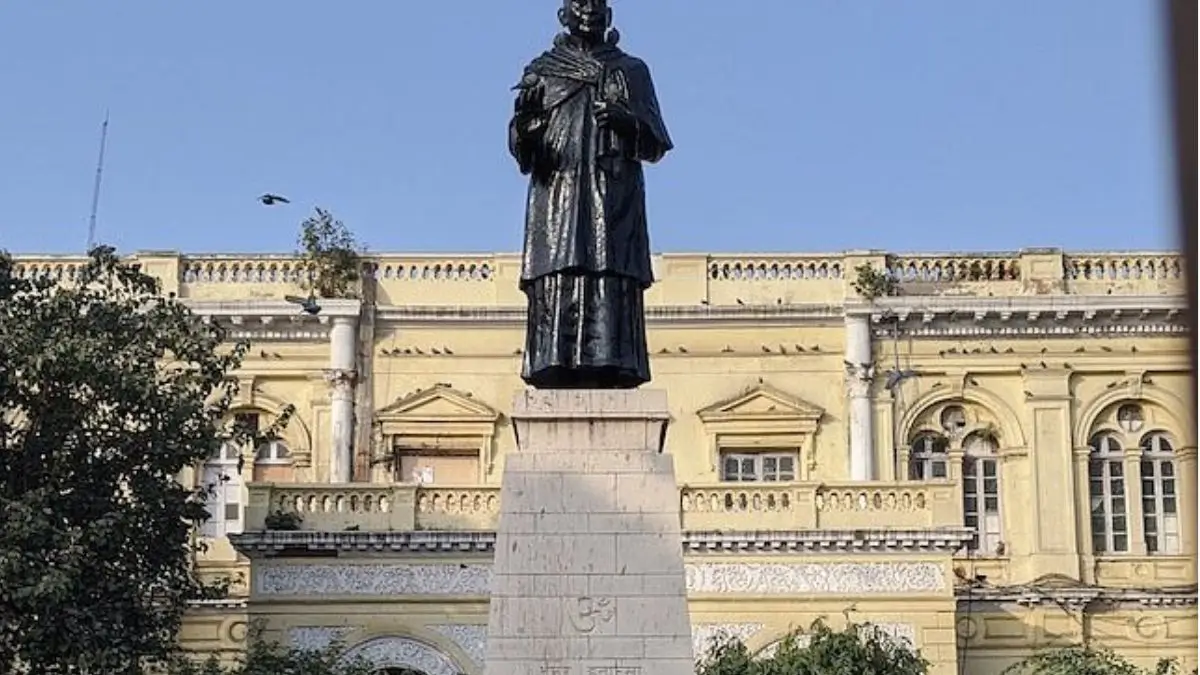
The first Republic Day parade was held at the Irwin Amphitheatre in New Delhi. This place is known today as the Major Dhyan Chand National Stadium. At that time, Kartavya Path (earlier called Rajpath) was not fully developed for such a large event. Therefore, the Irwin Amphitheatre was chosen as a suitable and organised venue for the celebrations.

Why Irwin Amphitheatre was Chosen?

In 1950, Irwin Amphitheatre was one of the best open venues in Delhi. It could accommodate large gatherings and official ceremonies. The area was well-planned and close to important government buildings. This made it convenient for leaders, foreign guests and citizens to attend the historic event safely and smoothly.

How the Parade has Changed Over Time?

After the first few years, the Republic Day parade was shifted to Rajpath, now known as Kartavya Path. Over time, the parade became larger and more colourful, with grand military displays, cultural tableaux from states, school performances and air force flypasts. What started at Irwin Amphitheatre has now grown into one of the biggest national celebrations in India.

Importance of the First Parade Venue

The Irwin Amphitheatre holds a special place in Indian history. It reminds us of the humble beginning of Republic Day celebrations and the early efforts to unite the nation. Even though the venue changed later, the spirit of pride, unity and patriotism from the first parade continues till today.

The Indian Constitution: 5 Terms in the Preamble You Should Know

The Preamble of the Indian Constitution is like the heart of the Constitution. It explains the basic ideas, values, and goals that guide India as a nation. While it does not give direct legal rights to citizens, it helps in understanding and interpreting the laws of India. It was first proposed by Jawaharlal Nehru through the Objective Resolution and officially adopted on January 22, 1947.

What is the Preamble?

The Preamble is the opening statement of the Constitution. It declares India to be a Sovereign, Socialist, Secular, Democratic Republic. It also promises Justice, Liberty, Equality, and Fraternity to its citizens. The words “We, the people of India…” show that the ultimate power belongs to the people, making it the soul of the Constitution.

How the Preamble Developed?

The Preamble’s journey started with the Objective Resolution, introduced by Nehru on December 13, 1946. This resolution laid down the main principles for India’s Constitution:

  • India would be an independent and sovereign republic.
  • All territories of India would form a Union but have local autonomy.
  • Citizens would enjoy social, economic, and political equality.
  • Freedom of thought, expression, religion, and work would be protected.
  • Special safeguards would be provided for minorities and backward groups.

Drafting and Adoption

B.N. Rao drafted the Preamble, which was presented on July 4, 1947, and after discussions, it was adopted on January 22, 1947.

5 Terms in the Preamble that You Should Know

The Preamble of the Indian Constitution is often called the “heart” of the Constitution. It explains the main goals and values that India follows as a country. The Preamble uses some important words to show what kind of nation India wants to be. Here, we will discuss five key terms that everyone should understand.

Sovereign

The word sovereign means that India is fully independent. The country can make its own rules and decisions without outside interference. No other country can control India’s choices. Being sovereign shows that India is free and makes decisions on its own for the welfare of its people.

Socialist

Socialism means that resources and wealth should be shared fairly among all people. It ensures that everyone has access to education, work, and basic facilities. Socialism also supports cooperative systems, where communities can share resources to benefit everyone. The goal is to reduce inequality and help all citizens live a better life.

Secular

India is a secular country, which means the government treats all religions equally. No religion is given special preference, and everyone is free to follow their own beliefs. Secularism helps people of different faiths live together peacefully and ensures that the state does not favor one religion over another.

Democracy and Republic

Democracy means the people have the power to choose their government through voting. India holds regular elections where citizens vote for representatives, ensuring everyone has a voice.

A republic means that the head of the country, like the President, is elected for a fixed term and is not chosen by birth or inheritance. India’s President is elected, which is why India is called a republic.

Justice, Liberty, Equality and Fraternity

These words show the goals of India’s government:

  • Justice: Everyone should get fair treatment in social, economic, and political matters. Discrimination should be removed, and people’s rights should be protected.
  • Liberty: Citizens have the freedom to think, speak, and follow their religion. This freedom comes with limits to maintain order and harmony.
  • Equality: Every person should be treated equally, no matter their caste, gender, or religion. Everyone should have the same opportunities in life.
  • Fraternity: Citizens should feel like brothers and sisters, respecting each other and working for the unity of the country.

The 42nd Amendment in 1976 also added the word integrity, emphasizing national unity.

The 21-Gun Salute: Why It Does Not Use 21 Guns?

The 21-gun salute is one of the highest military honors in the world. It is performed to show great respect to presidents, kings, queens, and brave soldiers who have passed away. When people hear loud cannon fire during national events, it often signals this special salute. Though it looks simple, the tradition behind it is very old and meaningful. Let us understand what the 21-gun salute really is and why it holds such importance.

What is a 21-Gun Salute?

A 21-gun salute is a ceremonial honor in which cannons or artillery guns are fired 21 times. These are not rifle shots. Only heavy guns like cannons are used. The salute is done slowly and with discipline to show respect, dignity, and honor.

Many people confuse it with the three-volley salute seen at military funerals. That salute uses rifles and is different from the 21-gun salute, which is much higher in status.

Why is it called a 21-Gun Salute?

The number 21 comes from old naval traditions. In earlier times, warships fired their guns to show they were friendly and carried no intention to attack. Ships usually had seven cannons. When they fired all seven, forts on land replied with three shots for each one, making the total 21.

Over time, 21 became the highest number used for honoring important leaders and national events. It slowly turned into an international standard.

Difference Between 21-Gun Salute and Three-Volley Salute

The 21-gun salute uses cannons and is given to heads of state and on national occasions.

The three-volley salute uses rifles and is mostly done at military funerals to honor fallen soldiers. Though both are respectful, they serve different purposes.

Types of Gun Salutes

Not everyone receives a 21-gun salute. The number of shots depends on rank and position. Heads of state receive 21 shots, while senior officials and top military officers receive fewer shots, such as 19, 17, or 15. This system helps maintain order and respect in military traditions.

History of the 21-Gun Salute

The practice of gun salutes began several centuries ago, mainly in naval forces. By the early 1700s, Britain had officially adopted the 21-gun salute. The United States later followed this tradition.

In 1818, the U.S. Navy included the 21-gun salute in its official rules. By 1875, it became the formal highest honor in the United States and matched the standards followed by many other countries.

When is a 21-Gun Salute Performed?

A 21-gun salute is performed on very important occasions. These include the funeral of a president or national leader, national holidays like Independence Day and Memorial Day, the swearing-in of a president, and visits by foreign leaders or royal family members.

It may also be fired on special national days to remember great leaders from history.

How the 21-Gun Salute is Carried Out?

The salute follows strict rules. Cannons are fired one at a time with a gap of a few seconds between each shot. Only trained military units perform this ceremony. Blank ammunition is used to ensure safety.

At funerals, the salute is usually followed by the bugle call “Taps,” which creates a moment of silence and respect.

21-Gun Salute in Different Countries

Many countries follow this tradition with small differences. In the United Kingdom, extra shots may be added for royal events. In India, the President is honored with a 21-gun salute, while other leaders receive fewer shots. France also uses the 21-gun salute for presidential and military ceremonies.

Importance of the 21-Gun Salute Today

Even in modern times, the 21-gun salute remains a powerful symbol of respect, honor, and national pride. It connects today’s world with centuries-old military traditions and reminds people of the sacrifices and leadership that shape a nation.

AIFF Expresses Condolences on the Death of Former Indian Defender Ilyas Pasha

Former India and East Bengal football star Ilyas Pasha passed away on January 22, 2026, after a long illness. Known for his calm and disciplined playing style, Pasha was one of Karnataka’s finest footballers. He leaves behind his wife, two daughters, and two sons. The Indian football community is mourning the loss of this legendary defender.

Early Life and Football Beginnings

Ilyas Pasha was born and raised in Vyalikaval, north Bengaluru. He started his football journey with Vinayaka Football Club, where his talent as a young defender quickly became apparent. His dedication and skill earned him a move to Indian Telephone Industries in the mid-1980s, marking the start of his rise in Indian football.

Rise in National Football

Pasha made his India debut on January 27, 1987, against Bulgaria in the Nehru Cup held in Kozhikode. He earned eight international caps, participating in two Nehru Cups (1987 and 1991), the 1991 SAF Games, and the 1992 Asian Cup qualifiers. His calm and composed defending made him a reliable choice for the national team.

Santosh Trophy and Domestic Success

Representing Karnataka, Pasha regularly played in the Santosh Trophy, participating in tournaments in Kolkata (1987), Quilon (1988), and Guwahati (1989). His standout performance in Guwahati helped Karnataka reach near the finals. Later, he won two Santosh Trophy titles with Bengal in 1993 and 1995.

Club Career Highlights

Pasha played for Mohammedan Sporting, winning the Sait Nagjee Trophy and Nizam Gold Cup in 1989. He then joined East Bengal, where he enjoyed the peak of his career in the 1990s. He captained the team in the 1993-94 season and was key in many of the club’s successes.

Major Achievements with East Bengal

  • Calcutta Football League: 1991, 1993, 1995, 1996, 1998
  • IFA Shield: 1990, 1991, 1994, 1995, 1997
  • Durand Cup: 1990, 1991, 1993, 1995
  • Other trophies: Federation Cup, Rovers Cup, Wai Wai Cup, Airlines Trophy, Bordoloi Trophy, Kalinga Cup, McDowell Trophy, Super Cup

He was also part of East Bengal’s triple crown-winning side in 1990 and led the team to its first international title at the Wai Wai Cup in 1993. Pasha captained the side during a memorable 6-2 win over Al Zawraa SC in the 1993-94 Asian Cup Winners’ Cup.

Personal Traits and Legacy

Pasha was known for his discipline, calmness, and ability to read the game. As a right wing-back, he made life difficult for opponents while giving goalkeepers confidence behind him. Former teammate Falguni Dutta remembered him as a guide and mentor who inspired young players without jealousy.

In 2012, East Bengal honoured him with a Lifetime Achievement Award for his contributions to Indian football.

Tributes and Final Farewell

The All India Football Federation (AIFF) and Indian football community mourned his passing. East Bengal paid tribute by lowering the club flag to half-mast, and the Under-16 team observed a minute’s silence.

Pasha was given a final farewell at his Bengaluru residence, with former players and officials paying their respects. His legacy as a dependable defender and mentor continues to inspire footballers across India.

RXIL Makes History By Becoming India’s First TReDS Platform to Announce Interim Dividend

Receivables Exchange of India Ltd (RXIL), India’s first Trade Receivables Discounting System (TReDS) platform, has announced an interim dividend of 21.6% on its shares. This marks a historic step as RXIL becomes the first TReDS platform in India to return capital to its stakeholders, showing the platform’s maturity, strong financial health, and commitment to supporting MSMEs.

What is RXIL and TReDS?

RXIL is a digital platform that helps small and medium businesses (MSMEs) get paid faster by allowing them to sell their receivables (invoices) to banks and financiers. This system is called TReDS (Trade Receivables Discounting System), and it connects MSMEs, large buyers, and financiers in a transparent digital marketplace.

RXIL was created as a joint venture by SIDBI and NSE, with support from SBI, ICICI Bank, and Yes Bank. It started operations in January 2017 after receiving RBI approval in 2016.

Milestone Dividend Reflects Growth

The interim dividend of 21.6% shows RXIL’s financial strength. It comes after the platform became profitable in 2023, erased past losses in FY24, and reported strong profits in FY25. This achievement highlights RXIL’s steady growth and its role as a reliable financing partner for MSMEs.

RXIL’s Role in MSME Financing

Since 2016, RXIL has helped finance over ₹2.6 lakh crore worth of invoices, supporting more than 57,000 MSMEs. The platform works with over 3,200 corporate buyers and 70+ financiers, facilitating monthly transactions of around ₹12,000 crore.

By providing access to working capital based on the buyer’s credit rather than the MSME’s balance sheet, RXIL has improved liquidity, reduced delays in payments, and made cash flow predictable for small businesses.

State Governments Join the Platform

RXIL is the only TReDS platform currently allowing state government participation. The governments of Goa and Tamil Nadu are already active on the platform. This move strengthens RXIL’s position as a national enabler of MSME financing and demonstrates trust in the system from both private and public sectors.

RXIL’s Journey and Achievements

  • First TReDS Transaction: Executed India’s first TReDS transaction on 9 January 2017.
  • Platform Growth: Monthly throughput rose from ₹223 crore in FY18 to ₹80,457 crore in FY25.
  • MSME Support: Over 55,000 MSMEs benefited, with more than one crore invoices financed.
  • Network Expansion: Connected 3,200+ buyers and 70+ financiers.
  • Digital Innovation: Introduced easy digital onboarding for MSMEs, increasing participation and efficiency.

Future Outlook

Ketan Gaikwad, MD & CEO of RXIL, emphasized that the platform will continue strengthening the TReDS ecosystem, expanding participation, and helping MSMEs access liquidity more efficiently. As more states and institutions join, RXIL is expected to play a crucial role in the growth of India’s MSME sector.

Republic Day 2026: Check Date, Theme, Chief Guests and Significance

India celebrates Republic Day every year on 26 January. This day is special because it marks when the Indian Constitution came into effect in 1950, making India a sovereign democratic republic. Republic Day 2026 will celebrate India’s 77th Republic Day and is important for remembering the country’s laws, democracy, and unity.

Republic Day 2026 – Date

Republic Day is celebrated every year on 26 January. In 2026, it will mark the 77th Republic Day of India. This day is very special because it celebrates the adoption of the Indian Constitution in 1950, which made India a sovereign democratic republic. Schools, government offices, and institutions across India and abroad observe this day with flag hoisting, parades, and cultural programs, showing respect for the nation and its democratic values.

How Republic Day 2026 will be Celebrated?

Republic Day 2026 will be celebrated all over India with patriotism and pride. The main event takes place at Kartavya Path, New Delhi, with a grand parade showing India’s military power, culture, technology, and unity.

Schools, colleges, government offices, and Indian missions abroad will hoist the national flag, sing the national anthem, and organize cultural programs to mark the day.

Why do we Celebrate Republic Day?

Republic Day is celebrated to remember that India adopted its Constitution on 26 January 1950. Although India became independent on 15 August 1947, it did not have a permanent Constitution until 1950.

The date 26 January was chosen to honor the Purna Swaraj Declaration of 1930, when India first demanded complete independence from British rule.

Republic Day reminds citizens about:

  • Supremacy of the Constitution
  • Rule of law
  • Democratic governance
  • Equality, liberty, and justice for everyone

Republic Day 2026 Chief Guests

The main guests for Republic Day 2026 are leaders from the European Union:

  • Ursula von der Leyen, President of the European Commission
  • António Costa, President of the European Council

They will attend as part of strengthening India–EU relations. Other international leaders will also be invited to join the celebrations.

Republic Day 2026 – Theme

The main theme of Republic Day 2026 focuses on 150 years of ‘Vande Mataram’ and the idea of Aatmanirbhar Bharat (Self-Reliant India).

Paintings from the historic 1923 Bande Mataram Album will be displayed along Kartavya Path. These artworks show the meaning of the song and India’s journey from the freedom movement to a strong democracy today.

Cultural performances by about 2,500 artists will be based on two ideas:

  • Freedom and national pride
  • Growth, strength, and self-reliance

Republic Day Parade 2026 – Time and Programme

  • 9:30 am: The Prime Minister will pay tribute at the National War Memorial
  • 10:30 am: The Republic Day Parade will begin at Kartavya Path
  • Duration: Around 90 minutes

People across India and abroad can watch the parade live on Doordarshan and official government YouTube channels.

History of Republic Day

  • 1929 – Lahore Session: The Indian National Congress declared Purna Swaraj (complete independence).
  • 1930 – 1947: 26 January was observed as Independence Day by freedom fighters.
  • 1946 – Constituent Assembly: Set up to draft India’s Constitution.
  • 26 November 1949: Constitution adopted.
  • 26 January 1950: Constitution came into force, India became a republic, and Dr. Rajendra Prasad became the first President.
  • First Republic Day Parade: Held in New Delhi, showing India’s transition to democracy.

Role of the Constituency in Democracy

The Indian Constitution ensures:

  • India is a Sovereign, Socialist, Secular, Democratic Republic
  • Voting rights for all citizens over 18
  • Fundamental Rights like equality, freedom of speech, and protection from discrimination
  • Rule of Law – everyone must follow the law
  • Independent Judiciary – protects citizens’ rights and reviews government actions
  • Separation of Powers – prevents misuse of authority
  • Federal system – divides power between the Union and States
  • Guidelines for welfare – ensures social and economic justice
  • Local democracy – empowers Panchayats and Municipalities

Awards Presented on Republic Award

On Republic Day, the President of India gives awards to honor citizens for their exceptional work in different fields. Some important awards are:

Civilian Awards

  • Bharat Ratna – highest civilian honor
  • Padma Vibhushan – exceptional service
  • Padma Bhushan – distinguished service
  • Padma Shri – notable contributions

Gallantry and Service Awards

  • President’s Police Medal – distinguished service
  • Police Medal for Gallantry – bravery
  • Fire Services and Home Guards Awards – for courage

Other Awards

  • Jeevan Raksha Padak – saving lives
  • Pradhan Mantri Rashtriya Bal Puraskar – children for bravery and talent

Importance of Republic Day 2026

Republic Day 2026 reminds citizens of India’s democracy, Constitution, and unity. It celebrates:

  • Enforcement of the Constitution (26 January 1950)
  • Democratic values and constitutional duties
  • Unity in diversity and national integration
  • India’s defence and cultural achievements
  • Encouragement to uphold fundamental rights and duties

Why January 26? The Story Behind “Purna Swaraj” and Republic Day

India celebrates Republic Day on January 26 every year to mark the day the Constitution of India came into effect in 1950. But this date was not chosen randomly. Its roots lie in a powerful moment from India’s freedom struggle — the declaration of Purna Swaraj, meaning complete independence, in 1930. The connection between that historic resolution and the birth of the Republic gives January 26 deep national importance.

What Was Purna Swaraj?

During the late 1920s, India’s freedom movement reached a turning point. The British government had offered dominion status, which meant limited self-governance under the British Crown. However, Indian leaders felt this fell short of their aspirations. They demanded full independence.

At the Lahore Session of the Indian National Congress in December 1929, leaders officially adopted the goal of Purna Swaraj as India’s national objective. This was the first time the Congress formally declared that complete freedom from British rule was its ultimate aim.

January 26, 1930: India’s First “Independence Day”

After passing the resolution, the Congress decided that January 26, 1930, would be observed across India as Independence Day. On that day:

  • People across the country took a pledge of complete independence
  • The national flag was hoisted
  • Public meetings were held to spread the message of self-rule

Although India did not gain freedom at that time, January 26 became a symbolic day of resistance and aspiration. For years, Indians continued to observe this date as a reminder of their demand for full sovereignty.

India Becomes Independent — But Not Yet a Republic

India finally achieved political independence on August 15, 1947. However, the country was still governed under colonial-era laws, especially the Government of India Act, 1935, until a new Constitution could be created.

To build a democratic framework, a Constituent Assembly was formed to draft a Constitution for free India. After nearly three years of debate and careful drafting, the Constitution was adopted on November 26, 1949.

But the leaders decided that it should not come into force immediately.

Why the Constitution Came into Force on January 26

When choosing a date to enforce the Constitution, India’s leaders deliberately selected January 26, 1950. This decision was made to honour the Purna Swaraj declaration of January 26, 1930.

By doing so, the country symbolically linked:

  • The dream of complete independence in 1930
  • With the legal and constitutional reality of a sovereign republic in 1950

On this day, India officially became a Republic, meaning the country would be governed by its own Constitution and an elected head of state, rather than a monarch.

What Republic Day Represents Today

Republic Day is more than a celebration of the Constitution. It represents:

  • The fulfillment of the freedom struggle’s goal of complete self-rule
  • The birth of India as a sovereign, democratic republic
  • A tribute to the sacrifices of leaders and citizens who fought for independence

The grand parade held each year in New Delhi showcases India’s military strength, cultural diversity, and democratic values, reminding citizens of both the journey and the responsibilities of nationhood.

77th Republic Day Parade 2026: Key Firsts, Military Power and Cultural Highlights

The 77th Republic Day Parade on January 26, 2026, stood out as one of the most dynamic and technology-driven celebrations in recent years. Held along Kartavya Path in New Delhi, the 90-minute ceremonial event blended military strength, indigenous defense innovation, and rich cultural heritage. This year’s parade was especially notable for several historic first-time appearances, making it highly important for students preparing for competitive exams and readers tracking India’s defense developments.

Major Firsts at Republic Day Parade 2026

Debut of Suryastra Rocket Launcher System

One of the biggest highlights was the first-ever parade appearance of the Universal Rocket Launcher System (URLS) ‘Suryastra’. This indigenous deep-strike rocket system has the capability to hit surface-to-surface targets up to 300 kilometers away. Its presence underlines India’s growing focus on long-range precision strike capability and self-reliance in defense production.

Bhairav Light Commando Battalion Makes Parade Entry

The newly raised Bhairav Light Commando Battalion also marched for the first time in a Republic Day parade. Created to bridge the operational gap between regular infantry and special forces, this unit is designed for high-mobility, rapid-response missions in challenging terrains. The battalion had earlier made its public debut during the Army Day Parade in Jaipur.

Animal Contingent Joins for the First Time

In a unique and symbolic addition, an animal contingent was included in the parade. It featured:

  • Zanskar ponies suited for high-altitude terrain
  • Bactrian camels known for desert operations
  • Raptors (birds of prey)
  • Indian Army dogs

These animals are considered force multipliers, especially in difficult terrains where vehicles cannot operate efficiently.

New ‘Phased Battle Array’ Format

A significant change in presentation style was the introduction of a “phased battle array formation.” Instead of purely ceremonial marching, Army units and equipment moved in a sequence similar to real battlefield deployment. The formation began with reconnaissance elements, followed by heavy platforms, logistics, and personnel in full battle gear. This new format aimed to make the parade more realistic and operationally relevant.

61 Cavalry Regiment in Battle Gear

Traditionally known for their ceremonial uniforms and distinctive headgear, the iconic 61 Cavalry Regiment appeared this year in combat battle gear for the first time. This shift symbolized the Army’s evolving focus on operational readiness while maintaining tradition.

Debut of Shaktiban Artillery Regiment

Another first was the participation of the newly raised Shaktiban Regiment from the artillery. This regiment represents the future of modern warfare, being equipped with:

  • Drones
  • Counter-drone systems
  • Loitering munitions

This highlights India’s growing emphasis on unmanned and network-centric warfare technologies.

Advanced Weapon Systems on Display

The parade showcased some of India’s most powerful and modern defense platforms, including:

  • BrahMos supersonic cruise missile
  • Akash surface-to-air missile system
  • MRSAM (Medium Range Surface-to-Air Missile) system
  • ATAGS (Advanced Towed Artillery Gun System)
  • Dhanush artillery gun
  • Static display of various military drones

These systems demonstrate India’s progress in air defense, artillery modernization, and indigenous missile development.

Grand Aerial Flypast

The Indian Air Force flypast was conducted in two phases and featured 29 aircraft, including:

  • Rafale fighter jets
  • Su-30 MKI
  • MiG-29
  • P-8I maritime aircraft
  • Apache attack helicopters
  • Light Combat Helicopter (LCH)
  • Advanced Light Helicopter (ALH)
  • Mi-17 helicopters
  • C-130 and C-295 transport aircraft

The aircraft performed in battle formations, symbolizing air dominance and joint operational capability.

Marching Contingents and Bands

The parade included 18 marching contingents and 13 military bands, creating a vibrant and disciplined display. A mixed scouts contingent, dressed in heavy thermal gear, also participated for the first time, highlighting inclusivity and youth representation.

International Participation

Adding diplomatic significance, top leaders from the European Union attended as chief guests. A small EU military delegation also participated, reflecting India’s growing strategic partnerships on the global stage.

Mozambique’s Graca Machel Honoured with Indira Gandhi Peace Prize

The Indira Gandhi Prize for Peace, Disarmament and Development 2025 has been awarded to Graca Machel, a renowned human rights activist from Mozambique. The announcement was made by the Indira Gandhi Memorial Trust. She has been honoured for her lifelong efforts to improve education, healthcare, nutrition, women’s empowerment and humanitarian support, especially in difficult and conflict-affected regions.

About the Indira Gandhi Prize

The Indira Gandhi Prize is one of India’s most respected international awards. It recognises individuals or organisations that have made outstanding contributions to peace, development and social justice. The award includes a cash prize of ₹1 crore, a trophy, and a citation.

Why Graca Machel was Chosen?

Graca Machel was selected by an international jury led by former National Security Adviser Shivshankar Menon. The jury praised her for her path-breaking work in education, child welfare, humanitarian service and economic empowerment. Her efforts have helped improve the lives of vulnerable people across Africa and beyond.

Early Life and Education

Graca Machel was selected by an international jury led by former National Security Adviser Shivshankar Menon. The jury praised her for her path-breaking work in education, child welfare, humanitarian service and economic empowerment. Her efforts have helped improve the lives of vulnerable people across Africa and beyond.

Role in Mozambique’s Freedom Struggle

In 1973, Graca Machel returned to Mozambique and joined FRELIMO, the Mozambican Liberation Front, as a freedom fighter and teacher. After the country gained independence in 1975, she became Mozambique’s first Minister of Education and Culture.

Achievements as Education Minister

As Education Minister, Machel brought major changes to the education system. School enrolment increased rapidly. Primary and secondary education participation rose from around 40% to over 90% for boys and 75% for girls, making education more accessible across the country.

Global Work for Children and Human Rights

In the 1990s, Graca Machel began working at the international level. The United Nations appointed her to lead a major study on how armed conflict affects children. Her 1996 report, “The Impact of Armed Conflict on Children,” changed how the UN and governments protect children in war zones.

International Recognition and Awards

For her global humanitarian work, Machel received the UN Nansen Refugee Award and was made an Honorary Dame Commander of the Order of the British Empire (DBE) in 1997. These honours recognised her dedication to peace and human rights.

Leadership in Global Organizations

Graca Machel is a founding member of The Elders, a group of global leaders working for peace and justice. She also helped establish the international NGO Girls Not Brides, which works to end child marriage. She is currently a member of the UN Secretary-General’s SDG Advocacy Group.

Graca Machel Trust and Recent Work

In 2010, she founded the Graca Machel Trust, focusing on women’s economic empowerment, food security and good governance in Africa. Through her organisations and academic leadership, she continues to promote social change and equality.

Personal Life

Graca Machel was married to Samora Machel, the first President of Mozambique, who died in 1986. Later, she married Nelson Mandela, former President of South Africa, becoming a respected global symbol of leadership, resilience and compassion.

A Global Icon of Peace and Development

By awarding the Indira Gandhi Prize 2025 to Graca Machel, India has honoured a woman whose life’s work stands for peace, justice and human dignity. Her contribution continues to inspire people around the world.

Indian Constitution: Borrowed Features from Constitutions Around the World_13.1
January 2026
M T W T F S S
 1234
567891011
12131415161718
19202122232425
262728293031