
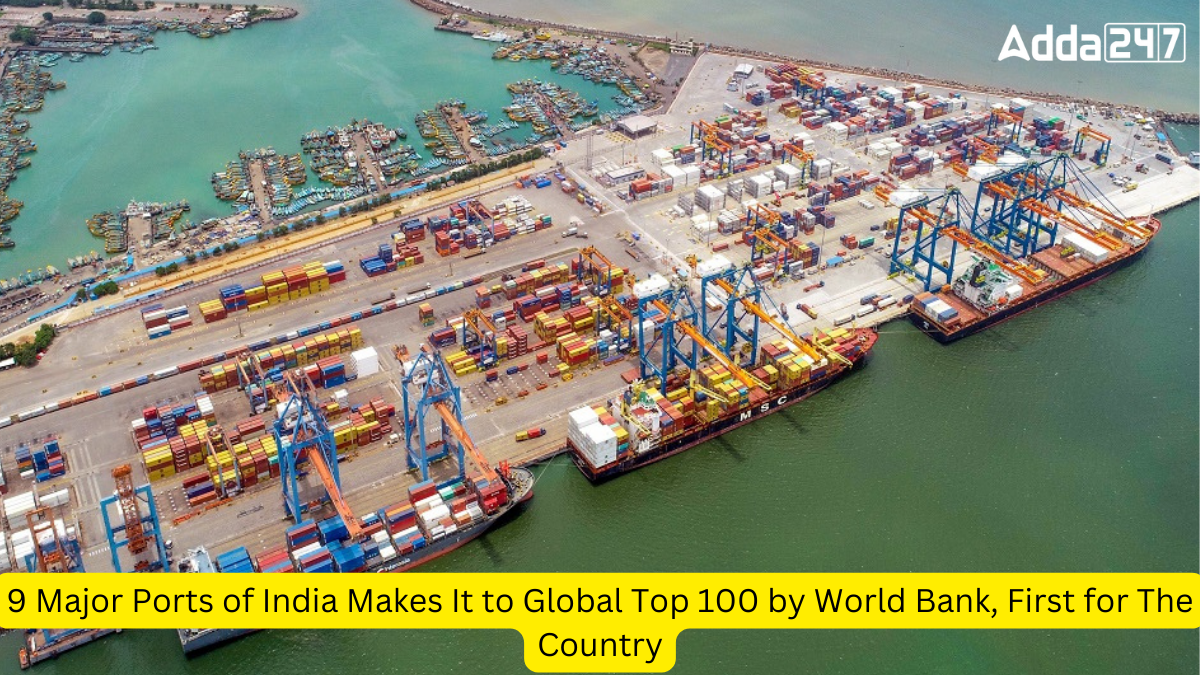
In a significant boost to the India’s port development programme, as many as 9 ports of India made it to the Global Top 100 in the latest edition of Container Port Performance Index (CPPI), 2023. This report is prepared by the World Bank and S&P Global Marketing Intelligence). The Union Minister of Ports, Shipping & Waterways, Sarbananda Sonowal gave credit to the ambitious Sagarmala programme, envisioned by Prime Minister Narendra Modi, for modernisation of the ports and improving their efficiency.
Tremendous achievement for the the Indian ports
Speaking on the occasion, the Union Minister Sarbananda Sonowal said, “This is a tremendous achievement for the Indian ports and is a testament to the efforts taken by the Narendra Modi Government to modernise, mechanise and make them technologically savvy to improve performance and enhance efficiency. There has been a significant improvement via operational efficiency and service delivery in the efficient handling of ships and cargo. This has helped us build resilience, incorporate new technology, and green infrastructure to ensure stability of global markets and sustainability of India’s maritime industry.
Performance of Vishakhapatnam Port
Indian maritime sector will further improve resilience and efficiency of Maritime gateways and boost port led economic development. Vishakhapatnam Port has showcased strong performance with 27.5 moves per crane hour, a turnaround time (TRT) of 21.4 hours, and minimal berth idle time. These metrics highlight the port’s efficiency in handling container ships and significantly influence customer preference. Seven other Indian ports, which secured ranks in the top 100, are Pipavav (41), Kamarajar (47), Cochin (63), Hazira (68), Krishnapatnam (71), Chennai (80) and Jawaharlal Nehru (96).








 India’s Classical Languages: 5 More La...
 Agasthyamalai Biosphere Reserve Records ...
 Vastra Utsav 2026 Celebrates India's Tex...










