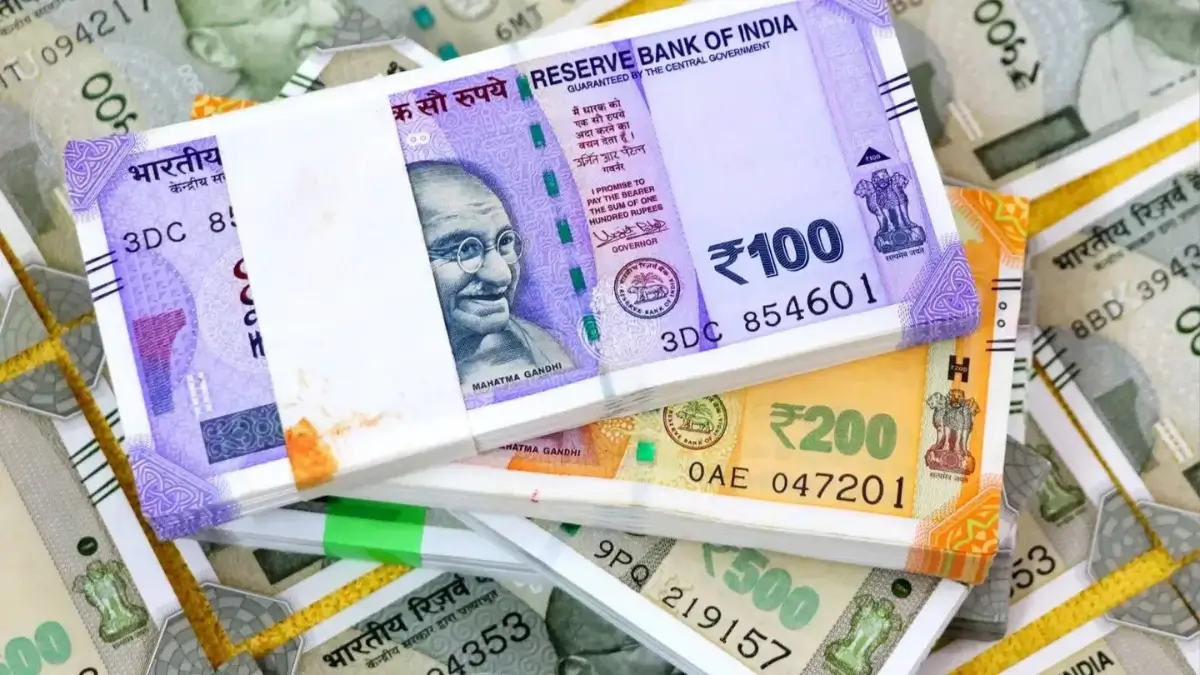
India’s Central Pay Commissions (CPCs) have played a major role in shaping the salary, pension, and allowance structures of central government employees. Since independence, eight Pay Commissions have been set up to ensure fair and updated compensation in line with inflation, economic growth, and cost of living.
The latest 8th Pay Commission (2025) has been approved and is expected to be implemented from January 2026.
Let’s understand the key details, chairpersons, and recommendations of all Pay Commissions so far.
First Central Pay Commission
- Formation Year: January 1946
- Implementation Year: July 1, 1947
- Chairman: Srinivasa Varadachariar
Key Highlights:
- The first ever pay commission formed by the Interim Government of India.
- Designed a structured pay scale system for civilian employees.
- Focused on creating uniform salary structures and fair compensation.
Post-War Pay Committee for Armed Forces
- The Armed Forces’ pay structure was not covered under the First CPC.
- A separate committee called the Post-War Pay Committee recommended new emoluments and pensions.
- The New Pay Code, based on these recommendations, came into effect on 1 July 1947.
Second Pay Commission
- Formation Year: August 1957
- Implementation Year: 1960 (effective retrospectively from 1 January 1959)
- Chairman: Jagannath Das
Key Highlights:
- Introduced rationalized pay scales to reduce income disparities.
- Aligned salaries with inflation and economic conditions.
- Had a financial impact of ₹39.6 crore on the government.
Third Pay Commission
- Formation Year: April 1970
- Implementation Year: 1973
- Chairman: Justice Raghubar Dayal
Key Highlights:
- Introduced a systematic and transparent approach to pay scales.
- Simplified salary structures and clarified pay fixation methods.
- Focused on reducing complexity and improving fairness in pay distribution.
Fourth Pay Commission
- Formation Year: June 1983
- Implementation Year: January 1, 1986
- Chairman: P. N. Singhal
Key Highlights:
- Submitted its report in three phases over four years.
- Brought major reforms in pay and allowances.
- Total financial burden on the government: ₹1,282 crore.
For the Armed Forces
- Introduced the concept of Rank Pay for Army, Air Force, and Navy officers (from Second Lieutenant to Brigadier ranks).
- This move altered pay parity between the military and police officers, sparking long-term debates on fairness in pay structures.
Fifth Pay Commission
- Formation Year: April 9, 1994
- Implementation Year: January 1, 1996
- Chairman: Justice S. Ratnavel Pandian
Key Highlights:
- Reduced pay scales from 51 to 34.
- Significantly increased minimum pay and pensions.
- Proposed a 30% reduction in government staff (not implemented).
- Financial impact: approximately ₹17,000 crore.
For the Armed Forces
Recommended 25% reservation in the Central Armed Police Forces (CAPFs) for retired Short Service Commission officers.
Suggested re-employment of trained defense personnel in civil services to reduce pension costs and utilize skilled manpower.
These suggestions were not implemented by later governments.
Sixth Pay Commission
- Formation Year: July 2006
- Implementation Year: January 1, 2006 (implemented in 2008)
- Chairman: Justice B. N. Srikrishna
Key Highlights:
- Introduced Pay Bands and Grade Pay system.
- Increased minimum salary to ₹7,000 per month.
- Abolished Group D cadre and improved pay structure transparency.
- Recommended modernization and better alignment with private sector pay.
- Employees received arrears in two installments (2008 and 2009).
Seventh Pay Commission
- Formation Year: September 25, 2013
- Implementation Year: January 1, 2016
- Chairman: Justice A. K. Mathur
Key Highlights:
- Proposed a 23.55% increase in overall pay and allowances.
- Introduced a fitment factor of 2.57.
- Increased minimum basic pay to ₹18,000 per month.
- Recommended faster payment of arrears — within the same financial year.
- Employees received their revised salaries six months after approval.
- Recommended a 3% annual increment and higher House Building Advance (HBA) limits up to ₹25 lakh.
For the Armed Forces
- Separate pay matrices for the Armed Forces were introduced.
- Concerns were raised about parity between military and civil services.
- Despite protests, the government implemented the recommendations without major changes in July 2016.
Eighth Pay Commission
- Formation Year: January 2025
- Expected Implementation: January 1, 2026
- Chairperson: To be appointed (as per latest updates)
Key Highlights (Expected):
- Likely to recommend a fitment factor of 3.68.
- Expected salary and pension hike for government employees.
- Revised Dearness Allowance (DA), HRA, and medical benefits.
- Approved by the Government of India in January 2025.
Recent Developments
- After months of delay, the government approved the Terms of Reference for the 8th Pay Commission on October 28, 2025.
- The Commission will submit its report within 18 months of its constitution.
- The implementation is expected from January 2026, benefiting over 30 lakh employees and pensioners.
Significance of Pay Commissions
The Pay Commissions are vital for ensuring fair pay and financial security for government employees and pensioners.
Their recommendations:
- Adjust salaries to match inflation and cost of living.
- Maintain equity and motivation among employees.
- Support pension reforms for retirees.
- Help in balancing public spending and employee welfare.
Every Pay Commission builds upon the previous one, helping India’s administrative system remain fair, modern, and efficient.


 Which is the Most Consumed Beverage in t...
 Which is the Only Continent with No Tree...
 Which River is known as the National Riv...