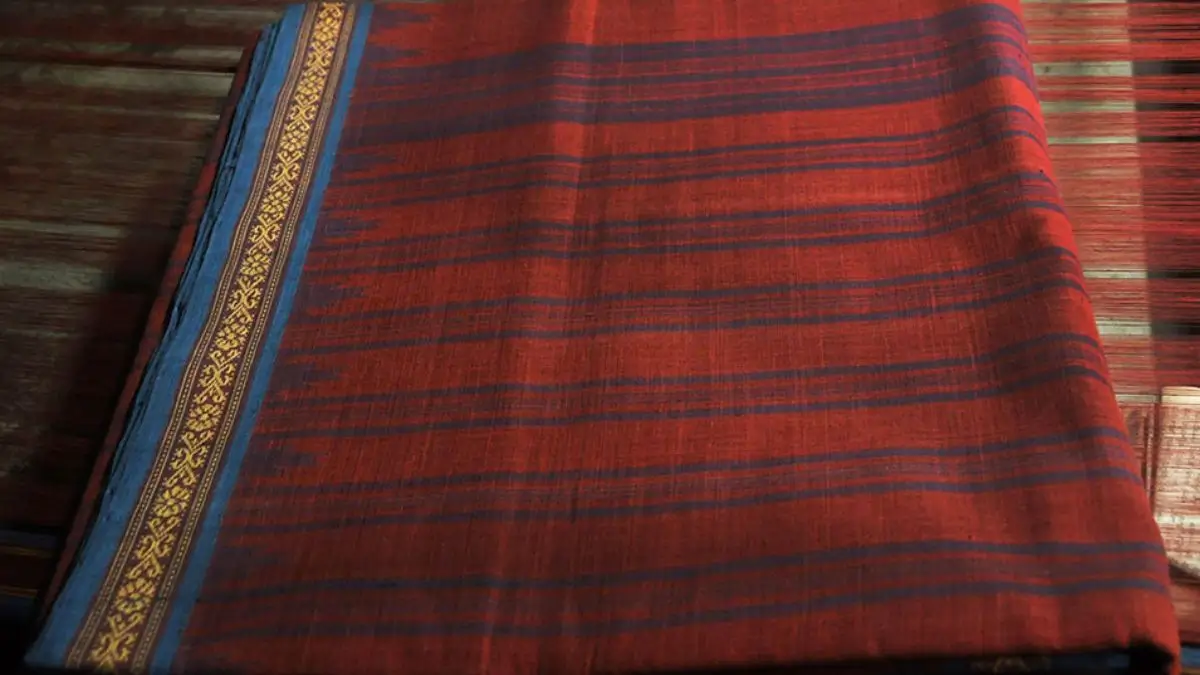
A significant boost to India’s traditional handloom heritage, Ponduru Khadi, a unique handspun and handwoven cotton fabric from Andhra Pradesh. Which has been granted the Geographical Indication (GI) tag by the Union Ministry of Commerce and Industry. This recognition comes nearly 100 years after Mahatma Gandhi himself praised Ponduru Khadi, calling attention to its exceptional fineness and craftsmanship.
What Is Ponduru Khadi?
- Ponduru Khadi is a traditional handspun and handwoven cotton fabric, renowned for its extremely fine texture and durability.
- What sets it apart from other khadi varieties is the use of locally grown cotton and traditional spinning techniques, often involving a special wooden charkha and rice starch for strengthening the yarn.
- Historically, Ponduru Khadi gained prominence during India’s freedom struggle when Mahatma Gandhi encouraged its production and use as a symbol of self-reliance and Swadeshi.
GI Tag: What It Means
- A Geographical Indication (GI) tag is an intellectual property right granted to products that originate from a specific geographical location and possess qualities or a reputation linked to that place.
- GI tags help protect traditional knowledge, prevent misuse of the product name, and ensure that only authorised producers can market the product under the GI name.
Cultural and Economic Significance
- The GI tag for Ponduru Khadi strengthens India’s broader efforts to protect traditional textiles and indigenous crafts.
- India already has several GI-tagged textile products such as Banarasi silk, Kanchipuram silk, Pochampally Ikat, and Chanderi fabric.
- Ponduru Khadi’s inclusion in this list adds to Andhra Pradesh’s cultural and artisanal identity.
Key Takeaways
- Ponduru Khadi has received the Geographical Indication (GI) tag.
- Located in Ponduru village, Srikakulam district, Andhra Pradesh.
- GI tag granted by the Union Ministry of Commerce and Industry.
- Ponduru Khadi was praised by Mahatma Gandhi nearly 100 years ago.
- GI tag is an intellectual property right linked to geographical origin.
Question
Q. Ponduru Khadi is primarily made from:
(A) Silk
(B) Wool
(C) Cotton
(D) Jute








 Lakshadweep Becomes India’s First 100%...
 Ayodhya Ram Temple Receives FSSAI’s â€...
 Ambaji Mohanthal Gets GI Tag: Gujarat’...