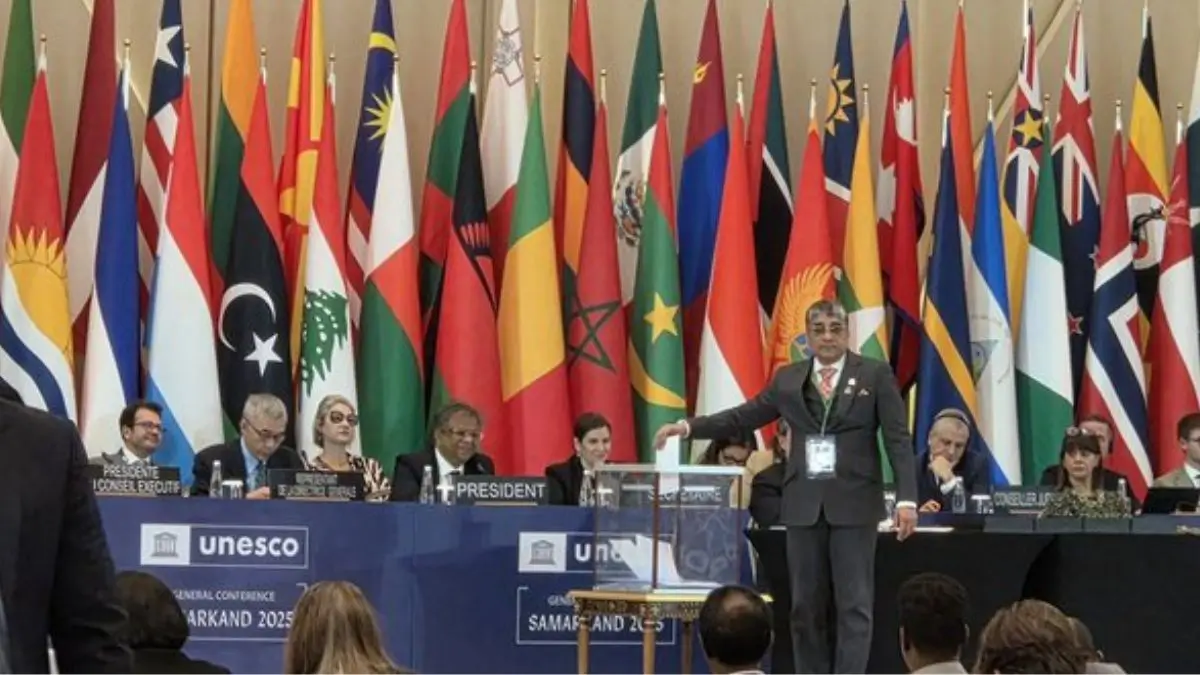
India has once again secured a seat on the UNESCO Executive Board for the 2025–2029 term, marking a reaffirmation of its growing global leadership in promoting education, culture, science, and communication through multilateral cooperation. The announcement was made by the Permanent Delegation of India to UNESCO, highlighting that India’s re-election reflects the global community’s confidence in its sustained and meaningful contribution to UNESCO’s mandate and its commitment to inclusive and human-centric development.
What is the UNESCO Executive Board?
The Executive Board is one of the three constitutional organs of UNESCO (United Nations Educational, Scientific and Cultural Organization). It plays a key role in,
- Overseeing the implementation of decisions by the General Conference
- Preparing the work programme and budget
- Guiding the overall strategy and policy-making process
- Comprising 58 member states, the board is responsible for ensuring that UNESCO’s decisions are translated into action.
India’s Continued Global Role
India’s re-election is both a diplomatic win and a signal of its soft power influence in global forums. As a long-standing contributor to UNESCO’s initiatives, India has championed themes such as,
- Universal access to education and digital learning
- Safeguarding of intangible cultural heritage
- Promotion of multilingualism and inclusive communication
- Scientific collaboration and indigenous knowledge systems
India’s contributions align closely with UNESCO’s vision of building peace through international cooperation in education, science, and culture.
Why This Matters
India’s presence on the Executive Board for the 2025–29 term enhances its ability to influence,
- Global education policies, especially digital equity and foundational literacy
- Cultural preservation efforts, including recognition of Indian heritage under UNESCO’s World Heritage programme
- Collaborative scientific research on climate change, sustainability, and digital ethics
- Media freedom and information access, in line with SDG Goal 16
India also uses its platform to strengthen South-South cooperation, encourage cross-cultural dialogue, and promote sustainable development frameworks that reflect developing country priorities.
India’s Vision: Human-Centric and Inclusive Development
The Permanent Delegation noted that India’s re-election represents a growing international endorsement of its inclusive, human-centric development model. This vision is based on,
- Equity in education and digital access
- Preservation of diverse knowledge systems and cultures
- Gender equality and youth empowerment
- Cross-border collaboration for peace and sustainability
India has repeatedly emphasized the importance of shared responsibility among nations, especially in an era marked by global challenges like climate change, digital divide, and cultural homogenization.
India’s Past Contributions to UNESCO
India has previously played a critical role in various UNESCO programmes, including,
- Establishment of Category-1 institutes like the Mahatma Gandhi Institute of Education for Peace and Sustainable Development (MGIEP) in New Delhi
- Recognition of Indian heritage sites such as Ramappa Temple, Kumbh Mela, and Durga Puja in Kolkata
- Supporting the International Year of Millets 2023, declared by the UN
- Engagement in World Philosophy Day, Mother Language Day, and Teacher’s Day campaigns
- India’s re-election will enable continued support for these global initiatives and expansion into new collaborative fields.
Key Takeaways
- Organization: UNESCO (United Nations Educational, Scientific and Cultural Organization)
- Role Secured: Member of Executive Board (2025–2029 term)
- Total Members on Board: 58
- India’s Key Focus Areas: Education, culture, science, communication, and information
- India’s Multilateral Vision: Inclusive, human-centric global development
- UNESCO Projects Led by India: MGIEP, World Heritage sites, digital learning, indigenous culture


 Iran–US Ceasefire: Iran’s 10 Conditions ...
 Russia and China Veto UN Resolution to R...
 France Hosts One Health Summit Under G7 ...