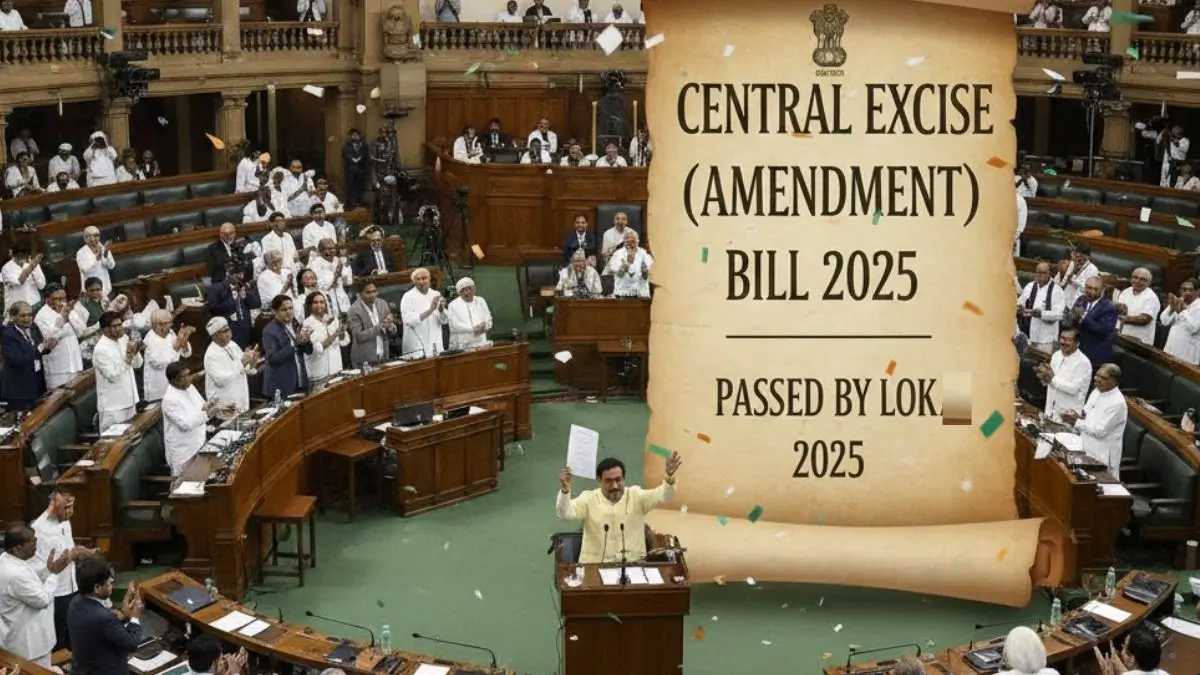
The Lok Sabha has passed the Central Excise (Amendment) Bill, 2025, along with the Health and National Security Cess Bill, 2025, introducing a revised tax structure on so-called ‘sin goods’ such as tobacco, cigarettes, and pan masala. These bills are a crucial step toward replacing the GST compensation cess, which is scheduled to be phased out by March 31, 2026. The new taxation regime will maintain the high tax incidence on such goods while introducing structural clarity and ensuring the continuation of revenue for health and security-related expenditures.
Objective of the Amendment
The reform aims to,
- Ensure revenue continuity after the phaseout of GST compensation cess.
- Maintain high taxation on demerit goods like tobacco and pan masala.
- Shift tax proceeds from general use to targeted public health and national security spending.
- Support the loan repayment taken by the Centre to compensate states during the COVID-19 fiscal crunch.
Background: GST Compensation Cess and Its Phaseout
When the Goods and Services Tax (GST) was introduced on July 1, 2017, the Centre promised compensation to states for any revenue losses, funded through a compensation cess on sin and luxury goods. Initially planned for 5 years till June 30, 2022, the cess was extended till March 31, 2026, to help repay loans taken during the pandemic.
While compensation cess on other luxury goods was withdrawn in September 2025, it continues for tobacco and pan masala. The new excise duty and cess framework will now take over as this cess is withdrawn.
What Does the New Law Propose?
Central Excise (Amendment) Bill, 2025
This bill replaces the existing cess with a fresh central excise duty on tobacco products, including,
- Cigarettes, cigars, cheroots, hookahs, zarda, and scented tobacco
- Excise duty of ₹5,000–₹11,000 per 1,000 sticks of cigarettes, depending on length
- 60–70% tax on unmanufactured tobacco
- 100% excise on nicotine and inhalation products
- This duty will be in addition to the existing 40% GST rate on these items.
Health and National Security Cess Bill, 2025
This bill introduces a dedicated cess on pan masala and any other products notified later. Proceeds will be used for,
- Public health programmes
- National security funding
- This will not be shared with states as it is not part of the divisible tax pool.
Broader Impact and Policy Significance
This dual tax mechanism ensures that once the GST compensation cess is removed, the overall tax burden on sin goods remains unchanged, continuing to serve both fiscal and social policy objectives.
It is a strategic transition that helps,
- Maintain fiscal discipline
- Promote discouragement of harmful products
- Repay pandemic-related loans without burdening core tax structures
With this shift, India also aligns with international practices of targeted taxation on health-risk products, using revenue not just for general consumption but for societal well-being.
Key Takeaways
- Lok Sabha passed the Central Excise (Amendment) Bill, 2025 and Health and National Security Cess Bill, 2025 on December 3, 2025.
- These replace the GST compensation cess on tobacco and pan masala.
- Tax Structure
- Excise duty on cigarettes: ₹5,000–₹11,000 per 1,000 sticks.
- 60–70% duty on unmanufactured tobacco.
- 100% duty on nicotine products.
- Cess applies to pan masala and funds health and national security programmes.


 Parliament Rejects Impeachment of Chief ...
 Against All Odds: Indian Cyclist Divya S...
 India’s Most Advanced Atomic Reactor Att...