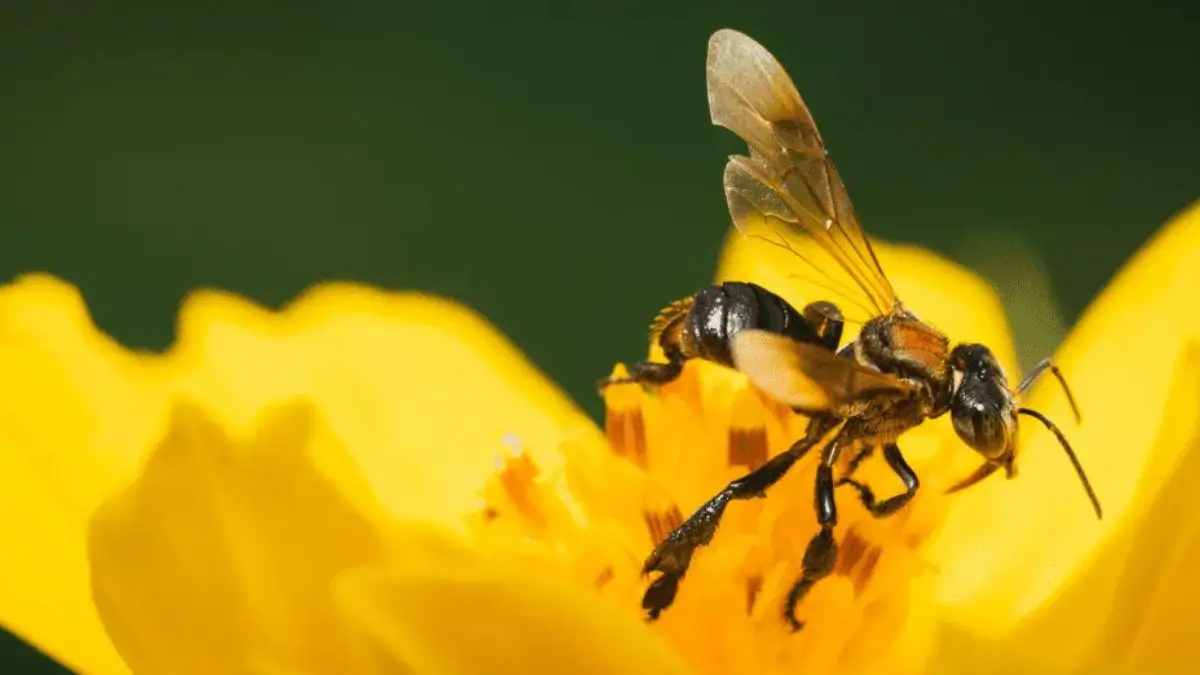
For the first time in the world, an insect species has been granted legal rights. Two municipalities in Peru have officially recognized the rights of Amazonian stingless bees, a vital pollinator species that has sustained tropical forests for millions of years. The decision highlights a growing global shift toward rights-based conservation and stronger protection for ecosystems and indigenous knowledge systems.
Why in the News?
Two municipalities in Peru Satipo and Nauta have passed an ordinance granting legal rights to Amazonian stingless bees, making them the first insects globally to receive such recognition. The move aims to protect them from deforestation, climate change, and habitat loss.
What Are Stingless Bees?
Stingless bees are a group of bees that either lack stingers or have stingers that cannot cause serious pain.
- They are mainly found in tropical regions.
- Around 500 species exist worldwide
- Nearly half live in the Amazon rainforest
- Peru alone is home to 170+ species
They have existed for about 80 million years, since the dinosaur era
Why Are Stingless Bees Important?
- Stingless bees are among the most important pollinators in tropical ecosystems.
- They pollinate over 80% of Amazon rainforest plants
- Support key crops like cacao, coffee, and avocados
- Help maintain forest biodiversity and food chains
- Their honey has anti inflammatory, antibacterial and antiviral properties
- Without them, both forests and food security would be at risk.
Cultural Importance for Indigenous Communities
Stingless bees are deeply linked to the lives of Indigenous communities such as the Asháninka and Kukama-Kukamiria.
- Their honey is used as traditional medicine
- Bees are part of spiritual beliefs and ancestral knowledge
- Indigenous culture and forest health are closely connected
- This cultural link played a key role in shaping the new ordinance.
Threats Faced by Stingless Bees
Despite their importance, stingless bees face serious threats,
- Deforestation due to illegal logging, farming, and cattle grazing
- Forest fires, increasing in frequency and intensity
- Climate change, forcing bees to migrate to higher altitudes
- Loss of traditional habitats near indigenous settlements
- Communities report that bees are now much harder to find than before.
What Does Granting Legal Rights Mean?
The new ordinance builds on Peru’s 2024 national law that recognized stingless bees as a native species.
The bees are now granted rights such as,
- Right to exist and survive
- Right to healthy and stable populations
- Right to habitat restoration
- Right to live in a pollution-free environment
These rights legally bind authorities to protect and conserve them.
Concept of Rights of Nature
- The idea of granting legal rights to nature allows ecosystems or species to be treated as legal entities.
- This approach has already been applied to rivers, forests, and mountains in some countries.
- Extending it to insects marks a new step in environmental law.
Key Data at Glance
| Aspect | Details |
| Why in News? | Stingless bees granted legal rights in Peru |
| Species | Amazonian stingless bees |
| Location | Peru (Amazon region) |
| Importance | Importance |
| Main Threats | Deforestation, fires, climate change |
| Legal Rights | Existence, habitat, pollution-free environment |
Question
Q. Amazonian stingless bees were granted legal rights in which country?
A. Brazil
B. Colombia
C. Peru
D. Ecuador


 UK Sets Strict Screen Time Rules for Kid...
 Japan's 275 kmph Cargo Bullet Train: Wor...
 Balendra Shah Sworn In As Nepal’s Younge...