
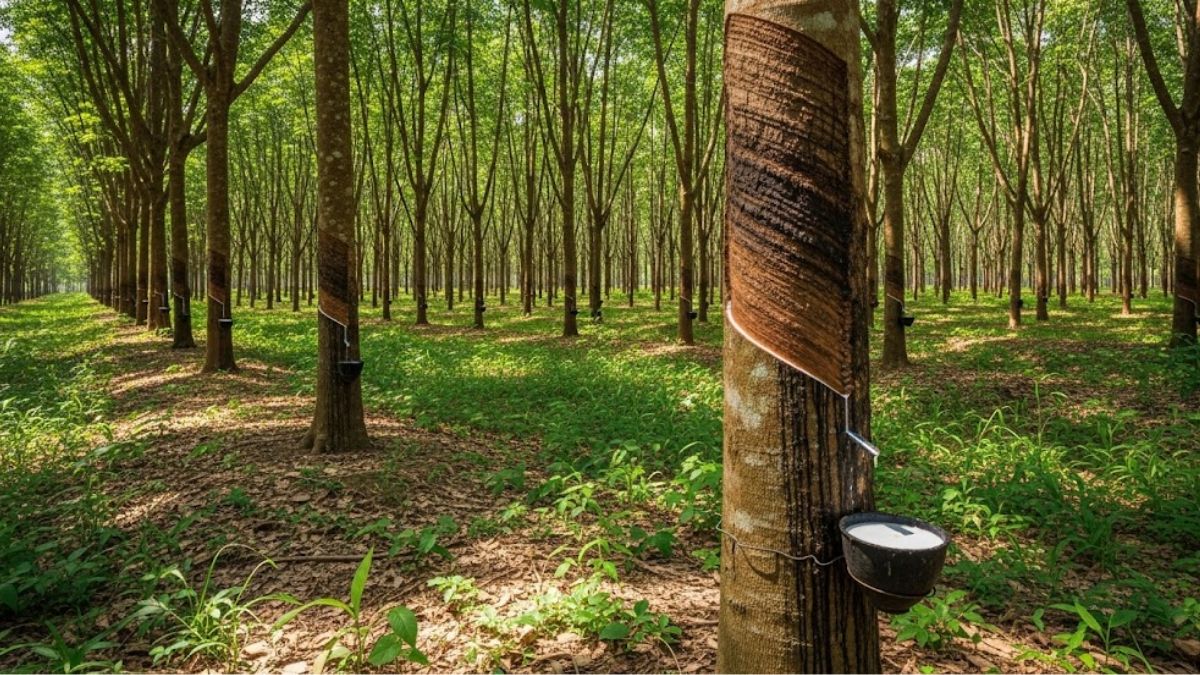
Kerala’s rubber plantations are under threat from an invasive pest, the ambrosia beetle (Euplatypus parallelus), which carries harmful fungi causing extensive tree damage. The infestation is impacting latex production and the local economy, raising concern among researchers and farmers.
Background
The ambrosia beetle, native to Central and South America, was first reported in India in 2012 on cashew trees in Goa. It targets stressed or dead trees, boring tunnels and introducing fungal spores. These beetles carry Fusarium ambrosia and the newly identified Fusarium solani, both of which are destructive to tree health.
Mode of Infestation
The beetle creates galleries in tree trunks where the fungi grow. In a mutualistic relationship, the fungi serve as food for the beetle and its larvae, while the beetles help spread the fungi. Unlike most ambrosia beetles, this species lacks mycangia, making its ability to carry fungi unique and concerning.
Impact on Rubber Plantations
Infected trees show latex oozing, leaf fall, and trunk drying. The fungi block xylem vessels, disrupting water flow and degrading wood. As a result, latex output drops, and tree recovery is slow or impossible. This poses a serious economic threat to rubber farmers in Kerala.
Control Measures and Challenges
Current methods include removing infected trees, using traps to catch beetles, and applying antifungal treatments. However, these are only partially effective due to the internal nature of fungal infection. Early detection and monitoring are critical but hard to implement across large plantation areas.
Broader Risks
The ambrosia beetle is known to attack over 80 broadleaf species, including teak, coffee, cashew, and coconut. If it forms new alliances with other pathogenic fungi, the ecological and economic risks could multiply. Additionally, Fusarium species can affect humans, especially immunocompromised individuals.
Recommendations
Experts advocate region-specific strategies for Kerala, as universal methods may not apply. Promising solutions include introducing antagonistic fungi and beneficial microbial communities inside trees. Long-term management requires collaborative action from scientists, government bodies, and farmers.


 Maharashtra CM Devendra Fadnavis unveils...
 Centre Issues Gazette Naming Amaravati a...
 Shree Jagannath International Airport in...











