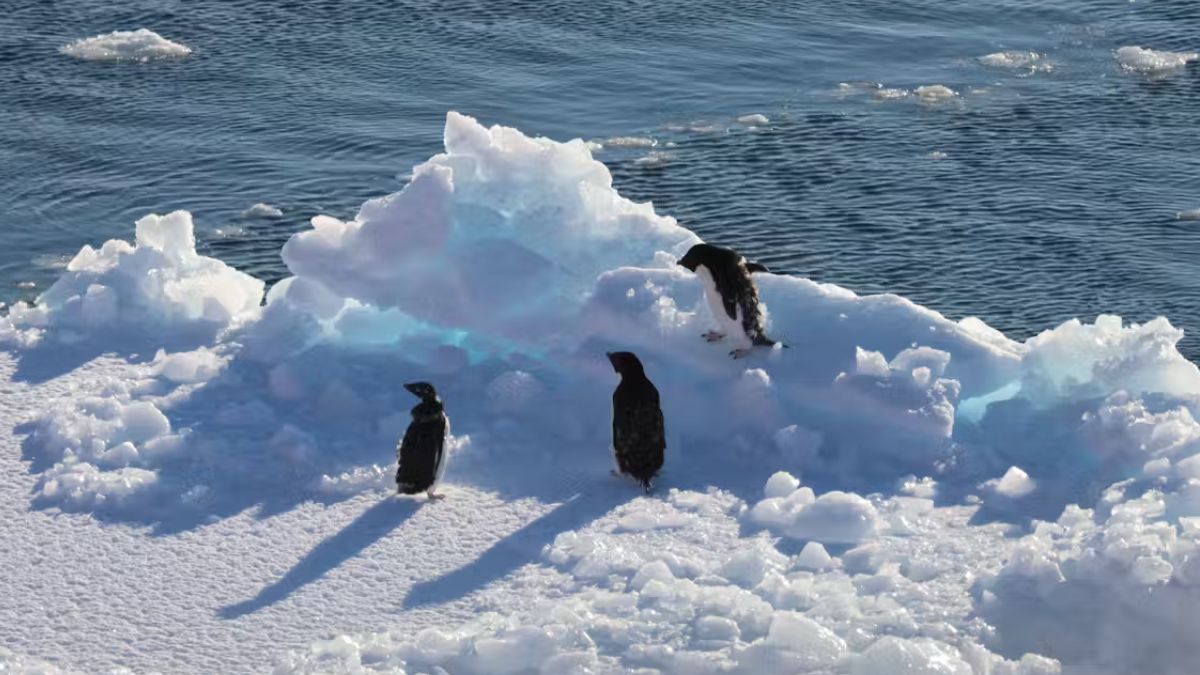
New research has confirmed that Antarctica’s summer sea ice is melting at record levels. This change, observed over the past few years, is warming the ocean, damaging ecosystems, and risking long-term climate effects. Scientists warn that these changes could seriously harm both the planet and people.
What the Study Found
A large team of scientists, including Edward Doddridge from the University of Tasmania, studied the sea ice loss using satellites, ocean robots, and computer models. Their findings, based on years of data and new missions to Antarctica, show that the loss of summer sea ice is more serious than expected. The researchers explored how this loss affects the climate, ocean temperatures, marine life, and even supply missions to Antarctica.
Ocean Heating Is Getting Worse
One major problem is that sea ice reflects sunlight. When it melts, more dark ocean water is exposed, which absorbs heat. This makes the ocean warmer each year. Before 2016, the ocean would cool down again in winter, but now, that cooling is not happening as much. The heat is staying in the water, causing a cycle of continued warming. According to models, the ocean now takes about three years to recover from low ice years – but with rising temperatures, recovery is becoming rare.
Impact on Nature and Ecosystems
The melting ice is not just about temperature. Sea ice supports tiny plants at the bottom of the marine food web, which in turn support fish, birds, and seals. When the ice disappears, these plants have trouble growing, affecting the whole food chain. The loss of ice also exposes the Antarctic coast to stronger ocean waves, increasing iceberg break-offs and changing coastlines.
Supply Missions and Global Concerns
Reports from Antarctic supply missions showed that resupply ships are facing new challenges. Some areas, previously blocked by ice, are now open – but this also brings rougher seas and more dangerous conditions. Experts say this is another sign of how fast the region is changing. The team hopes their findings will push world leaders to act faster on climate change.


 Meet MAI-Transcribe-1: Microsoft’s Fast,...
 What is Outer Space Treaty 1967? Princip...
 What Is Mission Mitra? ISRO’s New Experi...