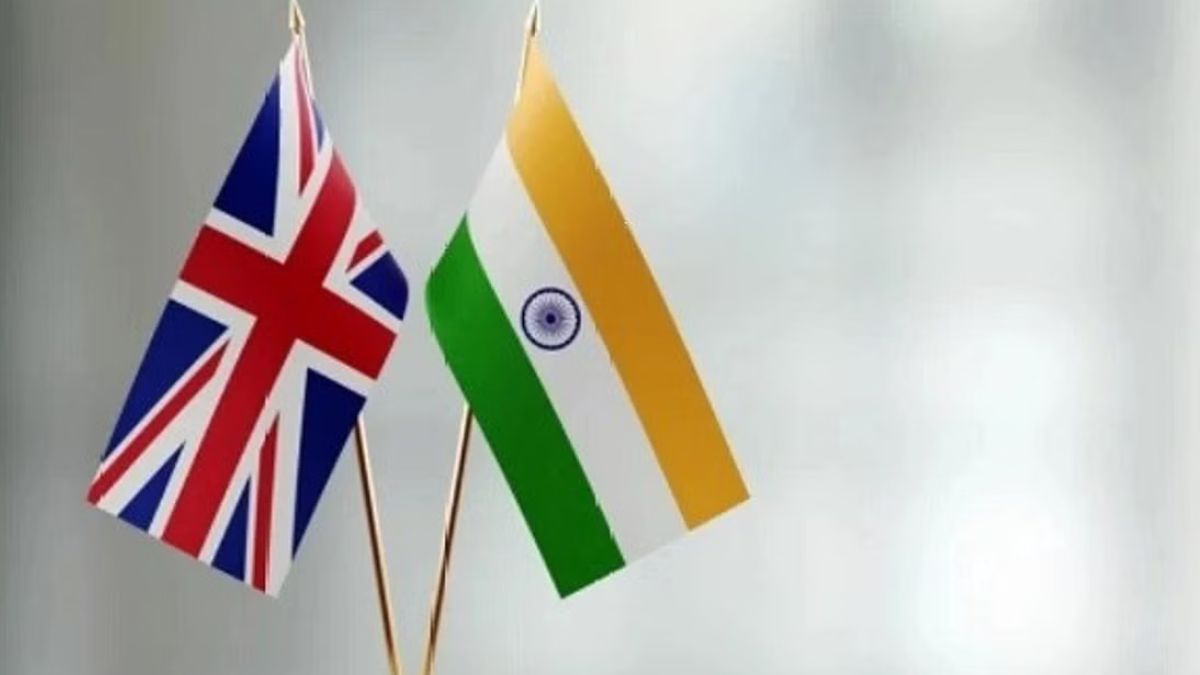
The Indian Cabinet has approved a landmark Free Trade Agreement (FTA) with the United Kingdom, known officially as the Comprehensive Economic and Trade Agreement (CETA). The pact is set to be signed during Prime Minister Narendra Modi’s visit to London on July 24, 2025. The agreement aims to boost bilateral trade by reducing tariffs, improving market access, and strengthening cooperation in services, innovation, and intellectual property.
Background
Negotiations for the India-UK FTA began in January 2022, with both countries committing to deepen economic ties post-Brexit. After several rounds of discussions, both nations concluded negotiations on May 6, 2025. The pact aligns with India’s broader strategy to expand global trade through bilateral deals and complements similar FTAs signed with countries like Australia and the UAE.
Significance
The FTA holds considerable strategic and economic significance. It is expected to double bilateral trade to USD 120 billion by 2030, promote labour-intensive Indian exports like textiles and leather, and ease access for British goods like cars and whisky. Politically, it reinforces India’s ties with a key G7 nation, boosting confidence in India’s global economic positioning.
Objectives
- Enhance market access for Indian goods and services in the UK.
- Remove or reduce tariffs to make exports more competitive.
- Strengthen regulatory cooperation in innovation and digital trade.
- Facilitate social security coordination for Indian professionals in the UK.
- Support investment liberalisation, although talks on a separate Bilateral Investment Treaty (BIT) are still ongoing.
Key Features
- Zero or reduced tariffs on a range of goods including leather, footwear, garments, and automotive products.
- Reduced import duties on UK products such as whisky and high-end cars.
- Chapters on goods, services, intellectual property rights, government procurement, innovation, and digital trade.
- Signing of the Double Contribution Convention Agreement, preventing double social security payments by temporary Indian workers in the UK.
- The FTA requires ratification by the British Parliament before it comes into effect.
Impact
The deal is expected to,
- Boost Indian exports to the UK and reduce trade barriers.
- Improve employment opportunities, especially in labour-intensive sectors.
- Enhance investor confidence and regulatory predictability.
- Set a template for future FTAs with developed economies.
India’s exports to the UK rose by 12.6% to USD 14.5 billion in 2024–25, while imports increased by 2.3% to USD 8.6 billion, reflecting growing bilateral engagement.


 Iran–US Ceasefire: Iran’s 10 Conditions ...
 Russia and China Veto UN Resolution to R...
 France Hosts One Health Summit Under G7 ...