
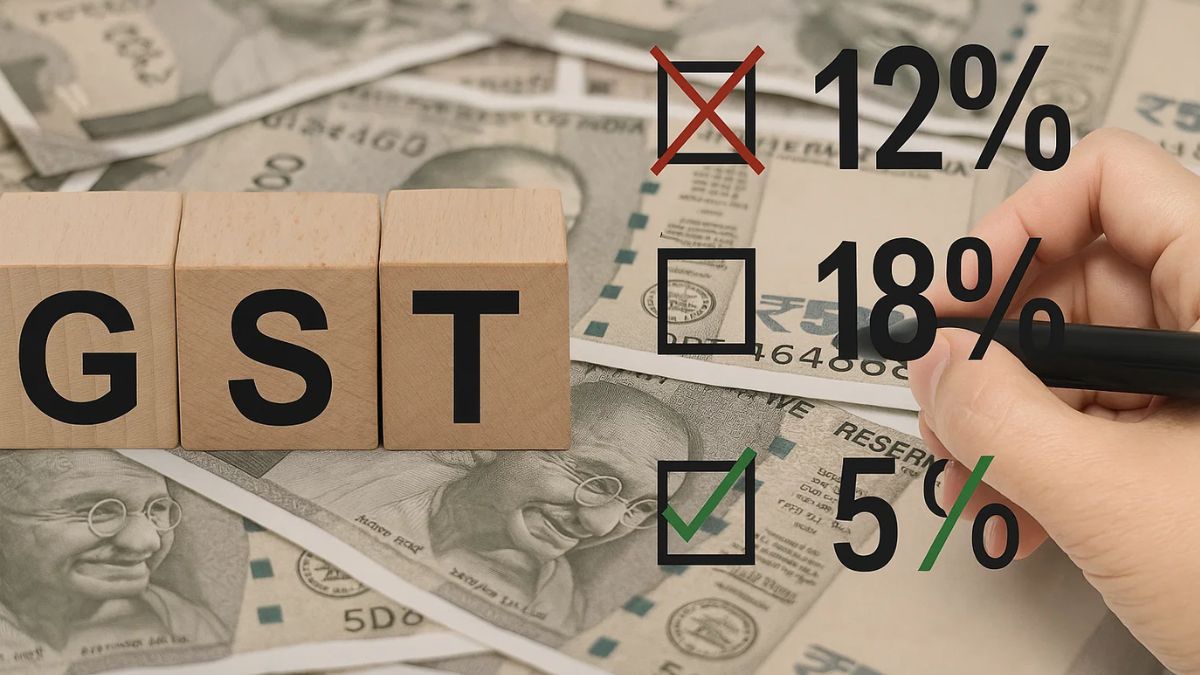
The Goods and Services Tax (GST) is set for a major overhaul as the Centre proposes a simplified two-slab system of 5% and 18%, along with a 40% rate for select sin goods like tobacco and pan masala. The proposal—part of the next-generation GST reforms—is expected to be taken up by the GST Council in September or October 2025 and could come into effect as early as the third quarter of FY 2025-26.
The reform aims to boost consumption, resolve tax disputes, and streamline compliance while supporting sectors such as agriculture, textiles, fertilisers, and renewable energy.
Proposed GST Rate Structure
1. Two Main Slabs
- 5% slab: Will include most daily-use and common goods; 99% of items currently taxed at 12% will move here.
- 18% slab: Will include white goods and aspirational items such as TVs and refrigerators (currently at 28%).
- 40% rate: Reserved for five to seven sin goods—including tobacco and pan masala—replacing the existing compensation cess.
2. Key Rate Changes
- Essential food items: Will remain tax-free.
- Middle-class aspirational goods: Move from 28% to 18%.
- Common-use goods: Shift from 12% to 5% to boost affordability and consumption.
Economic Impact
Current revenue distribution,
- 67% from the 18% slab
- 5% from the 12% slab
- 7% from the 5% slab
Lower GST rates on essentials expected to stimulate demand, boost GDP growth, and support key industries.
Short-term dip in tax revenue possible but expected to be offset by higher consumption.
Structural & Procedural Reforms
1. Correction of Inverted Duty Structure
- Focus on sectors like textiles and fertilisers where tax rates on raw materials exceed those on finished goods.
2. Streamlined Classification
- Similar goods to be placed in the same slab to reduce litigation and disputes (e.g., namkeens and savouries).
3. Faster Business Registration & Refunds
- Target: 95% registrations within 3 days.
- Automated refunds for exporters and businesses facing inverted duty structure issues.
4. Pre-Filled Returns
- Aim: Reduce invoice mismatches and cut compliance burden for businesses.
Political & Policy Context
In his Independence Day 2025 address, PM Narendra Modi announced that next-generation GST reforms will be rolled out by Diwali 2025. The reforms aim to,
- Make GST more common man-friendly with lower rates.
- Support growth in agriculture, textiles, automotives, renewable energy, handicrafts, health, and insurance.
- Move away from legacy GST structure toward a simplified, business-friendly regime.
Implementation Timeline & Process
- Discussion Stage: GST Council meetings in Sept–Oct 2025.
- Approval & Rollout: Possible from Q3 FY 2025-26.
- No GST Act Amendment Needed: Can be implemented through notifications, speeding up execution.
Multiple Council meetings likely due to the comprehensive scope of the proposal.


 World Bank Projects India to Drive South...
 RBI MPC Meeting 2026, Kept Repo Rates Un...
 India's Major Ports Handle Record 915.17...











