
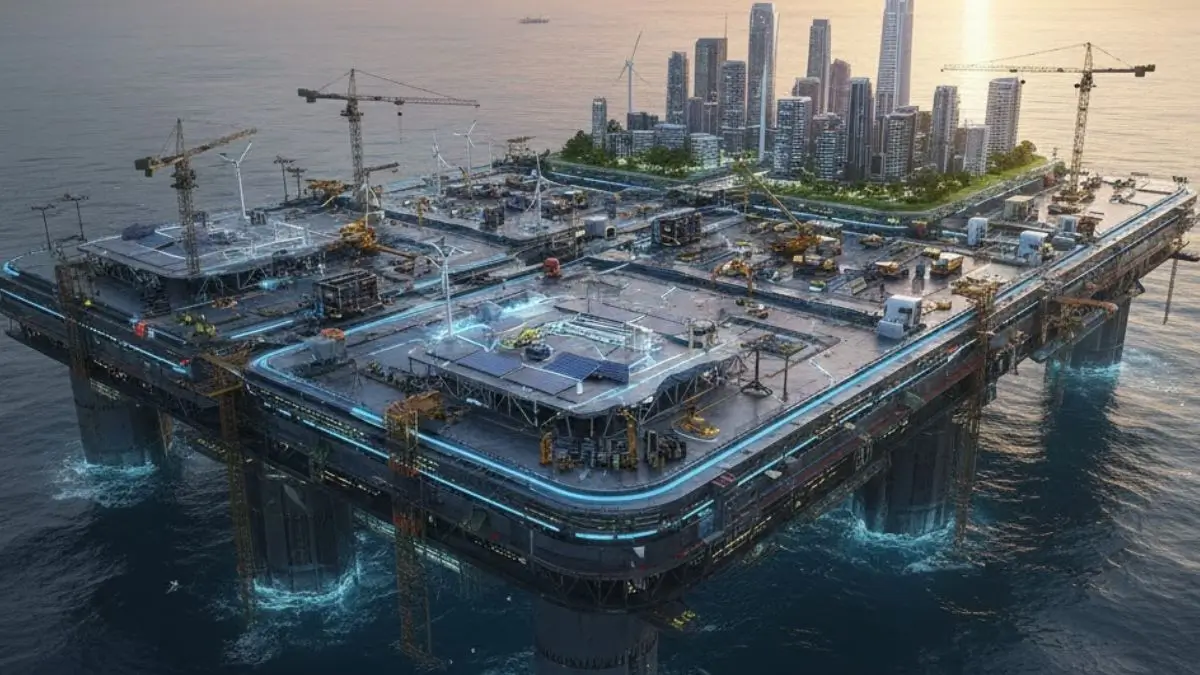
In a bold stride toward futuristic infrastructure, China has begun building the world’s first artificial floating island capable of withstanding nuclear explosions, severe storms, and long-term sea conditions. Scheduled for completion and operational readiness by 2028, this massive, mobile research platform marks a major leap in maritime engineering, national security, and scientific capability.
What Is China’s Floating Island Project?
Named the Deep-Sea All-Weather Resident Floating Research Facility, the artificial island is being developed by a team from Shanghai Jiao Tong University (SJTU).
The floating platform will be,
- 138 metres long and 85 metres wide
- 45 metres above the waterline, with multiple secured compartments
- Weigh around 78,000 tonnes, making it comparable in size to the Fujian aircraft carrier
- Sustain up to 238 people for four months without outside resupply
Built for Survival: Nuclear Blasts, Waves, and Typhoons
What sets this platform apart is its extreme resilience,
- Nuclear Protection: The structure is designed using military-grade specifications for nuclear blast resistance (GJB 1060.1-1991). Critical compartments will remain intact even under catastrophic shockwaves.
- Storm Resilience: The island can endure waves between 6 to 9 metres and withstand Category 17 typhoons—the most powerful tropical cyclones classified.
- Shock-Absorbing Design: The facility’s use of “metamaterial sandwich panels” helps absorb intense energy by converting powerful shocks into milder vibrations, providing a protective cushion for equipment and occupants.
A Civilian Research Platform with Strategic Depth
Although presented as a scientific research facility, the design clearly incorporates military engineering principles. The platform ensures,
- All-weather functionality for deep-sea exploration
- Secure emergency systems for communication, power, and navigation
- Autonomous living capabilities in remote waters, strengthening China’s presence in international seas
Given its mobility and resilience, the platform could also have dual-use potential for maritime defense, underwater surveillance, or emergency response in conflict zones.
Static Facts
- Project Name: Deep-Sea All-Weather Resident Floating Research Facility
- Lead Institution: Shanghai Jiao Tong University (SJTU)
- Operational Year: Targeted for 2028
- Dimensions: 138m (length), 85m (width), 45m (deck height above water)
- Weight: 78,000 tonnes (same as Fujian aircraft carrier)
- Capacity: 238 people for 4 months without resupply


 Preeti Saran Re-Elected as UN Committee ...
 Global Trade Hits New High in 2025: Key ...
 Iran–US Ceasefire: Iran’s 10 Conditions ...











