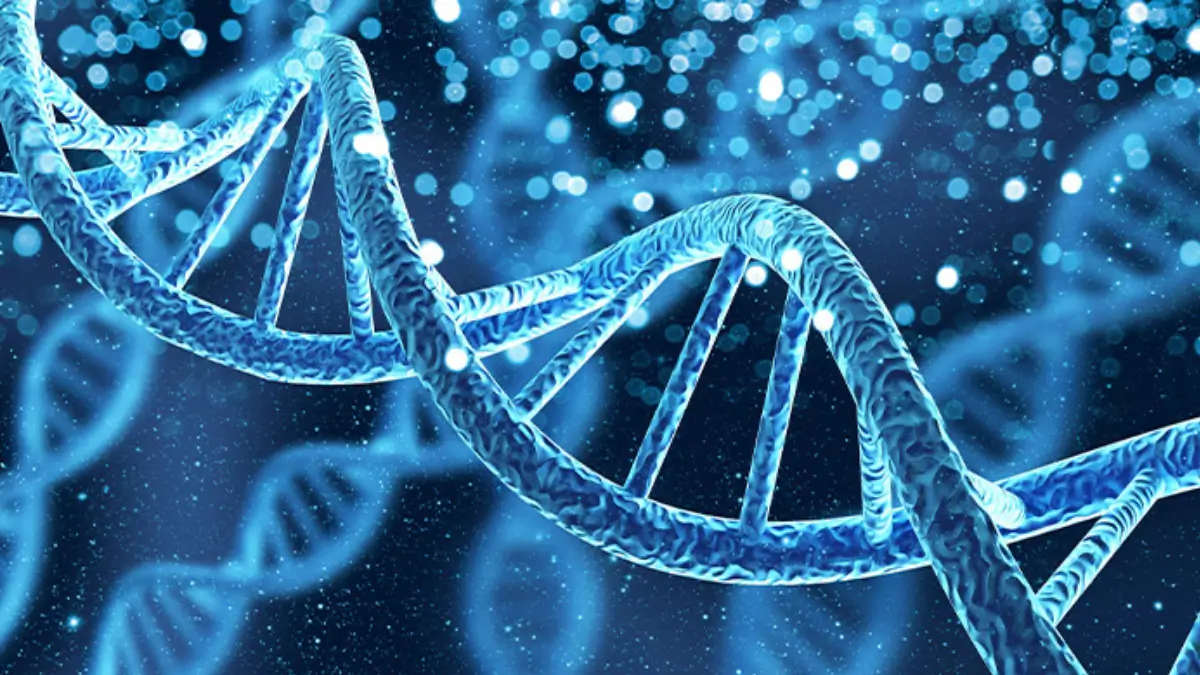
DNA is one of the most important molecules in all living things. It carries the information that makes every plant, animal, and human unique. Without DNA, life as we know it would not exist. Understanding DNA helps us learn how traits are passed from one generation to another and how our bodies work.
Full Form of DNA
The full form of DNA is Deoxyribonucleic Acid. Each part of the name tells something about its structure:
- Deoxy means that one oxygen atom is missing in the sugar part.
- Ribo comes from ribose, a type of sugar.
- Nucleic means it is found in the nucleus of a cell.
- Acid shows that it is a type of chemical compound.
DNA is like a long instruction book that tells every cell how to function and what to become.
What is DNA?
DNA is a molecule that carries the genetic code for all living organisms. It is found mainly in the nucleus of cells and is made up of two strands twisted together, forming a double helix shape.
Each strand contains units called nucleotides, made up of:
- A sugar (deoxyribose)
- A phosphate group
- A nitrogen base — Adenine (A), Thymine (T), Cytosine (C), or Guanine (G)
The order of these bases decides the traits and characteristics of an organism. DNA also guides the body in making proteins that are needed for growth and repair.
Structure of DNA
The structure of DNA was discovered in 1953 by James Watson and Francis Crick. It looks like a twisted ladder, where the sides are made of sugar and phosphate, and the rungs are pairs of nitrogen bases:
- Adenine (A) pairs with Thymine (T)
- Guanine (G) pairs with Cytosine (C)
This unique structure allows DNA to copy itself and pass genetic information to new cells during reproduction.
Types of DNA
DNA exists in several forms, each with a special role:
- B-DNA: The most common form found in living organisms; it carries genetic information.
- A-DNA: A more compact version that appears under certain conditions.
- Z-DNA: A zigzag-shaped DNA that helps control gene expression.
- Mitochondrial DNA (mtDNA): Found in the cell’s mitochondria and helps in energy production.
- Plasmid DNA: Found in bacteria, often giving them resistance to antibiotics.
Each type supports life in different ways.
Functions of DNA
DNA performs several key functions in living things:
- Stores Genetic Information: DNA keeps all the instructions for building and maintaining the organism.
- Protein Production: It helps form proteins through transcription and translation.
- Heredity: DNA passes traits from parents to children.
- Cell Control: It regulates cell growth, division, and repair.
- Evolution: Small DNA changes, called mutations, help species adapt and evolve over time.
Interesting Facts About DNA
- Human DNA is about 50% similar to cabbage DNA!
- A tiny amount of DNA can store the world’s data.
- Each person has about 20,000 to 25,000 genes, but they make up only 1–2% of all DNA.
- Scientists can collect animal DNA from air samples.
These facts show how amazing and powerful DNA truly is.
Uses of DNA in Science
DNA technology is used in many modern fields:
- Medicine: For genetic testing, disease detection, and gene therapy.
- Forensic Science: To identify criminals and solve cases using DNA fingerprints.
- Agriculture: To develop better and more disease-resistant crops.
- Ancestry Testing: To trace family roots and human evolution.
These uses make DNA one of the most important discoveries in science.


 Which City is known as the Purple City o...
 Which River is known as the Lifeline of ...
 What is the Old Name of Jharkhand?