
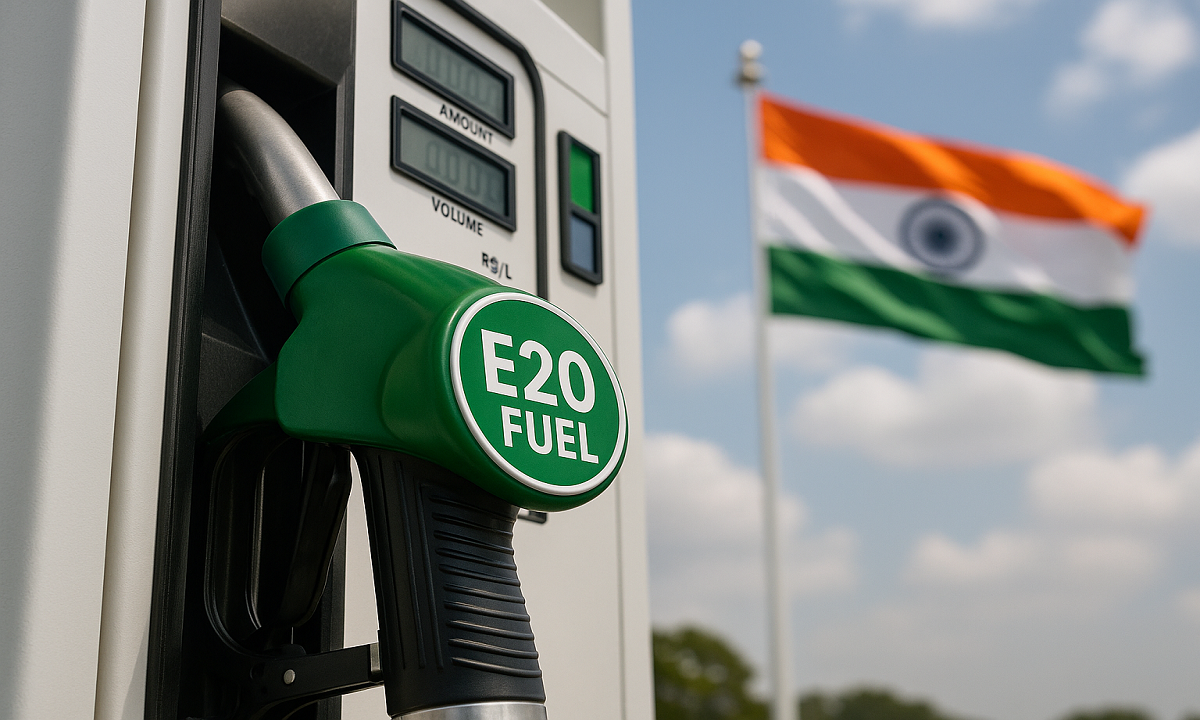
What is E20 Fuel?
E20 fuel is a blend of 20% ethanol and 80% petrol. Ethanol is an alcohol-based biofuel made mainly from sugarcane, maize, and other crops.
The goal of blending ethanol with petrol is to:
- Reduce dependence on imported crude oil
- Lower greenhouse gas emissions
- Boost income for farmers who grow ethanol-producing crops
India’s E20 programme is part of its energy transition strategy and supports the target of net zero emissions by 2070.
Why India is Promoting E20 Fuel
The Ministry of Petroleum and Natural Gas highlights multiple benefits:
1. Environmental Gains
- Studies show ethanol emits far less CO₂ than petrol.
- From 2014–15 to July 2025, ethanol blending: Saved 736 lakh metric tonnes of CO₂ emissions — equal to planting 30 crore trees.
2. Economic Savings
- Saved ₹1.44 lakh crore in foreign exchange
- Replaced 245 lakh metric tonnes of crude oil imports
- At 20% blending, projected ₹43,000 crore annual forex savings
3. Support to Farmers
- Annual payments to farmers expected to touch ₹40,000 crore
- Cleared sugarcane payment arrears
- Improved market viability for maize cultivation
Mileage and Performance with E20
Some people fear that E20 reduces mileage. The government’s research, involving IOCL, ARAI, and SIAM, found:
- E20-ready vehicles show better acceleration and smoother rides.
- Carbon emissions are 30% lower compared to E10 fuel.
- Higher octane rating (108.5 for ethanol vs 84.4 for petrol) improves engine performance and reduces knocking in high-compression engines.
- For E10-compatible vehicles, mileage drop is marginal.
Vehicle Compatibility & Maintenance
- E20 meets all BIS and automotive standards for drivability, cold start, and material safety.
- In older vehicles, some rubber seals and gaskets may need earlier replacement — a small, one-time maintenance cost.
- Global examples, like Brazil’s E27 fuel, show long-term feasibility.
Cost & Insurance Factors
- Ethanol prices have risen and are sometimes higher than refined petrol, but blending continues for environmental and energy security benefits.
- Insurance validity is not affected — E20 use won’t void your policy, despite misleading social media claims.
Future Plans
- E20 fuel will continue until October 31, 2026.
- Any move beyond 20% blending will involve consultations with automakers, ethanol producers, and experts.
Quick Facts for Exam Prep
| Aspect | E20 Details |
|---|---|
| Ethanol content | 20% |
| Petrol content | 80% |
| Source of ethanol | Sugarcane, maize, crops |
| Benefits | Lower emissions, energy security, farmer income |
| Octane rating | Ethanol: 108.5, Petrol: 84.4 |
| CO₂ reduction | 30% less than E10 |
| Economic savings | ₹43,000 crore/year (at 20% blend) |
| Insurance impact | None |


 Which is the Most Consumed Beverage in t...
 Which is the Only Continent with No Tree...
 Which River is known as the National Riv...











