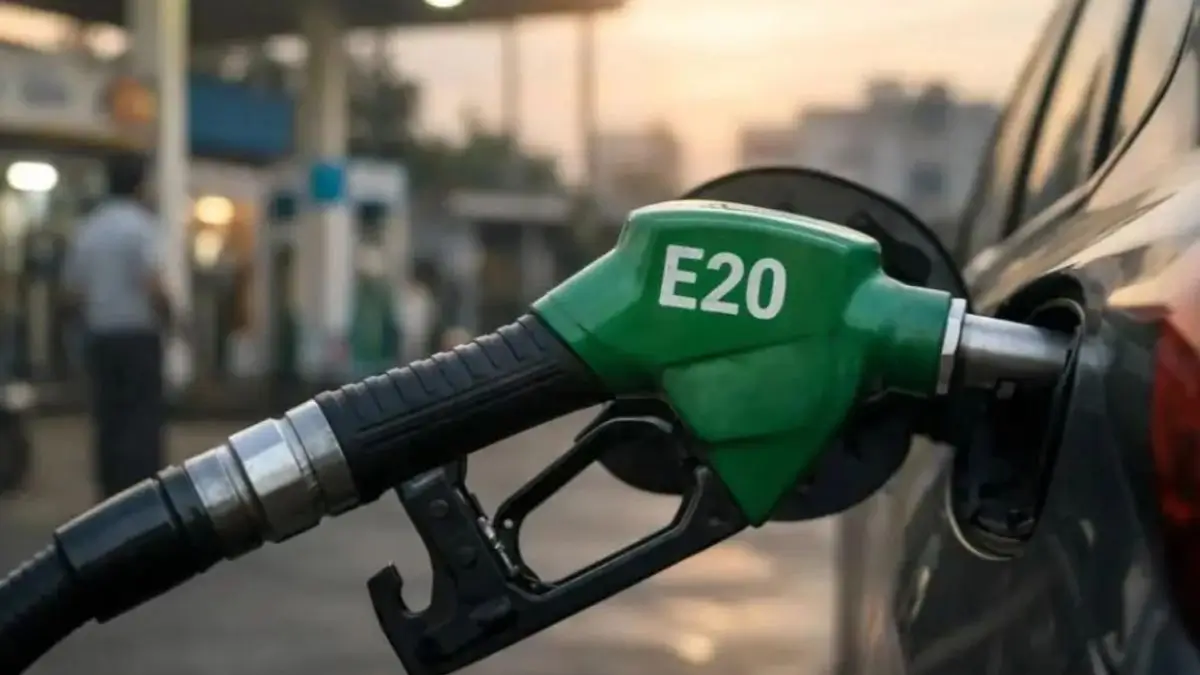
From the April 1st fuel stations across the country are now supplying that petrol which blended with 20% ethanol. As they are implementing from the directives from the Ministry of Petroleum and Natural Gas. With this India has taken important step towards the clean and more sustainable mobility by introduction of E20 petrol nationwide. After this move it aims to reduce pollution, will cut oil imports and also to strengthen energy security.
E20 Petrol Becomes Standard in India: What Has Changed
The central government has made the E20 fuel the standard petrol across all states and Union Territories In India.
The direction has been given to the oil marketing company of India to ensure uniform fuel quality across the nation and also to follow the Bureau of Indian Standards (BIS) norms. And after this supply that E20 fuel consistently nationwide. With this introduction it is compliment the India’s long-term ethanol blending program.
What Is E20 Fuel?
E20 petrol is a blend of the
- 80% petrol
- 20% ethanol which is known as the bip-fuel.
That Ethanol is produced from the different agricultural sources like the,
- Sugarcane
- Maize
- Other grains
Key Characteristics of Ethanol
It has the higher octane rating which is around 95 RON.
Also have the cleaner combustion compared to regular petrol.
And it creates the lower carbon emissions and footprint.
This makes E20 a more environment-friendly fuel option.
How E20 Petrol Affects Your Car
The impact of E20 fuel depends largely on the vehicle type of the individual.
For New Vehicles
Most of the modern vehicles like cars have the compatibility with E20-petrol and they are designed for the upgraded fuel systems.
And this models are also capable of handling the higher ethanol blends without issues.
These vehicles are unlikely to face performance problems.
For Older Vehicles
Older cars users can use E20 but they have to consider such things like they have to face slight drop in fuel efficiency and also the minor changes in engine performance.
India’s Ethanol Blending Programme
India has been gradually increasing ethanol blending in petrol for the lowering the carbon footprint.
- Earlier target: 10% blending (E10)
- Current shift: 20% blending (E20)
The future goal is to make the higher adoption of biofuels and green energy


 NCERT Gets ‘Deemed University’ Status: W...
 India Ranks 3rd Globally in Renewable En...
 CBSE Introduces AI Curriculum On Computa...