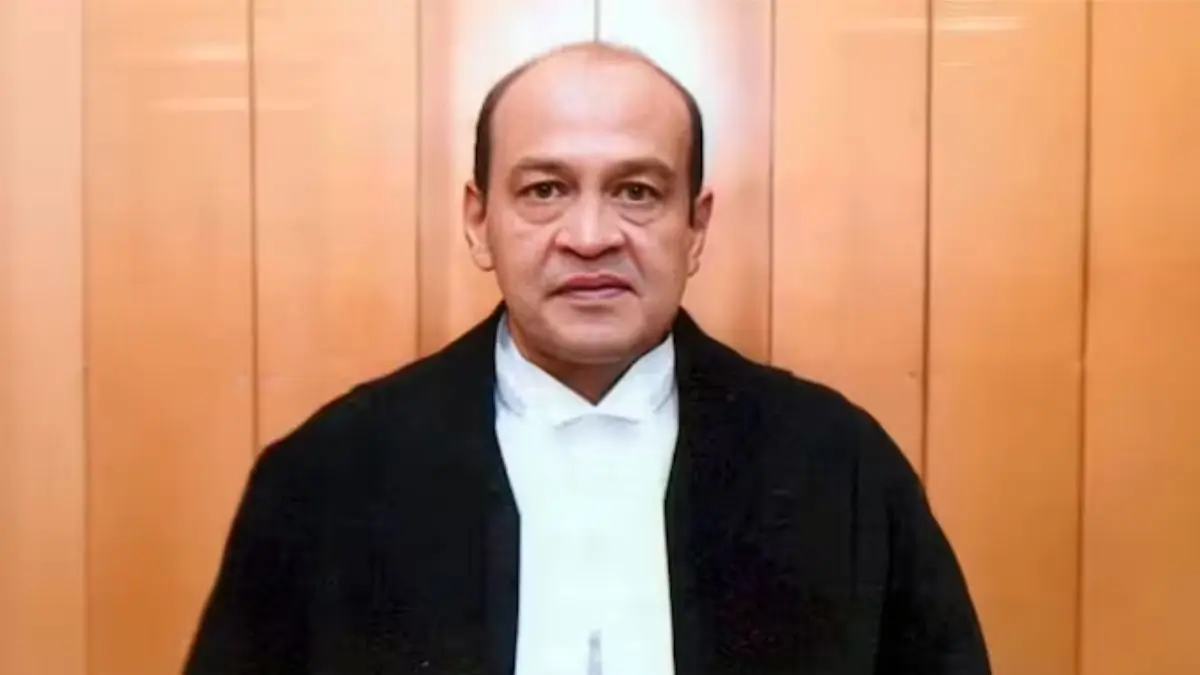
The former Delhi High Court judge Yashwant Varma has resigned from his post after the submitting his resignation to Honorable President of India Droupadi Murmu with the immediate effect. The resignation of the former judge Mr. Verma comes after the controversy linked to the alleged recovery of the burnt cash at his official residence in Delhi. Under the Articles 124 and 218 the judges of the Supreme Court and High Courts can be removed by the President on grounds of “proven misbehaviour” or “incapacity”.
Timeline of Justice Verma Case
- The controversy was began on the 14th of March 2025 when a fire broke out the Justice Varma’s residence in Delhi and burnt cash was found and some questions were raised suddenly after the incident.
- The in-house inquiry was initiated under then the Chief Justice of India Sanjiv Khanna and the three-member panel investigated during that time.
- After reviewing the report the CJI have asked Justice Varma to resign or to face impeachment but when the no immediate resignation was followed the matter was escalated to the President and Prime Minister.
- In the August 2025 Lok Sabha Speaker Om Birla have formally initiated the removal proceedings under the Judges (Inquiry) Act, 1968 and the committee was formed to examine the charges.
- Although Justice Varma was transferred to the Allahabad High Court and he was relieved of the judicial work.
- The Supreme Court later refused to stop the inquiry and stated that proper legal procedures were to be followed and no fundamental rights were violated.
Resignation and Removal of High Court Judges
| Aspect |
Details |
| Resignation |
Judge can submit the resignation letter to the President. |
| Removal |
By President through impeachment process which is same as Supreme Court judges under Article 124(4) |
Procedure for Removal of Judges in India
| Stage/Aspect |
Details |
| Constitutional Provisions |
Under Articles 124 and 218 Constitution of India (CoI) judges of the Supreme Court and High Courts can be removed by the President. |
| Grounds for Removal |
‘Proven misbehaviour’ or ‘incapacity’ – A the definition of this terms are not defined in the constitution. |
| Meaning of Misbehaviour |
It includes the wilful misconduct, corruption, lack of integrity or the moral turpitude (as it is interpreted by the Supreme Court). |
| Meaning of Incapacity |
It refers to the physical or mental conditions that affect the judicial functioning. |
| Definition Status |
The terms ‘proven misbehaviour’ and ‘incapacity’ are not explicitly defined in the Constitution of the India. |
Parliamentary Requirement
| Requirement Type |
Details |
| Type of Resolution |
It must be passed by the both Houses of Parliament. |
| Majority 1 |
Majority of the total membership of the House. |
| Majority 2 (Special Majority) |
Which is not less than two thirds of members present and voting. |
| Condition |
Both the majorities must be achieved in the same session. |
Procedure under the Judges (Inquiry) Act, 1968
| Step |
Details |
| 1. Notice of Motion |
This motion requires the signature of at least 50 Rajya Sabha members or 100 Lok Sabha members. |
| 2. Admission of Motion |
Chairman (Rajya Sabha) or Speaker (Lok Sabha) decide to whether to admit the motion after consultation. |
| 3. Formation of Inquiry Committee |
It is the 3-member committee which is formed consisting of,
- A Supreme Court judge
- A High Court Chief Justice
- A distinguished jurist
|
| 4. Investigation |
This formed committee investigates all the allegations of misbehaviour or incapacity. |
| 5. Committee Report Outcome |
- If the judge is not found guilty the motion isdismissed.
- If the judge found to be guilty the detailed report sent to the parliament.
|
Final Stage
| Parliamentary Approval |
Both House of the parliament shall must pass the resolution with special majority. |
| Final Authority |
The President issues the order for the removal after the Parliamentary approval. |
Question
Q. The correct sequence of removal process is,
A. Parliament → Inquiry → President
B. Motion → Inquiry Committee → Parliament → President
C. President → Motion → Parliament
D. Inquiry → President → Parliament



 Operation HimSetu: Army Completes High R...
 What Is NHAI’s 'Arogya Van' Initiative? ...
 India Withdraws Its Plan to Host COP33 S...











