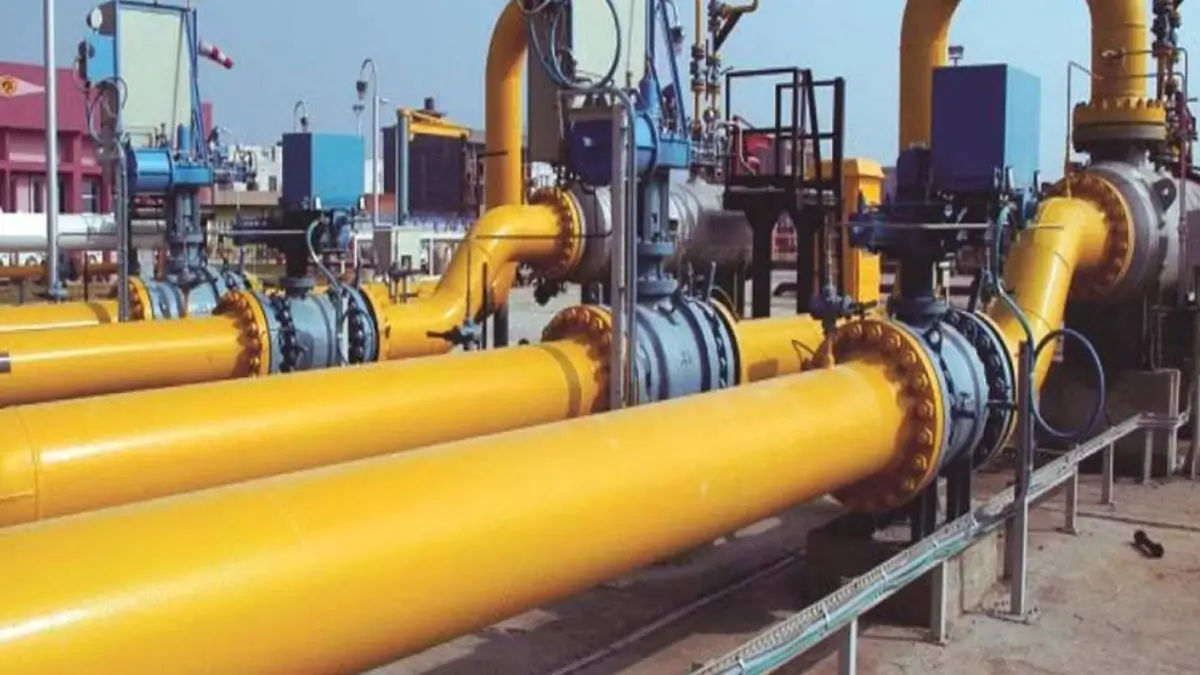
India has achieved a major infrastructure milestone with the completion of a unique natural gas pipeline project. State-owned GAIL (India) Ltd has built a 694-kilometre gas pipeline almost entirely within a narrow 3-metre strip along an expressway in Maharashtra. This first-of-its-kind project demonstrates how transport corridors can also serve as utility corridors under integrated planning.
Why in News?
GAIL has completed the Mumbai-Nagpur Natural Gas Pipeline (MNPL), built largely within a 3-metre-wide corridor along the Samruddhi Mahamarg. The project is being seen as a major success of the PM GatiShakti integrated infrastructure framework.
What Makes the Pipeline Project Unique
- The Mumbai-Nagpur Natural Gas Pipeline stretches 694 km, of which about 675 km (96%) runs inside a utility strip just three metres wide along the Samruddhi Mahamarg expressway.
- Normally, gas pipelines require 20-30 metres of working space, but here GAIL installed a 24-inch high-capacity pipeline within the width of a footpath.
- This tight constraint fundamentally shaped engineering design, construction sequencing, and coordination with expressway works handled by MSRDC.
Engineering Challenges and Innovations
- The most difficult section lay in the Western Ghats, particularly near Fugale hill, where elevation differences exceeded 200 metres.
- Rocky terrain, dense forests, and heavy monsoon rains posed serious challenges.
- Engineers used a hybrid method combining horizontal directional drilling (HDD) with a thruster system to pull nearly one kilometre of pipeline through steep terrain.
- Slope stabilization, dewatering, and protective measures were deployed during monsoons, reflecting high safety standards and disciplined execution under extreme conditions.
Coordination and Regulatory Hurdles
- The pipeline received regulatory approval in May 2020 but faced delays due to the pandemic and forest clearances across 10 districts covering about 56 km, which were granted only in April 2023.
- GAIL maintained progress by adjusting work sequences and coordinating daily with 16 expressway packages and three pipeline sections.
- This joint working model between GAIL and MSRDC is now seen as a reference framework for future corridor-based infrastructure projects in India.
Economic and Energy Impact
- The MNPL has a capacity of about 16.5 million standard cubic metres per day with bi-directional flow.
- It will enable city gas distribution in 16 districts, support piped natural gas for around 95 lakh households, and supply fuel to over 1,700 CNG stations.
- The pipeline will boost sectors such as power, fertilisers, chemicals, and manufacturing, while promoting cleaner fuel use and encouraging small and medium industries along the Samruddhi Mahamarg corridor.
Key Summary at a Glance
| Key Point | Details |
| Why in News? | GAIL completed 694-km expressway gas pipeline |
| Project | Mumbai-Nagpur Natural Gas Pipeline |
| Corridor Width | 3 metres |
| Expressway | Samruddhi Mahamarg |
| Capacity | 16.5 MMSCMD |
| Significance | PM GatiShakti infrastructure model |
Question
Q. The Mumbai–Nagpur Natural Gas Pipeline project was executed by which organization?
A. ONGC
B. IOCL
C. GAIL (India) Ltd
D. NTPC


 India Withdraws Its Plan to Host COP33 S...
 IIM Rohtak Wins BIMTECH's 'Hermes' Dialo...
 Gurgaon Tops the List of India's Most Po...