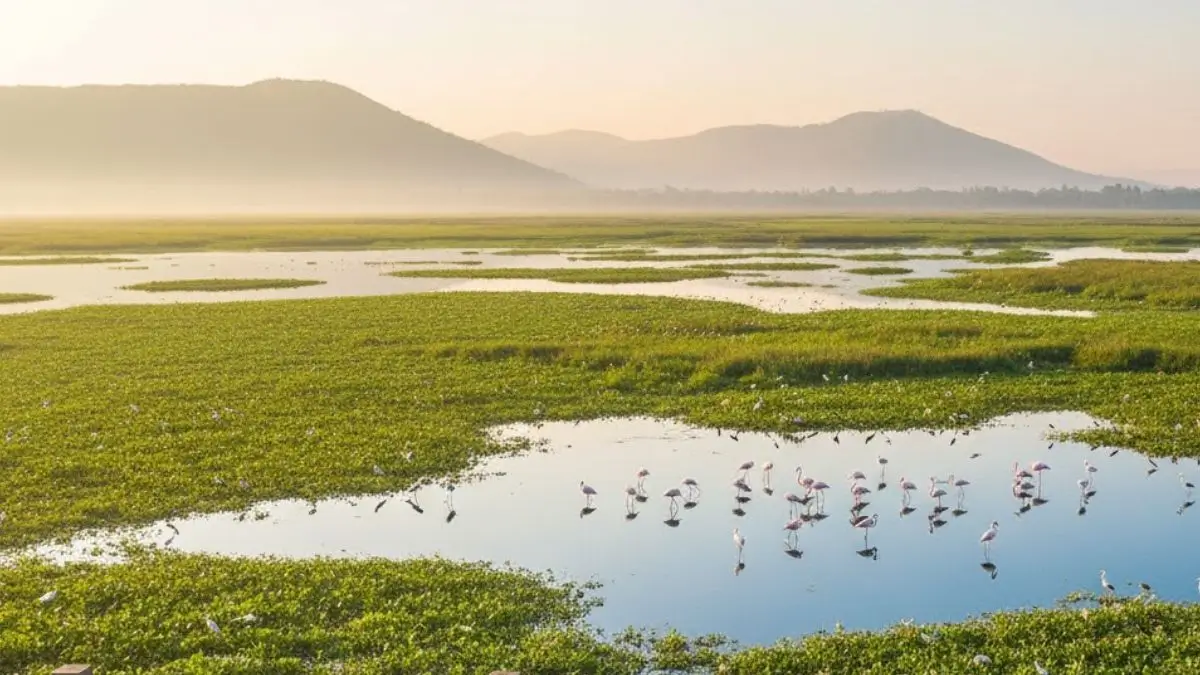
Gogabeel Lake, located in the Katihar district of Bihar, has been officially designated a Ramsar site, gaining global recognition as a wetland of international importance. With this, India adds yet another name to its growing list of protected wetlands under the Ramsar Convention, strengthening its commitment to wetland conservation and biodiversity protection.
Where is Gogabeel Lake?
Situated in the trans-Gangetic plains, Gogabeel is a unique ox-bow lake—a naturally formed wetland created by the meandering course of rivers.
Geographical highlights,
- Flanked by River Mahananda in the northeast and River Ganga in the south
- Lies in the Katihar district of Bihar
- First declared as Bihar’s Community Reserve, reflecting strong community involvement in its preservation
This positioning in a riverine landscape makes Gogabeel a critical hydrological and ecological buffer zone.
Ecological Richness: Flora and Fauna
Flora
- The region around Gogabeel is dominated by tropical dry deciduous forests, supporting plant biodiversity and maintaining soil health.
Fauna
Gogabeel serves as,
- A wintering ground for migratory birds, making it an important stopover on migratory flyways
- Habitat for species of global conservation concern, such as:
- Smooth Coated Otter (Lutrogale perspicillata) – listed as Vulnerable
- Helicopter Catfish (Wallago attu) – a threatened freshwater fish that breeds in the lake
This makes the lake not just a local treasure but an international biodiversity hotspot deserving of protection and sustainable management.
Cultural and Social Significance
Gogabeel is also a cultural landmark, embedded in the traditions of local communities who celebrate festivals like,
- Sirva
- Adra
- Chhath
These rituals, often performed near or on the lake, underscore the spiritual connection between people and wetlands, supporting the Ramsar philosophy of “wise use”—a balance between conservation and human need.
Ramsar Convention: A Global Wetland Treaty
The Ramsar Convention, signed in 1971 in Iran, is the world’s foremost international agreement focused on wetland conservation and sustainable use.
Its goals include,
- Protecting wetland ecosystems globally
- Promoting international cooperation
- Supporting the role of wetlands in biodiversity, water security, and climate resilience
India is a signatory to the Convention and now boasts over 80 Ramsar sites, with Gogabeel being the latest addition in 2025.
Key Facts to Remember
- Location: Katihar district, Bihar
- Type: Ox-bow lake
- Rivers nearby: Ganga (South), Mahananda (North-East)
- Declared as: Bihar’s first Community Reserve
- Fauna: Smooth Coated Otter, Wallago attu
- Ramsar Status: Declared in 2025
- Cultural ties: Celebrations of Sirva, Adra, and Chhath


 After 10 Years, Great Indian Bustard Chi...
 Jewar Airport Opens: 10 Key Facts About ...
 India’s Unemployment Rate Falls to 6.5% ...