
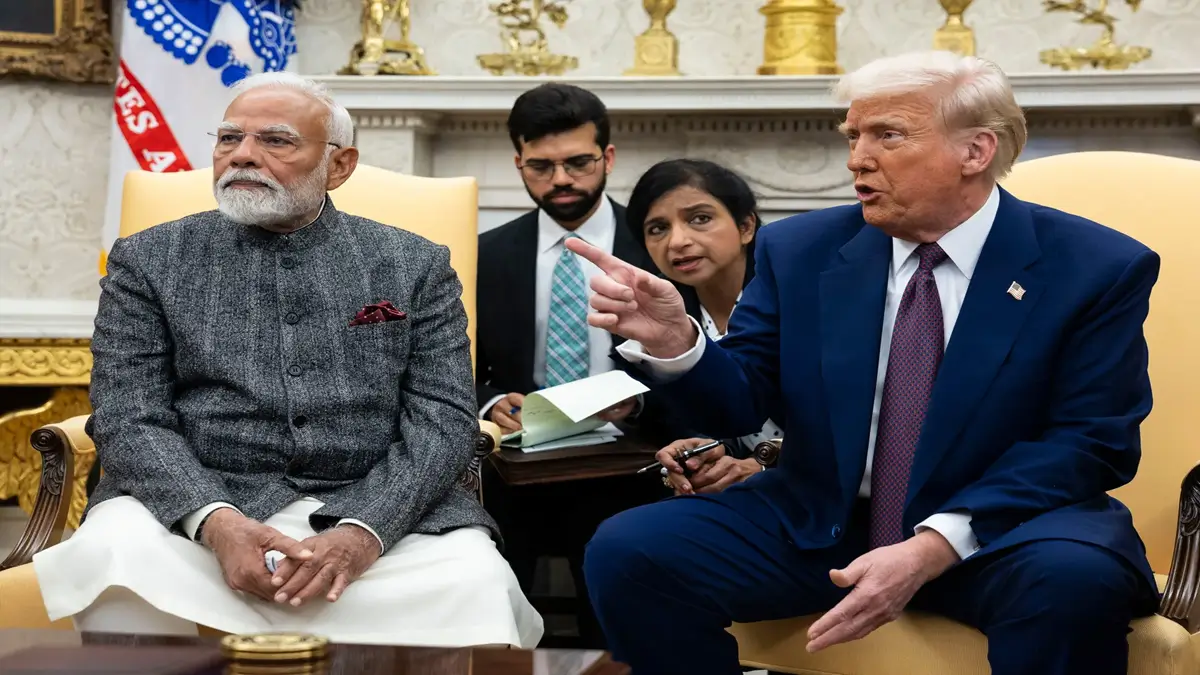
In a positive outlook for the Indian economy, Goldman Sachs has upgraded India’s GDP growth forecast for Calendar Year 2026 (CY26). In February 2026, the global investment bank raised its estimate by 20 basis points, from 6.7% to 6.9%. The upgrade follows the conclusion of the India–USA trade deal, under which reciprocal tariffs on Indian goods exported to the United States of America were reduced from 25% to 18%. This development is important as it signals improving external conditions and stronger growth prospects for India.
Background: India’s Growth Outlook and Global Trade
India is among the fastest-growing major economies in the world. However, global trade tensions, high interest rates, and geopolitical uncertainties have posed challenges in recent years. Trade relations with the United States are particularly important, as the US is one of India’s largest trading partners.
The latest trade deal between India and the USA is seen as a step toward greater trade stability, reducing uncertainty for exporters and investors. Against this backdrop, Goldman Sachs reassessed India’s medium-term growth outlook.
Basis of the Revised GDP Forecast
Goldman Sachs stated that its revised estimate is based on India’s exposure to US demand and improved trade conditions. According to the forecast:
- India’s goods export exposure to US final demand is around 4% of GDP.
- The export demand elasticity is estimated at 0.7, meaning exports respond positively to improved demand and lower tariffs.
The reduction in tariffs is expected to directly support Indian exports and indirectly boost overall economic activity.
Impact on Investment and Capital Expenditure
One of the key benefits of the trade deal is the reduction in trade-policy uncertainty. Goldman Sachs noted that lower uncertainty is likely to:
- Improve private investment sentiment
- Support a recovery in capital expenditure (capex)
The investment bank expects a stronger capex recovery in the second half of CY26, as companies gain confidence to expand capacity and undertake new projects.
External Sector and Current Account Deficit
Lower tariffs on Indian goods are also expected to strengthen India’s external balance. Goldman Sachs projects that:
- The Current Account Deficit (CAD) could narrow by around 0.25% of GDP
- CAD is likely to reach nearly 0.8% of GDP in CY26
A lower CAD improves macroeconomic stability and reduces dependence on volatile capital flows.
Currency and Capital Flows
Easing trade tensions between India and the USA may also have a positive impact on financial markets. Goldman Sachs noted that improved trade conditions could:
- Support foreign capital inflows
- Reduce pressure on the Indian Rupee (INR)
Stable capital inflows and a resilient currency are crucial for managing inflation and maintaining investor confidence.
India–USA Trade Trends
India’s bilateral goods trade surplus with the USA has shown strong growth over the past decade:
- Around USD 20 billion in CY15
- Nearly USD 40 billion in CY25
This expansion has been driven mainly by key export sectors such as:
- Electronics
- Pharmaceuticals
- Textiles
These sectors are expected to benefit the most from the tariff reduction under the new trade deal.
Significance of the Forecast Upgrade
The upward revision by Goldman Sachs reflects growing optimism about India’s economic fundamentals. It highlights the importance of stable trade relations, export growth, and private investment in sustaining high growth rates.
For policymakers, the forecast underscores the role of trade agreements and global integration in supporting domestic economic momentum.


 World Bank Projects India to Drive South...
 RBI MPC Meeting 2026, Kept Repo Rates Un...
 India's Major Ports Handle Record 915.17...











