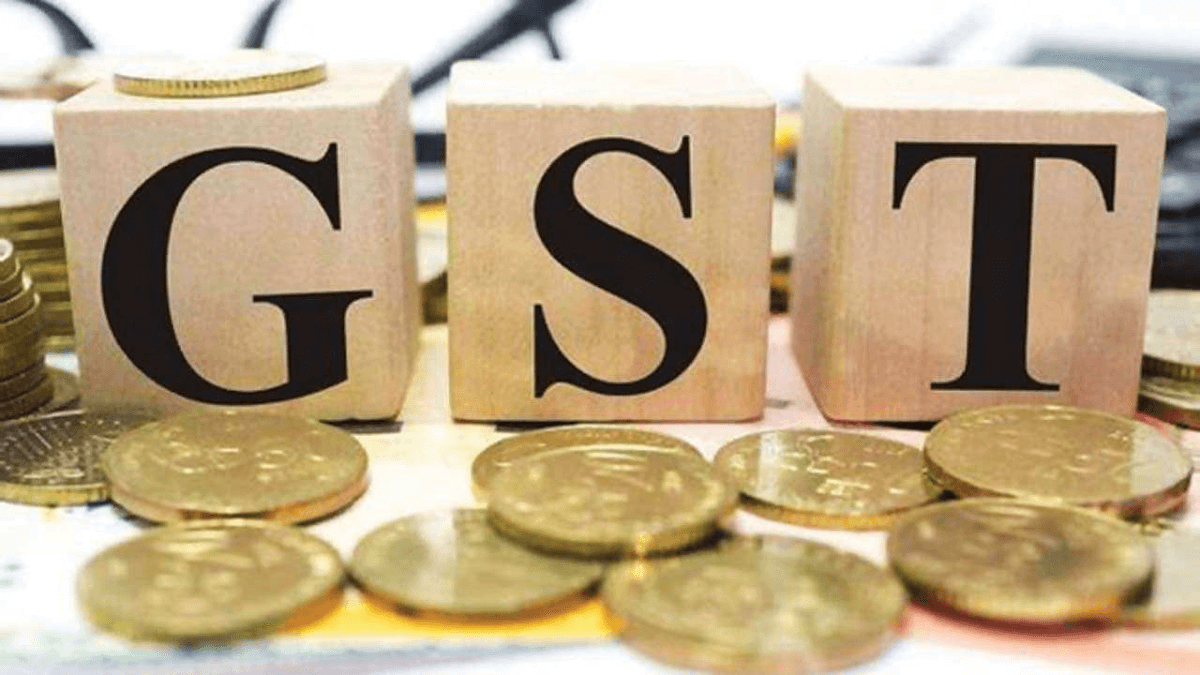
The Goods and Services Tax (GST) is one of the biggest tax reforms in India’s history. It replaced multiple indirect taxes with a single, unified tax, making it easier for businesses and consumers. To introduce GST, several constitutional changes were made, leading to the passing of the 101st Constitutional Amendment Act, 2016. This Act gave both the Centre and the States the power to make laws related to GST and set up the GST Council to oversee its functioning.
Constitutional Journey of GST
The journey of Goods and Services Tax (GST) in India began with the need for one simple tax system. To make this possible, the Constitution was amended, and GST was introduced as a major tax reform.
The 122nd Constitutional Amendment Bill, 2014
- To bring GST into force, the 122nd Amendment Bill was introduced in Parliament in 2014.
- The Lok Sabha passed the Bill in May 2015.
- The Rajya Sabha approved it with changes on 3rd August 2016, and the Lok Sabha agreed to those changes on 8th August 2016.
- Over 15 states approved the Bill, and finally, it received the President’s assent on 8th September 2016.
- This led to the enactment of the 101st Constitutional Amendment Act, 2016.
Creation of the GST Council
According to Article 279A of the Constitution, the GST Council had to be formed within 60 days of the amendment coming into force.
- The notification was issued on 10th September 2016, and Article 279A came into effect from 12th September 2016.
- The Union Cabinet approved the formation of the GST Council and its Secretariat, headquartered in New Delhi.
Composition of the GST Council (Article 279A(2))
- Union Finance Minister (Chairperson).
- Union Minister of State in charge of Finance/Revenue.
- Finance/Taxation Ministers from each State.
- In case of emergency under Article 356, a person nominated by the Governor.
Functions of the GST Council
As per Article 279A(4), the GST Council recommends:
- Which goods and services should be taxed or exempted.
- Model GST laws and principles for tax collection.
- Place of supply rules.
- GST rates and thresholds.
- Special rates for natural calamities.
- Provisions for special category states.
Decision-Making in the Council
Generally, decisions are made through consensus. If voting is required:
- The Centre’s vote = 1/3rd weightage.
- All States’ votes together = 2/3rd weightage.
- A proposal passes if 75% or more weighted votes support it.
Key Decisions of the GST Council
Since its first meeting on 22nd–23rd September 2016, the Council has taken many important decisions:
- e-Way Bill System: Introduced for self-reporting of goods movement.
- Real Estate Sector: GST on affordable housing cut to 1% and non-affordable to 5%.
- e-Invoicing System: Mandatory for firms with turnover of ₹5 crore+ from 1st August 2023.
- Green Energy: GST on electric vehicles reduced from 12% to 5%; exemption for electric buses with capacity over 12.
- QRMP Scheme: Quarterly filing, monthly payment for small businesses.
- COVID-19 Relief: GST reduction on COVID-related items.
- Rate Rationalization: Number of items under 28% GST slab reduced from 227 to just 35.
- Trade Facilitation: Simplified refund rules, reduced late fees, and introduced new payment modes.
- GST Tribunal (GSTAT): Approved for resolving tax disputes.
- Amnesty Schemes: Relief for late appeals and demand notices without fraud.
- Digital Taxation: Biometric Aadhaar verification and pilot project for B2C e-invoicing.
- Latest (55th Meeting): No GST on voucher transactions and exemption of GST on gene therapy.
Impact of GST and the GST Council
- GST has created a unified national market by removing multiple state-level taxes.
- Businesses now face simpler compliance procedures with digital invoicing and online returns.
- The Council has shown flexibility by making frequent changes based on feedback and economic needs.
- It reflects cooperative federalism, as both Centre and States take part in decision-making.


 Which Country is the Largest Exporter of...
 GK Quiz on Good Friday 2026, Questions a...
 Which is the largest Coriander Producing...