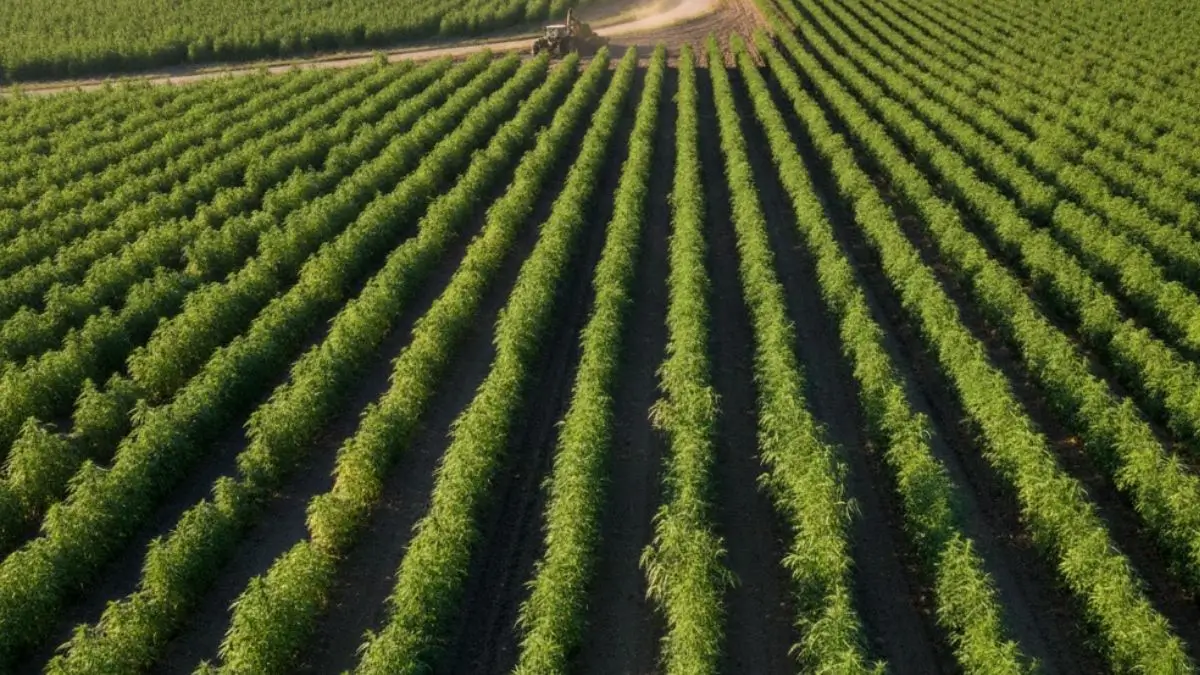
A policy shift aimed at transforming its rural economy and promoting sustainability Himachal Pradesh has initiated the cultivation of industrial hemp. Which is marking a decisive move from illicit associations to regulated economic utilization. Chief Minister Sukhvinder Sukhu launched the ‘Green to Gold’ initiative envisioning hemp as a key driver in achieving a self-reliant Himachal Pradesh by 2027 and positioning the state as a leader in the bio-economy.
From Illicit Crop to Industrial Resource
For decades cannabis grew wild across valleys such as Kullu, Mandi, and Chamba, often linked with the illegal drug trade. Under the new policy framework, this narrative is set to change decisively. The state government has identified industrial hemp as a versatile and high-value industrial asset, with applications spanning,
- Medicinal uses (pain management and inflammation control)
- Textile and apparel industry
- Paper and packaging
- Cosmetics and personal care
- Biofuel and renewable energy
The shift aims to replace hemp’s long-standing “narcotic image” with a “resource identity”, rooted in science, regulation, and sustainability.
Strict Regulation
A central pillar of Himachal Pradesh’s policy is strict regulation. The Chief Minister clarified that all industrial hemp cultivated in the state must maintain a tetrahydrocannabinol (THC) content below 0.3%.
This internationally recognised scientific threshold ensures that,
- The crop is non intoxicating
- It is unsuitable for drug misuse
- Its fibre and seed quality remain optimal for industrial use
Such safeguards aim to balance economic opportunity with social and legal responsibility.
Pilot Project and Farmer Support
Following the Cabinet decision of January 24, the state is preparing to roll out a pilot project for controlled cultivation. This move comes at a time when many farmers are abandoning traditional crops due to severe wildlife damage, particularly from monkeys which has reduced farm incomes in hill regions.
Industrial hemp offers an attractive alternative because it is,
- Climate-resilient
- Requires around 50% less water than cotton
- Thrives in marginal and degraded soils
These features make it especially suitable for Himachal’s hill and rural economies.
Revenue Potential and Economic Impact
The state government projects that once fully scaled, regulated hemp cultivation could generate annual revenues between ₹1,000 crore and ₹2,000 crore. By legalizing and scientifically regulating production, Himachal Pradesh aims to,
- Capture markets currently dominated by the black economy
- Reduce dependence on international imports
- Supply the rapidly expanding pharmaceutical and wellness sectors
Beyond revenue, the initiative promises to create new livelihood opportunities for farmers, startups, and rural youth.
Hemp Hub Vision and Green Construction
Under the broader “Hemp Hub” vision Himachal Pradesh aims to become a manufacturing centre for,
- Hempcrete – a carbon-negative, eco-friendly construction material
- Specialiજed textiles
- Ayurvedic and herbal medicines
Hempcrete, in particular, is gaining global attention for its low carbon footprint, insulation properties, and sustainability, aligning with India’s climate commitments.
Key Takeaways
- Himachal Pradesh legalized regulated cultivation of industrial hemp.
- Initiative launched under ‘Green to Gold’ vision by CM Sukhvinder Sukhu.
- THC content capped at 0.3% to prevent misuse.
- Hemp applications include textiles, bioplastics, medicine, cosmetics, biofuel, and hempcrete.
- Projected revenue: ₹1,000–2,000 crore annually when scaled.
- Research led by CSK HPKV Palampur and Dr Y.S. Parmar University, Nauni.
Question
Q. The industrial hemp initiative in Himachal Pradesh is called:
A. Green Revolution 2.0
B. Green to Gold
C. Hemp for Hills
D. Bio-Economy Vision 2027


 Gujarat Becomes Second State To Passing ...
 Rekha Gupta Unveils Delhi’s Green Budget...
 GHADC Amendment 2026 Explained: Only ST ...