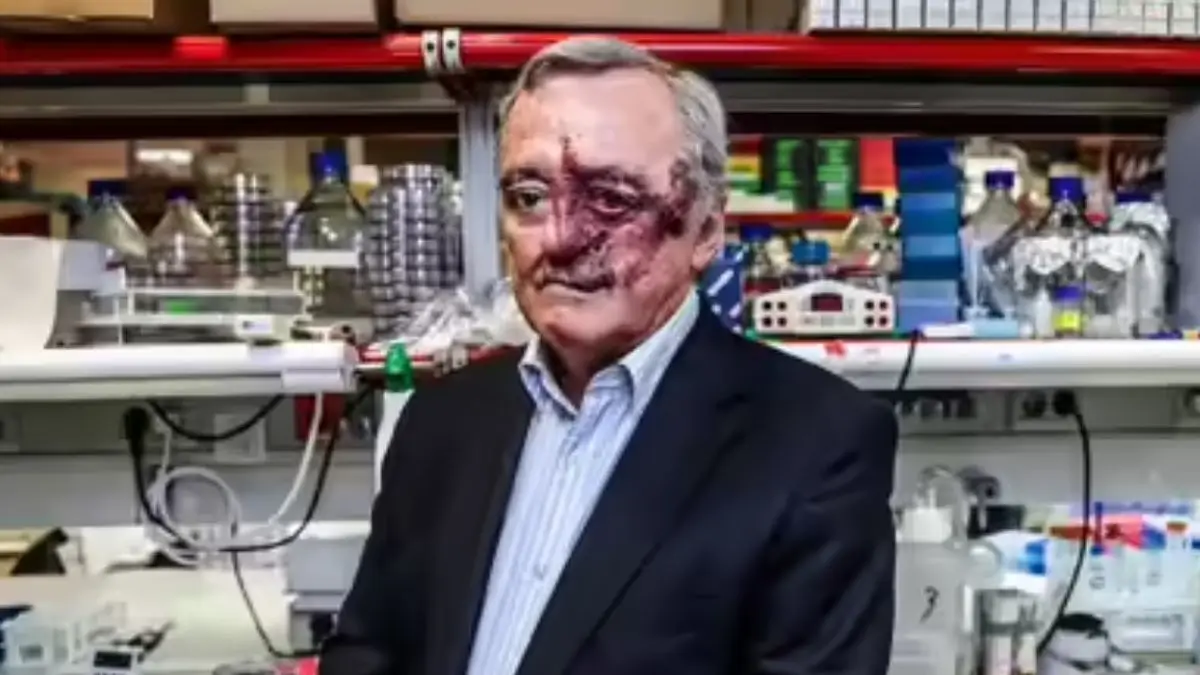
A research team reported that they had completely eliminated the most aggressive form of pancreatic cancer in laboratory mice, with no tumour relapse. The study, led by veteran cancer scientist Mariano Barbacid, is being seen as one of the most promising developments in pancreatic cancer research in decades. But while the findings inspire hope, scientists urge caution before calling it a cure. A Spanish research team has reported that a new triple-drug therapy completely eliminated pancreatic tumours in mice, with no relapse observed, offering fresh hope against one of the deadliest cancers.
Understanding Pancreatic Cancer: Why It Is So Deadly
- Pancreatic cancer, especially pancreatic ductal adenocarcinoma, is among the deadliest malignancies worldwide.
- It is usually detected at a late stage and is highly resistant to conventional treatments.
- One major reason is its dense tumour microenvironment, which blocks drug penetration.
- Additionally, pancreatic cancer cells are extremely adaptable, quickly bypassing single-drug therapies.
- This is why survival rates remain very low compared to most other cancers.
What Is the Triple-Drug Therapy?
- The breakthrough therapy developed at Spain’s Spanish National Cancer Research Centre does not rely on a single target.
- Instead, it uses three drugs simultaneously to block multiple survival pathways inside cancer cells.
- This multi-pronged approach prevents tumour cells from “rewiring” themselves, a common reason why treatments fail.
- According to the researchers, shutting down several pathways at once leaves the cancer with no escape mechanism.
What Did the Laboratory Experiments Show?
- In controlled laboratory studies, mice with advanced pancreatic tumours were treated with the triple-drug combination.
- The results were striking. Tumours were completely eliminated, and during long-term follow-up, no tumour regrowth was observed.
- Equally important, the animals showed minimal side effects, addressing one of the biggest challenges in cancer therapy toxicity.
- Independent experts note that such durable, relapse-free responses are extremely rare in pancreatic cancer models.
Why the Findings Are Scientifically Important
- The study was published in the prestigious journal Proceedings of the National Academy of Sciences, following rigorous peer review.
- Reviewers highlighted both the durability of the response and the unusually low toxicity.
- These factors make the results stand out from earlier experimental therapies.
- For researchers, this suggests that coordinated inhibition of multiple cancer pathways may finally overcome pancreatic cancer’s resistance to treatment.
Who Is Mariano Barbacid
- Mariano Barbacid is one of Europe’s most respected cancer researchers.
- In the early 1980s, he helped identify the first human oncogene, a discovery that transformed cancer biology.
- For decades, his work has focused on KRAS-driven tumours, which account for about 90 per cent of pancreatic cancers.
- His long-standing argument has been clear: pancreatic cancer cannot be defeated with a single-drug strategy.
- This background gives added credibility to the current findings.
Funding, Credibility and Scientific Safeguards
- The research was supported by Fundación CRIS Contra el Cáncer, known for funding high-risk, high-impact cancer research.
- CNIO officials have emphasized that the study followed established experimental protocols and underwent independent peer review.
- Amid online speculation, they clarified that the findings were not rushed and that no scientific safeguards were bypassed, reinforcing the credibility of the work.
Key Summary at a Glance
| Aspect | Details |
| Why in News? | Triple-drug therapy eliminates pancreatic cancer in mice |
| Lead Scientist | Mariano Barbacid |
| Institution | Spanish National Cancer Research Centre |
| Journal | Proceedings of the National Academy of Sciences |
| Key Outcome | No tumour relapse, low toxicity |
Question
Q. The recent pancreatic cancer breakthrough involved which approach?
A. Gene editing
B. Immunotherapy alone
C. Triple-drug combination therapy
D. Radiation-only treatment


 What Is Mission Mitra? ISRO’s New Experi...
 NASA's Artemis II Mission Begins: First ...
 India's First Quantum Computer to be Lau...