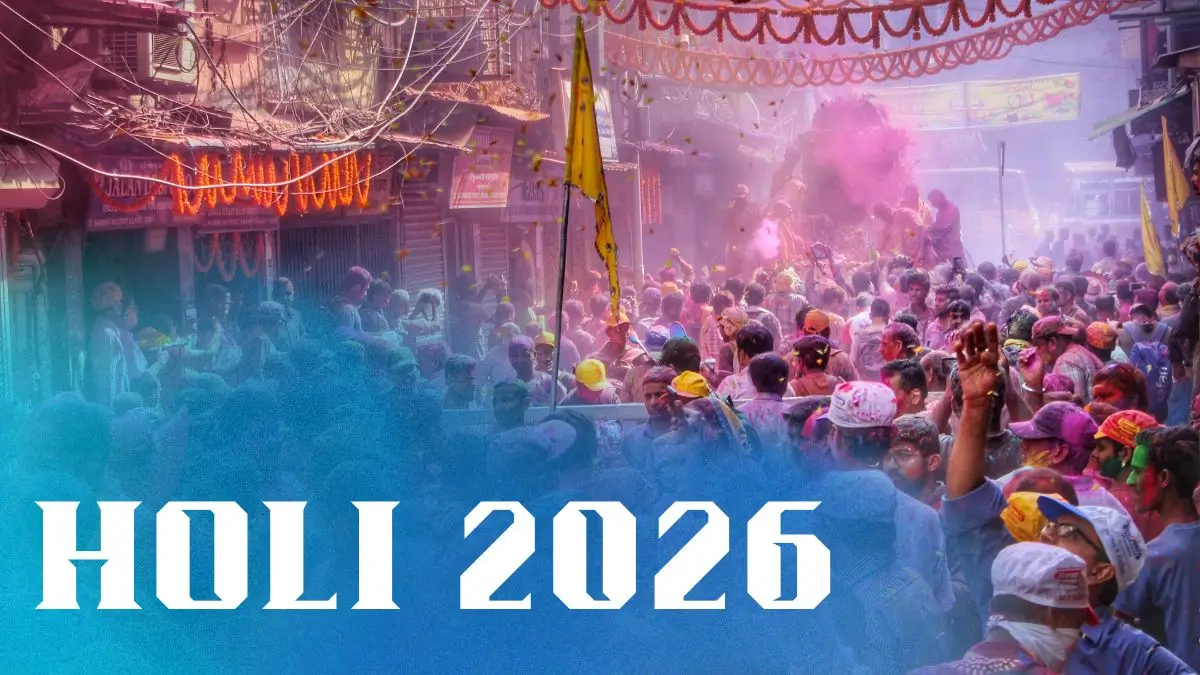
Holi 2026 will be celebrated on March 4, 2026 which is marking the arrival of spring and the victory of good over evil. Popularly known as the Festival of Colours and Holi is one of India’s most vibrant and widely celebrated festivals. People gather to apply colours, enjoy sweets like gujiya, sing festive songs and celebrate togetherness. Beyond the playful atmosphere, Holi carries deep spiritual, cultural, and seasonal significance rooted in ancient Indian traditions.
Historical Origins of Holi
- Holi is one of the oldest festivals in India, with references found in ancient Sanskrit texts such as the Jaimini’s Purva Mimamsa Sutras and Kathaka Grhya Sutras.
- It is also mentioned in the Narada Purana and Bhavishya Purana.
- The 7th-century Sanskrit drama Ratnavali, written by King Harsha.
- Which describes Holi celebrations, showing that the Festival of Colours has been celebrated for centuries.
- The long historical continuity of Holi reflects its deep roots in Indian civilisation and cultural practices.
The Story and Significance of Holi
Victory of Good Over Evil
- The most famous legend associated with Holi is the story of Prahlada and Holika.
- Prahlada, a devotee of Lord Vishnu, survived a fire set by the demoness Holika due to his unwavering faith.
- Holika was burned instead.
- This event symbolizes the triumph of righteousness over evil, which is celebrated during Holika Dahan.
Celebration of Divine Love
- Holi also celebrates the playful love between Lord Krishna and Radha.
- The tradition of applying colours is believed to originate from Krishna playfully colouring Radha and the gopis.
Seasonal Transition
- Holi marks the end of winter and the arrival of spring.
- Blooming flowers and harvest preparations make it a time of renewal, prosperity, and joy.
Rituals and Celebrations of Holi
1. Holika Dahan (Chhoti Holi)
- On the eve of Holi, bonfires are lit in a ritual known as Holika Dahan.
- Families and communities gather around the fire and symbolizing the burning away of negativity and evil forces.
2. Rangwali Holi (Dhulandi)
- The next day is the main celebration, known as Rangwali Holi.
- People apply gulal (coloured powder), splash coloured water, dance to music and enjoy festive foods such as gujiya and traditional drinks.
Regional Variations of Holi
Barsana – Lathmar Holi
In Barsana and Nandgaon, women playfully hit men with sticks (lathis), recreating Krishna’s legendary teasing of Radha. This unique celebration is known as Lathmar Holi.
West Bengal – Dol Jatra
In West Bengal and Odisha, Holi is celebrated as Dol Jatra, where idols of Krishna and Radha are carried in decorated processions with devotional songs.
Goa – Shigmo
In Goa, Shigmo includes folk dances, street performances, and cultural parades reflecting regional traditions.
Holi Beyond India
The Festival of Colours has become a global celebration.
- In the United States and Canada, large community events attract diverse participants.
- In the United Kingdom, Holi festivals combine traditional practices with modern music.
- In Australia and New Zealand, public park celebrations are common.
- The Indian diaspora has played a key role in spreading Holi worldwide.
Cultural Significance of Holi
Holi promotes,
- Social harmony – Breaking social barriers and uniting people.
- Forgiveness and renewal – A chance to mend relationships.
- Joy and positivity – Encouraging laughter and celebration.
- The festival goes beyond colours; it strengthens community bonds.
Precautions for a Safe Holi 2026
To ensure responsible celebration,
- Use eco-friendly and natural colours.
- Practice water conservation.
- Respect personal boundaries and consent.
- Celebrating responsibly preserves the spirit of Holi for future generations.


 International Day for the Right to Truth...
 World TB Day 2026: Date, Theme, History,...
 World Meteorological Day 2026: How Weath...