
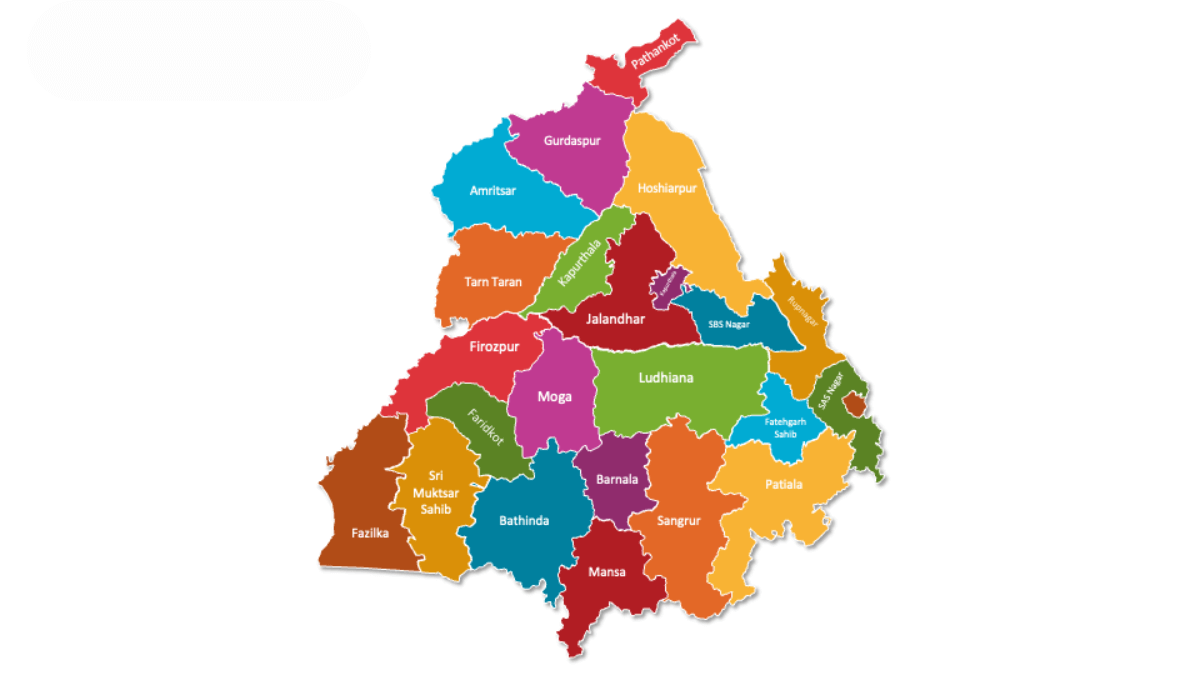
Punjab, a vibrant state in northern India, is known for its fertile lands, rich history, colorful festivals, and warm hospitality. To manage its administration smoothly, the state is divided into smaller regions called districts. Each district has its own unique culture, traditions, and local governance system. Understanding the number of districts in Punjab is important for students, travelers, and anyone interested in India’s geography and administration.
An Overview of Punjab
Punjab is a state in northwestern India, sharing borders with Himachal Pradesh, Haryana, Rajasthan, Jammu and Kashmir, and also Pakistan’s Punjab province. Covering about 50,362 square kilometers, it has 23 districts and a population of over 27 million. Chandigarh serves as its capital. Punjabi is the official language, and Sikhs and Hindus are the main communities. The rivers Sutlej, Beas, and Ravi flow through the state.
Number of Districts in Punjab
The Indian state of Punjab is divided into 23 districts, which help in managing its administration and development. The newest district, Malerkotla, was created in 2021 after being separated from Sangrur. Each district has its own local governance and cultural identity, making Punjab a state rich in diversity and regional importance.
List of Districts of Punjab
Punjab, the land of rich culture and history, is divided into 23 districts for better administration and governance. Each district has its own unique traditions, geography, and importance, together reflecting the state’s diversity and vibrant identity.
Let’s take a look at the complete list:
| S. No. | District | Formation Year | Area (in sq. km) | Population (2011) |
| 1. | Amritsar | 1947 | 2,647 | 2,490,891 |
| 2. | Barnala | 1983 | 1,410 | 596,294 |
| 3. | Bathinda | 1947 | 3,385 | 1,388,859 |
| 4. | Faridkot | 1947 | 1,469 | 618,008 |
| 5. | Fatehgarh Sahib | 1993 | 1,180 | 599,814 |
| 6. | Firozpur | 1838 | 2,190 | 965,337 |
| 7. | Fazilka | 2011 | 1,582 | 888,503 |
| 8. | Gurdaspur | 1947 | 2,635 | 2,299,039 |
| 9. | Hoshiarpur | 1846 | 3,397 | 1,584,598 |
| 10. | Jalandhar | 1947 | 2,297 | 2,181,505 |
| 11. | Kapurthala | 1947 | 1,656 | 809,313 |
| 12. | Ludhiana | 1947 | 3,746 | 3,467,783 |
| 13. | Mansa | 1992 | 887 | 818,141 |
| 14. | Moga | 1972 | 1,678 | 998,750 |
| 15. | Muktsar Sahib | 1995 | 2,613 | 603,756 |
| 16. | Pathankot | 1972 | 588 | 550,200 |
| 17. | Patiala | 1947 | 5,093 | 2,820,071 |
| 18. | Rupnagar | 1995 | 1,258 | 955,442 |
| 19. | Sahibzada Ajit Singh Nagar (Mohali) | 1996 | 1,093 | 998,467 |
| 20. | Sangrur | 1947 | 3,646 | 2,486,813 |
| 21. | Shahid Bhagat Singh Nagar (Nawanshahr) | 1995 | 1,221 | 881,395 |
| 22. | Tarn Taran | 1947 | 2,473 | 1,150,038 |
| 23. | Malerkotla | 2021 | 838 | N/A |


 Which is the Most Consumed Beverage in t...
 Which is the Only Continent with No Tree...
 Which River is known as the National Riv...











