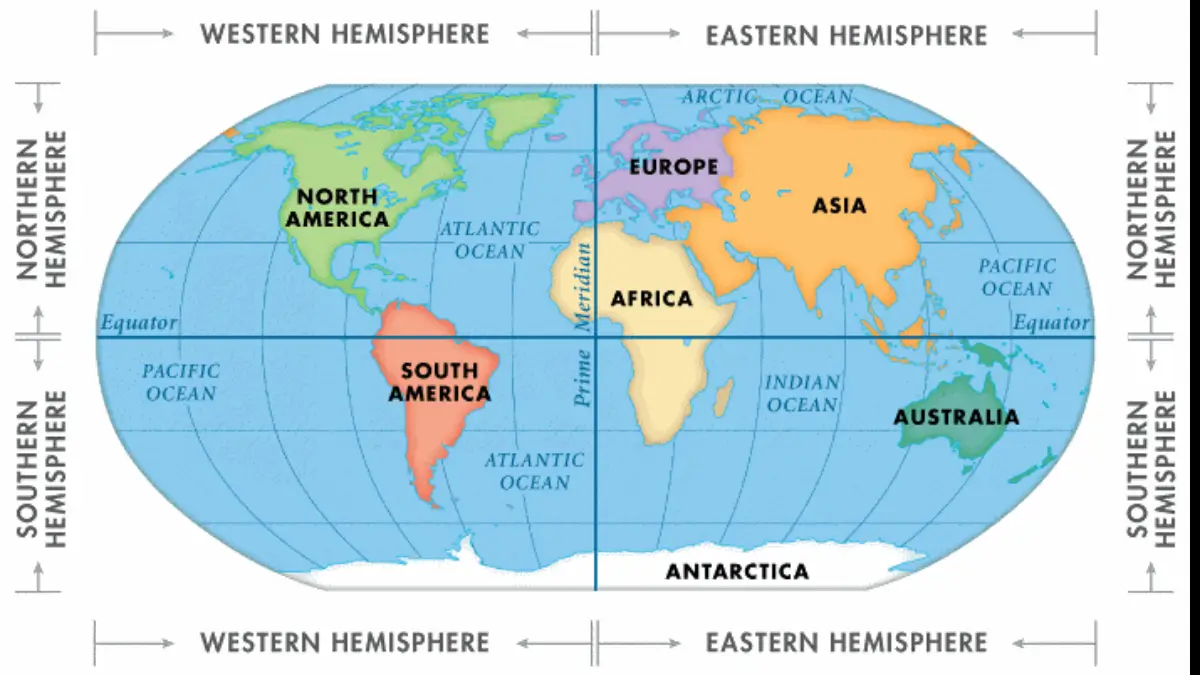
India’s position on the globe plays an important role in shaping its climate, seasons, daylight hours, and time zone. Understanding where the country lies on Earth helps explain why different regions experience varied temperatures and weather patterns. It also helps us learn how India is placed in relation to other countries and continents. Knowing its hemispheres makes this geographical concept simple and clear.
India’s Hemispheric Location
India is located in both the Northern Hemisphere and the Eastern Hemisphere. The whole country lies above the Equator and to the east of the Prime Meridian. Because of this position, India experiences distinct seasons, varied climates, and an early time zone. Its location also influences sunlight patterns, weather changes, and the movement of monsoon winds across different parts of the country.
Why India Falls in Two Hemispheres?
India’s placement can be understood through its latitudes and longitudes. It stretches across several degrees northward and across many degrees eastward. Because of these coordinates, India falls fully inside the Northern part of the Earth and completely inside the Eastern section. This position influences how India receives sunlight, when its seasons begin, and how its time zone is fixed.
How India’s Location Affects its Geography?
India’s hemispheric position helps create wide differences in weather from one region to another. Areas in the north become cooler during winter, while southern regions stay warm for most of the year. India’s time zone is also based on its eastern location, placing it ahead of many countries in time. This placement allows India to have mountains in the north, plains in the middle, and long coastlines in the south.
Important Facts About India’s Hemisphere Position
- Entire Country Lies Above the Equator: India is totally north of the Equator, which is why the country experiences clear summer and winter seasons.
- Fully East of the Prime Meridian: India is located completely in the Eastern Hemisphere, giving it an early sunrise and a time zone of UTC +5:30.
- Tropic of Cancer Passes Through India: A major line of latitude cuts across the middle of India, dividing it into tropical and subtropical climate zones.
- Location Helps Create Monsoon Winds: India’s place on the Earth, along with surrounding seas, helps form the famous monsoon winds that bring seasonal rainfall.


 Where is the Strait of Hormuz Located?
 Best Airlines in the World 2026: Best Fu...
 Who Invented the QR Code? Check Here