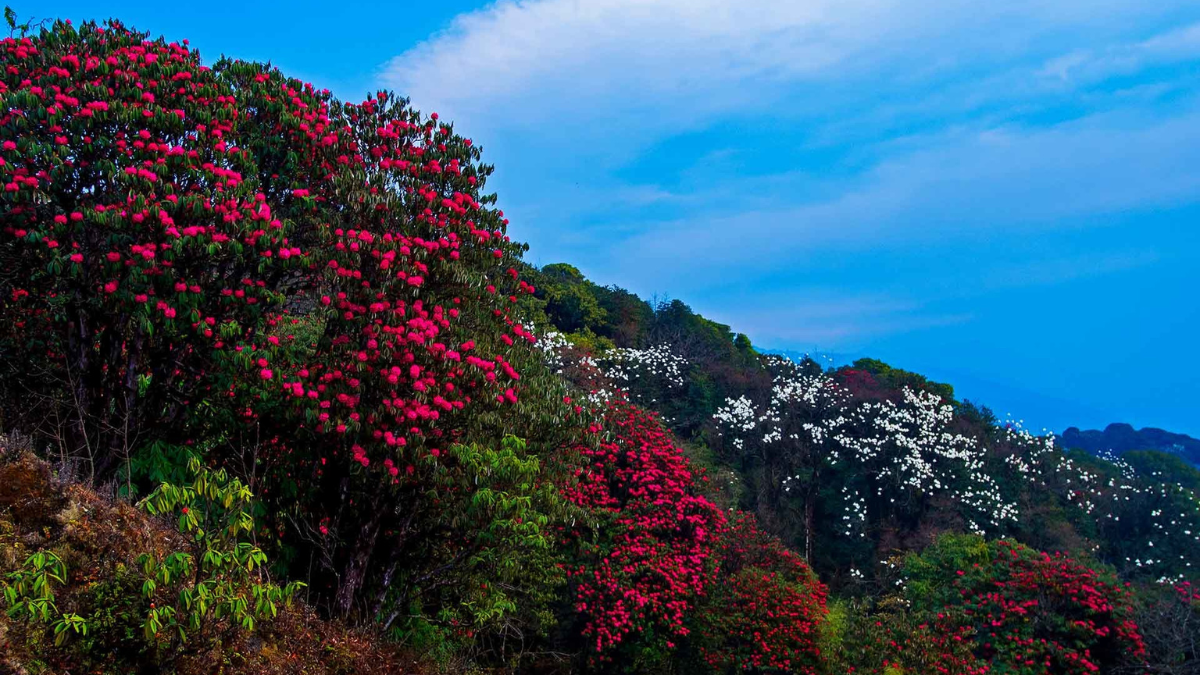
India is home to many beautiful national parks that protect animals, plants and natural beauty. One such national park is located high in the mountains and is known for its rare animals, colorful flowers and stunning views of snowy peaks. It is also a favorite place for nature lovers and trekkers. In this article, we will learn more about this special national park and what makes it unique.
Location of Singalila National Park
Singalila National Park is located in the state of West Bengal, in the Darjeeling district. It lies along the Singalila Ridge, which is part of the Eastern Himalayas. The park sits at a height of 2,300 to 4,000 metres above sea level and shares borders with Nepal and Sikkim.
A Little History of the Park
- The area was first used as a trekking route by the British in the 1800s.
- It was declared a wildlife sanctuary in 1986.
- In 1992, it officially became a National Park.
- The famous British botanist Joseph Dalton Hooker visited this region in 1849 to study plants.
What is the Geography Like?
- The park covers about 78.6 square kilometers.
- Two of West Bengal’s highest peaks, Sandakphu (3636 m) and Phalut (3600 m), are inside the park.
- Rivers like Rammam and Srikhola flow through the park.
Natural Beauty and Biomes
Singalila has three types of forest biomes due to its height:
- Subtropical pine forests (lower areas)
- Broadleaf and mixed forests (middle)
- Subalpine conifer forests (higher regions)
It is full of rhododendrons, oaks, bamboo and many wildflowers, especially during spring and post-monsoon.
Wildlife of the Singalila National Park
Singalila is home to many rare animals:
- Red panda (the most famous)
- Himalayan black bear
- Leopards
- Barking deer
- Pangolin, martens and clouded leopards
It is also a birdwatcher’s paradise, with over 120 bird species like:
- Himalayan vulture
- Blood pheasant
- Fire-tailed myzornis
The rare Himalayan newt can be found in nearby lakes.
Conservation Efforts
- The park is part of Project Red Panda, which successfully reintroduced red pandas into the wild.
- Main threats include trash, forest fires and cattle grazing.
- Tourists are asked to respect nature and follow the rules.


 Weekly Current Affairs One Liners (09th ...
 Health Ministry Grants Lifetime Validity...
 José Antonio Kast Rist Takes Oath as the...