
India and Argentina have taken an important step to deepen their agricultural partnership with the signing of the ICAR–INTA Work Plan 2025–27. The agreement aims to strengthen bilateral cooperation in the area of agricultural research, technology exchange, and capacity building. Which also reflecting the growing importance of science-led and sustainable agriculture for food security.
What Is the ICAR–INTA Work Plan?
The Work Plan is a structured framework signed between,
- Indian Council of Agricultural Research (ICAR)
- National Institute of Agricultural Technology (INTA), Argentina
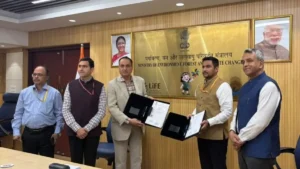
- The signed document was exchanged by Dr M.L. Jat, Secretary (DARE) and Director General of ICAR, and H.E. Mariano Augustin Caucino, Ambassador of Argentina to India.
- The plan will guide cooperation for the period 2025 to 2027.
Key Areas of Cooperation
The ICAR-INTA Work Plan covers a wide range of modern and sustainable agricultural domains. Major focus areas include,
- Natural resource management and sustainable agronomy
- Zero tillage, mechanization, micro-irrigation, and fertigation
- Crop and animal biotechnology
- Livestock improvement and precision livestock farming
- Digital agriculture and smart farming solutions
- Biosafety and phytosanitary measures
- Agricultural value chain development
These areas reflect shared priorities in climate-resilient and technology-driven agriculture.
Research, Training, and Technology Exchange
Implementation of the Work Plan will take place through,
- Joint research projects
- Exchange of germplasm
- Expert interactions and technical missions
- Training programmes and study visits
Planned training areas include greenhouse vegetable production, floriculture, temperate fruit cultivation, post-harvest technologies, veterinary diagnostics, functional food development, waste-to-wealth technologies, and digital farming systems.
Germplasm Exchange and Crop Focus
A significant component of the agreement is the exchange of germplasm, which will support crop improvement and biodiversity conservation.
Crops identified for exchange include,
- Soybean and sunflower
- Maize
- Blueberry and citrus
- Wild papaya species
- Guava and selected vegetable crops
This will help both countries improve productivity and crop resilience.
Oilseeds, Pulses, and Mechanization
India and Argentina will deepen cooperation in,
- Oilseeds and pulses value chains
- Agricultural mechanization, including zero-tillage equipment
- Cotton harvesting machinery and agricultural drones
- Horticulture value chain infrastructure and planting material
These initiatives aim to enhance efficiency, reduce costs, and promote modern farming practices.
Plant and Animal Health Cooperation
The Work Plan also focuses on strengthening plant and animal health systems. It includes,
- Region-specific Foot-and-Mouth Disease (FMD) elimination strategies
- Enhanced cooperation on locust surveillance and management
- Sharing best practices in veterinary and phytosanitary systems
- This is crucial for safeguarding livestock, crops, and trade.
Monitoring and Implementation
Both sides agreed to,
- Annual monitoring and review meetings
- Regular assessment of progress and outcomes
- Continued commitment to long-term scientific collaboration
- This ensures effective implementation and accountability.
Key Takeaways
- India and Argentina signed the ICAR–INTA Work Plan for 2025–27.
- Focus areas include sustainable agronomy, biotechnology, digital agriculture, and livestock improvement.
- The plan involves joint research, germplasm exchange, training, and expert engagement.
- Cooperation extends to oilseeds, pulses, mechanisation, and plant-animal health.
- Annual reviews will track progress and ensure effective implementation.
Question
Q. India recently signed the ICAR–INTA Work Plan 2025–27 with which country?
(A) Brazil
(B) Mexico
(C) Argentina
(D) Chile


 India Launches AI-Driven Initiative to M...
 What the NPC-MoEFCC Agreement Means for ...
 IIT Bombay & Honeywell Launch Sustai...