
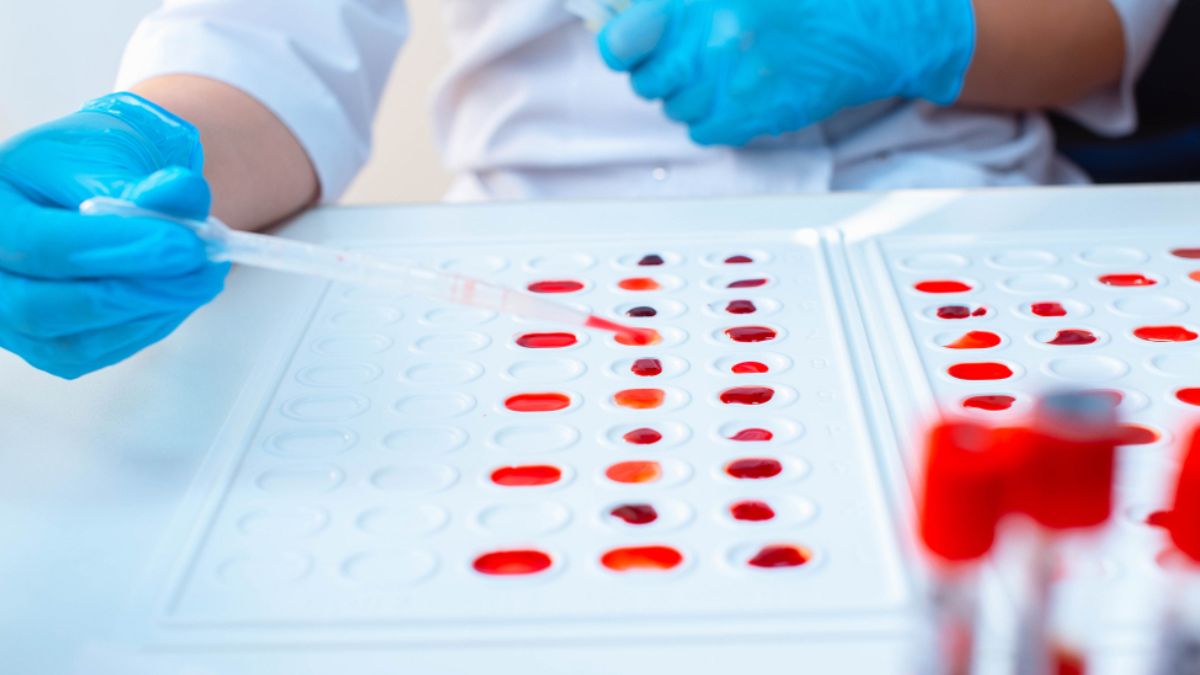
In a historic breakthrough for transfusion medicine, scientists from India and the UK have identified the world’s rarest blood group, named CRIB, in a 38-year-old woman from Kolar, near Bengaluru. This discovery, hailed as a milestone in global healthcare, could transform critical care, prenatal diagnostics, and blood donation protocols worldwide.
The Rare Discovery
The woman, undergoing medical treatment at Manipal Hospital, Bengaluru, was found to have a blood type that matched none of the known donor samples. Even after testing 20 of her family members, no compatible blood was found.
- Her blood showed panreactivity, meaning it was incompatible with every known sample tested.
- Doctors ultimately performed her surgery without a transfusion, a rare and high-risk decision.
- After extensive testing, experts confirmed the presence of a newly identified antigen, now classified as the CRIB blood group.
What is the CRIB Blood Group?
The CRIB blood group is a new and extremely rare type classified under the Cromer blood group system. It has been described as the rarest blood group ever discovered, with only one known case worldwide — the Bengaluru woman. CR stands for Cromer, the blood group system it belongs to. IB represents India and Bengaluru, where the case was first identified. CRIB is part of the Indian Rare Antigen (INRA) system, recognized by the International Society of Blood Transfusion (ISBT) in 2022.
Unlike ABO or Rh groups, CRIB is defined by the absence of a high-prevalence antigen found in almost all humans. This makes finding compatible donors nearly impossible.
Why is CRIB So Unique?
According to Dr. C. Shivaram, Consultant and Head of Transfusion Medicine at Manipal Hospital,
- The human body recognizes blood through 47 internationally recognized blood group systems, not just ABO and Rh.
- The Bengaluru woman’s blood contained a previously unknown antigen within the Cromer system, causing incompatibility with every tested sample.
- This reaction suggested an antigen so unique that no blood bank in the world had a matching donor.
The Cromer Blood Group System
The Cromer system includes several antigens, most of which are common, while some are extraordinarily rare. Typically, antibodies against these rare antigens develop due to,
- Pregnancy
- Previous blood transfusions
- Genetic mutations
However, the Bengaluru woman had never received a transfusion before. Yet, her red blood cells rejected all donor blood as foreign, confirming the presence of the new CRIB antigen.
Medical and Global Significance
The discovery of CRIB has immense implications, It enhances understanding of rare blood incompatibilities in critical care and surgery. It may play a vital role in prenatal medicine, especially in cases of fetal and neonatal hemolytic disease. It sets the stage for international cooperation in rare blood donor registries, given the global scarcity of compatible samples.


 Meet MAI-Transcribe-1: Microsoft’s Fast,...
 What is Outer Space Treaty 1967? Princip...
 What Is Mission Mitra? ISRO’s New Experi...











