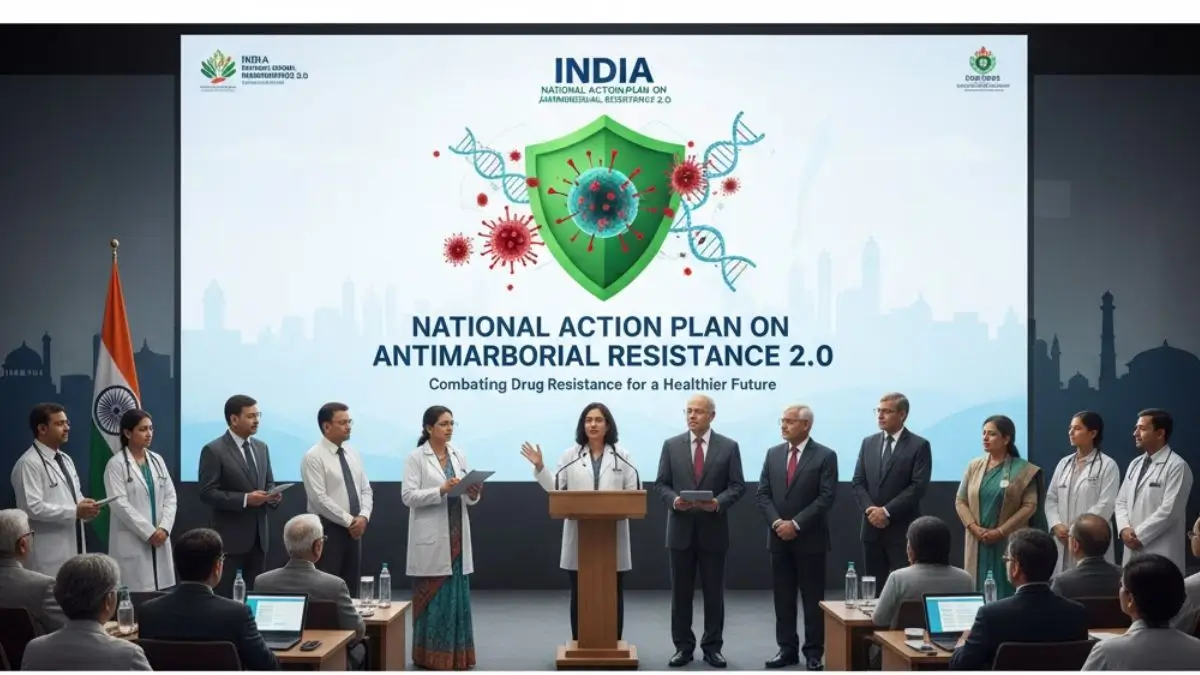
Union Health and Family Welfare Minister J.P. Nadda has launched the National Action Plan on Antimicrobial Resistance (AMR) 2.0, a renewed initiative covering the period 2025 to 2029. The launch took place in New Delhi and marks a major step in India’s national public health strategy to combat the rising threat of antibiotic resistance.
Why Antimicrobial Resistance Matters
Antimicrobial resistance (AMR) occurs when bacteria, viruses, fungi, and parasites evolve to resist the effects of medications, making infections harder to treat. This has become a global health emergency, with direct consequences for critical procedures such as,
- Surgical operations
- Cancer therapies
- Intensive care interventions
Minister Nadda emphasized that the overuse and misuse of antibiotics has led to AMR becoming a widespread issue, not just in hospitals but in the community and veterinary sectors as well. Left unchecked, AMR can result in prolonged illness, higher mortality rates, and increased healthcare costs.
What’s New in AMR 2.0 (2025–29)
The second version of the action plan builds on the learnings of the earlier strategy and aims to,
- Address implementation gaps from the first plan
- Increase accountability and ownership among stakeholders
- Strengthen coordination across different sectors (human health, animal health, environment)
- Enhance private sector engagement in antimicrobial stewardship
- Promote rational use of antibiotics across all levels of healthcare
This plan also aligns with India’s commitments to Global AMR frameworks such as the WHO Global Action Plan on AMR and the One Health approach, which integrates human, animal, and environmental health responses.
The Urgent Need for Action
AMR leads to,
- Delayed treatment outcomes
- Spread of resistant microbes
- Longer hospital stays
- Increased costs for families and health systems
The economic implications are significant, with losses arising from reduced workforce productivity, higher treatment costs, and growing burdens on healthcare infrastructure. In India, where antibiotics are often used without prescription, the risk is even more severe.
Government’s Multi-Sectoral Approach
The AMR 2.0 strategy promotes multi-stakeholder partnerships and emphasizes,
- Surveillance systems for tracking antibiotic resistance trends
- Regulatory frameworks to curb irrational drug use
- Capacity building of health professionals and pharmacists
- Public awareness campaigns on responsible antibiotic use
- Infection prevention in hospitals and clinics
This integrated approach ensures that AMR containment is not limited to hospitals, but extends to agriculture, animal husbandry, and the environmental sectors.
Static Facts
- Plan Name: National Action Plan on Antimicrobial Resistance (AMR) 2.0
- Launch Date: 18 November 2025
- Launched By: Union Health Minister J.P. Nadda
- Coverage Period: 2025–2029
- Objective: Combat AMR through coordinated, multi-sectoral action
- Major Focus Areas: Human health, animal health, antibiotic use regulation, private sector engagement
- Key Challenges Addressed: Overuse/misuse of antibiotics, coordination gaps, low awareness
- Frameworks Linked: WHO Global Action Plan, One Health Approach


 Where is the Strait of Hormuz Located?
 Best Airlines in the World 2026: Best Fu...
 Philippines Declares Energy Emergency Am...