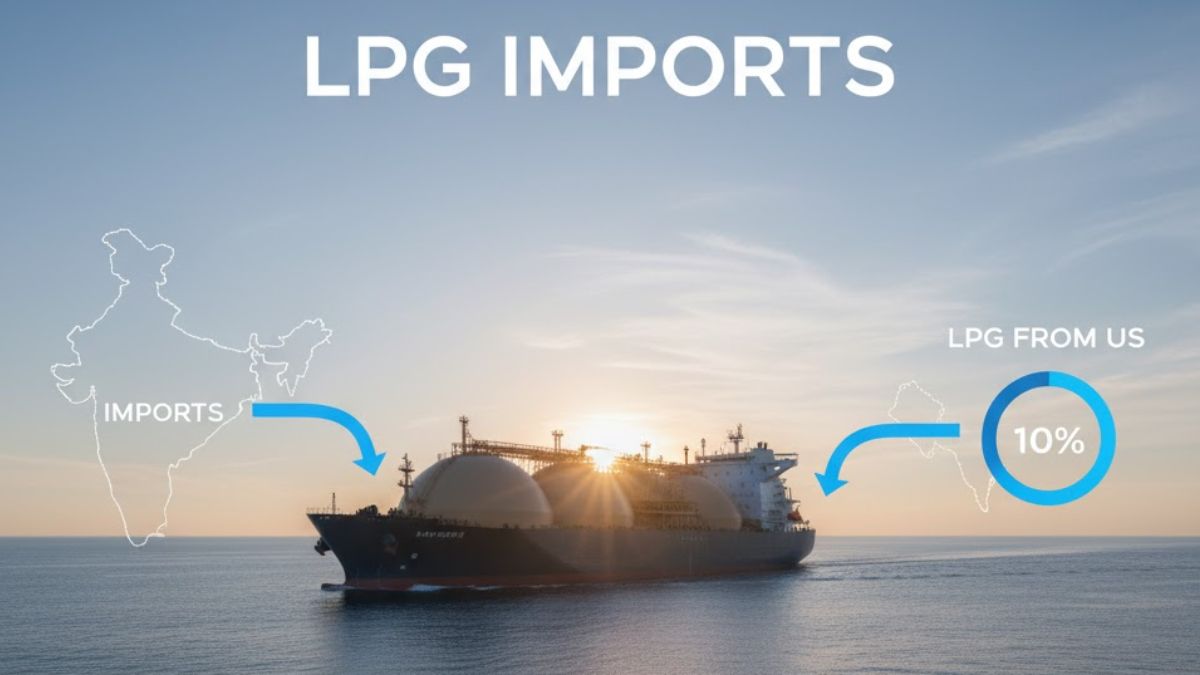
In a landmark energy agreement, India has signed its first ever structured deal to import liquefied petroleum gas (LPG) from the United States. This contract, set to begin in 2026, will see India sourcing 2.2 million tonnes per annum (MTPA) of LPG, covering 10% of its total annual imports. The move is part of a broader push to diversify suppliers and strengthen trade ties with the US.
India’s LPG Needs
LPG is a crucial household fuel in India, especially for cooking. In recent years, government programs like the Ujjwala Yojana have increased LPG access in rural and low-income households. As a result, India has become one of the largest LPG consumers in the world.
However, over 60% of this demand is met through imports, mostly from West Asian countries such as Saudi Arabia, UAE, Qatar, and Kuwait. This heavy dependence has prompted India to look for alternative and reliable sources.
What the Deal Involves
This new deal covers a one-year contract for the year 2026. The Indian public sector oil firms — IOC, BPCL, and HPCL — will jointly import LPG from US suppliers like Chevron, Phillips 66, and TotalEnergies.
The supply will come from the US Gulf Coast and will be benchmarked to the Mont Belvieu pricing system, widely used in the US market.
Why It’s Important
- Energy Security: By adding the US as a major LPG source, India is reducing its dependence on the Middle East. This is especially important in times of regional instability or supply disruptions.
- Trade Balance: The deal also serves as a step to narrow India’s trade surplus with the US, which has been a sticking point in trade negotiations. By increasing energy imports from the US, India is attempting to balance the flow of goods between the two countries.
- Better Pricing Options: US LPG pricing, linked to the Mont Belvieu benchmark, offers an alternative to Middle Eastern pricing. This gives Indian companies more flexibility in choosing the most cost-effective supplies.
Challenges Ahead
While the deal is promising, there are some technical and economic hurdles,
- US LPG is propane-rich, while India prefers more butane-heavy LPG for domestic cooking. This could require additional blending or storage adjustments.
- Freight costs from the US are higher than from the Middle East, possibly affecting overall cost benefits.
- Since it is a short-term deal (only for 2026), long-term benefits will depend on future contracts and market stability.
- Cylinder prices for consumers may not immediately fall, especially with existing subsidy structures in place.
Future Direction
This deal reflects India’s larger goal to diversify energy imports, enhance supply chain resilience, and build stronger energy trade relations with global partners. Going forward, India is expected to expand such arrangements, not only with the US but also with other emerging suppliers.
Static Facts
- Deal Signed: November 2025
- Import Volume: 2.2 MTPA (Million Tonnes Per Annum)
- Year of Supply: 2026
- Share of Total LPG Imports: About 10%
- Indian Companies Involved: Indian Oil (IOC), Bharat Petroleum (BPCL), Hindustan Petroleum (HPCL)
- US Suppliers: Chevron, Phillips 66, TotalEnergies
- Benchmark Used: Mont Belvieu (US Gulf Coast)


 Philippines Declares Energy Emergency Am...
 Iran’s Ceasefire Conditions After Trump’...
 WMO Warns Earth's Climate Is "Flashing R...