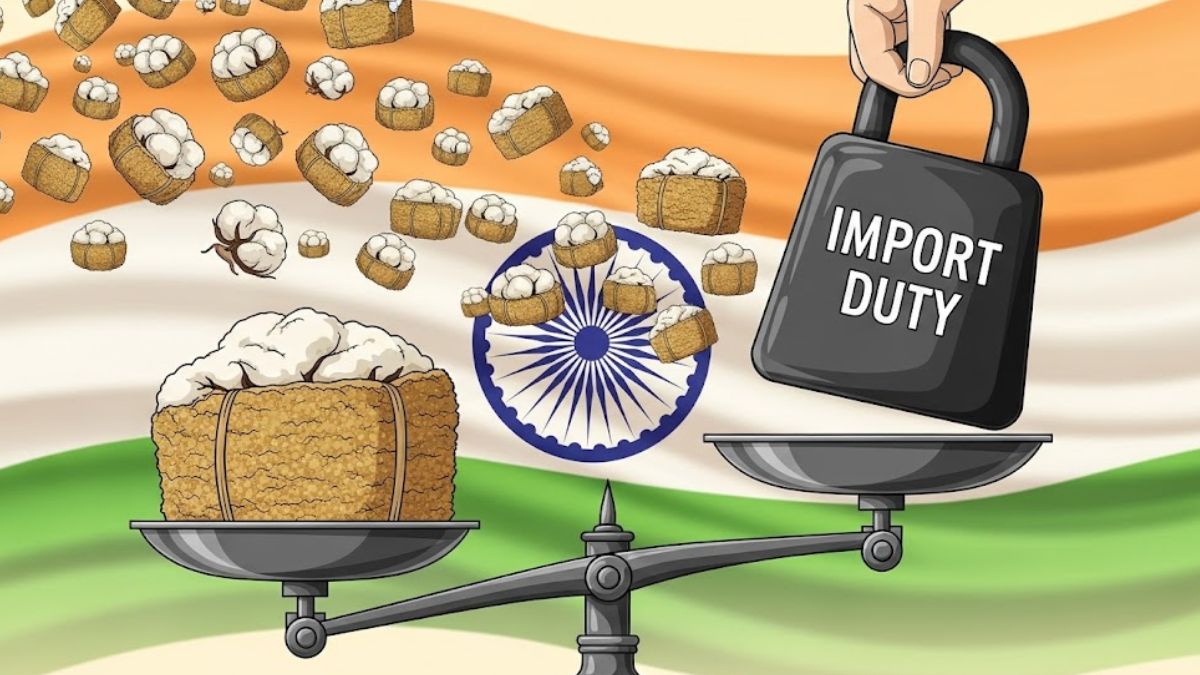
In a significant policy move, the Indian government has suspended the 11% import duty on cotton until September 30, 2025. The decision comes at a time when India’s garment exporters face mounting global competition and rising costs, while bilateral trade relations with the United States remain under strain. The suspension is expected to benefit U.S. cotton growers and offer relief to India’s textile and apparel industry, one of the country’s largest employment generators.
Why Did India Suspend the Cotton Import Duty?
Trade Context
- The suspension comes just weeks after the U.S. raised tariffs to 50% on certain Indian goods.
- By easing restrictions on cotton imports, New Delhi is sending a conciliatory signal to Washington, showing willingness to address trade concerns in the agricultural sector.
Industry Demand
- India’s garment and textile industry, which employs millions, has been seeking relief from high raw material costs.
- With cotton prices fluctuating globally, the duty waiver helps reduce input costs, allowing exporters to stay competitive.
Implications for the Garment Industry
Competitive Pressure
India’s apparel exports face stiff competition from,
- China
- Bangladesh
- Vietnam
These nations enjoy lower tariffs and cheaper raw material access, putting India at a disadvantage in global markets.
Sectoral Relief
- The temporary duty waiver reduces cotton procurement costs.
- Provides breathing space for small and medium garment exporters struggling with high costs and narrowing margins.
- May help offset upcoming U.S. tariffs of nearly 60% on Indian garment shipments.
Global Trade Significance
For the US
- The suspension benefits U.S. cotton growers, who are among the world’s largest exporters.
- It provides them with better market access in India, one of the biggest cotton-consuming countries globally.
For India
- The move positions India as a responsive trade partner, potentially opening doors for future negotiations on tariff reductions and trade facilitation.
- It aligns with India’s strategy to remain competitive in the global textile supply chain, especially as Western nations seek to diversify sourcing beyond China.


 World Bank Projects India to Drive South...
 RBI MPC Meeting 2026, Kept Repo Rates Un...
 India's Major Ports Handle Record 915.17...