
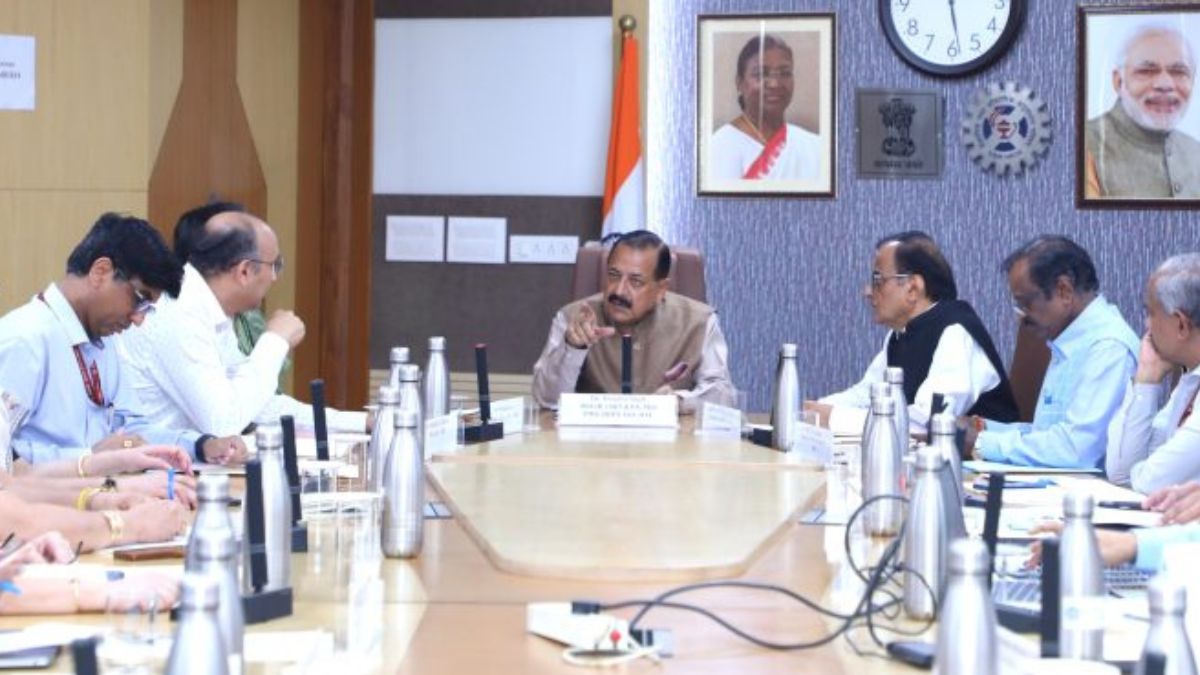
India has begun the development of its next-generation electric trainer aircraft, E-Hansa, a two-seater aircraft that represents a major milestone in green aviation and indigenous aerospace technology. Spearheaded by the Council of Scientific and Industrial Research – National Aerospace Laboratories (CSIR-NAL), this aircraft will cost nearly half of its imported counterparts and is aligned with India’s efforts to reduce carbon emissions and promote self-reliance in aviation. The announcement was made by Dr. Jitendra Singh, Union Minister of State for Science and Technology, during a high-level review meeting on May 27, 2025.
Why in News?
Dr. Jitendra Singh announced the initiation of the E-Hansa development at a review meeting of India’s major scientific departments. The aircraft is part of a broader vision for green aviation, technology commercialization, and public-private partnerships. ISRO’s successful SPADEX mission, and India’s contribution to Axiom Space Mission, were also highlighted. India aims to transform its science ecosystem using a Whole-of-Government approach with region-wise Chintan Shivirs.
E-Hansa Electric Trainer Aircraft
- Developed by: CSIR-NAL, Bengaluru
- Type: Two-seater electric trainer aircraft
- Cost: Approx. ₹2 crore – 50% cheaper than imported alternatives
- Purpose: Affordable, eco-friendly option for flight training
- Part of: HANSA-3 (NG) trainer aircraft program
- Significance: Reduces dependence on imports, supports green aviation goals
Technology Commercialization and PPP
- NRDC directed to adopt BIRAC and IN-SPACe models for tech transfer
- Push for hub-and-spoke Public-Private Partnership models
- Proposed use of AI-driven tech/IP exchange platforms
- Formation of regional NTTOs to improve technology access and innovation outreach
ISRO Achievements
- SPADEX mission successfully demonstrated docking/undocking crucial for Gaganyaan
- Significant role in Operation Sindoor
- Collaboration with 40 Ministries and 28 States
- Upcoming space missions and contributions to Axiom Space Mission
- Group Captain Subhash Shukla to perform 7 microgravity experiments on ISS
Whole-of-Science, Whole-of-Government Approach
Chintan Shivirs to be held regionally involving,
- DST, DBT, CSIR, ISRO, MoES, Atomic Energy departments
- Encouragement of integrated planning and inter-agency synergy
Global Collaboration and Science Talent Mobility
- Proposed Global Science Talent Bridge to attract top international researchers
- Global interest from Switzerland, Italy, and others for Indo-style science centres
- PM’s announcement of CSIR labs opening to students welcomed, though currently paused due to security reasons
| Summary/Static | Details |
| Why in the news? | “India Takes Flight with E-Hansa: Indigenous Electric Aircraft Initiative Launched” |
| Project Name | E-Hansa (Electric Hansa) |
| Developed by | CSIR-National Aerospace Laboratories (NAL) |
| Aircraft Type | Electric two-seater trainer |
| Cost | ₹2 crore (approx. 50% of imported alternatives) |
| Minister Involved | Dr. Jitendra Singh |
| Other Highlights | ISRO’s SPADEX, Operation Sindoor, Axiom Mission |
| Policy Push | Public-Private Partnerships, Chintan Shivirs, Global Talent Bridge |
| Vision | Green Aviation, Viksit Bharat, Whole-of-Government in Science |


 What Is Mission Mitra? ISRO’s New Experi...
 NASA's Artemis II Mission Begins: First ...
 India's First Quantum Computer to be Lau...











