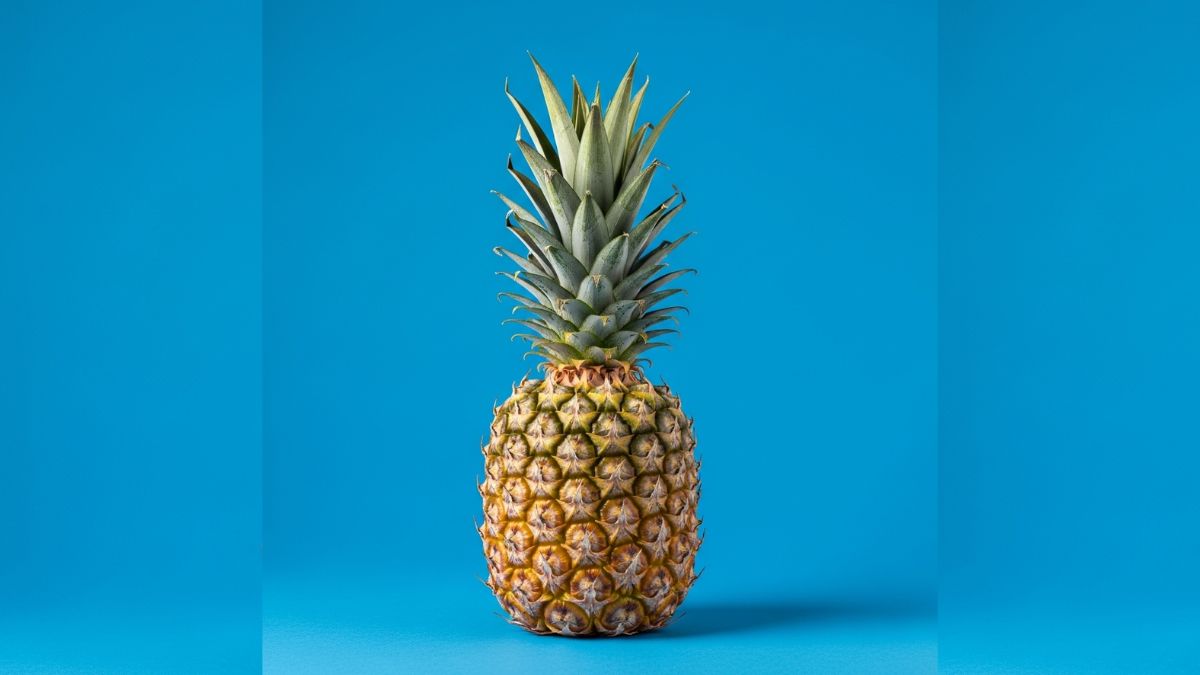
Indian researchers have made a significant advancement in protecting pineapple crops from fungal diseases by genetically enhancing a native gene that strengthens the plant’s natural defences. This innovation holds promise for improving crop yields and reducing losses caused by Fusariosis, a devastating disease affecting pineapple cultivation.
Background
Pineapple (Ananas comosus L. Merr.) is the most economically vital fruit in the Bromeliaceae family, known for its nutritional value and health benefits. However, pineapple farming faces a major challenge from Fusariosis, caused by the fungus Fusarium moniliforme. The disease deforms stems, blackens leaves, and rots fruit, severely impacting harvests.
Significance
Traditional breeding methods have been ineffective against rapidly evolving fungal threats. The new approach focuses on genetic solutions within the plant, aiming for a sustainable and long-term resistance. This research is especially crucial for India’s agriculture sector where crop protection is essential for food security and farmers’ livelihoods.
Objective
The primary goal of the study by scientists at the Bose Institute (under the Department of Science and Technology) was to identify and enhance a native gene in pineapple that can act as a defence mechanism against fungal infections, particularly Fusariosis.
Key Features
Researchers identified and overexpressed the AcSERK3 gene—a part of the Somatic Embryogenesis Receptor Kinase (SERK) family. This gene is known to assist in plant reproduction and stress resistance. Using genetic engineering, they overexpressed AcSERK3 in pineapple plants, boosting their ability to combat Fusarium fungi.
Impact
The transgenic pineapple lines demonstrated increased resistance to Fusarium through elevated levels of stress-related metabolites and scavenging enzyme activity. Unlike regular varieties, these modified plants remained green and robust during infection tests. The breakthrough also showed stable gene expression, indicating potential long-term effectiveness across generations.
Future Potential
With successful field trials, these genetically resilient pineapples could be propagated using slips and suckers, giving rise to a multi-fungal tolerant variety. This would not only reduce crop losses but also decrease dependency on chemical fungicides.


 UAE Introduces World's First 10G Interne...
 Meet MAI-Transcribe-1: Microsoft’s Fast,...
 What is Outer Space Treaty 1967? Princip...