
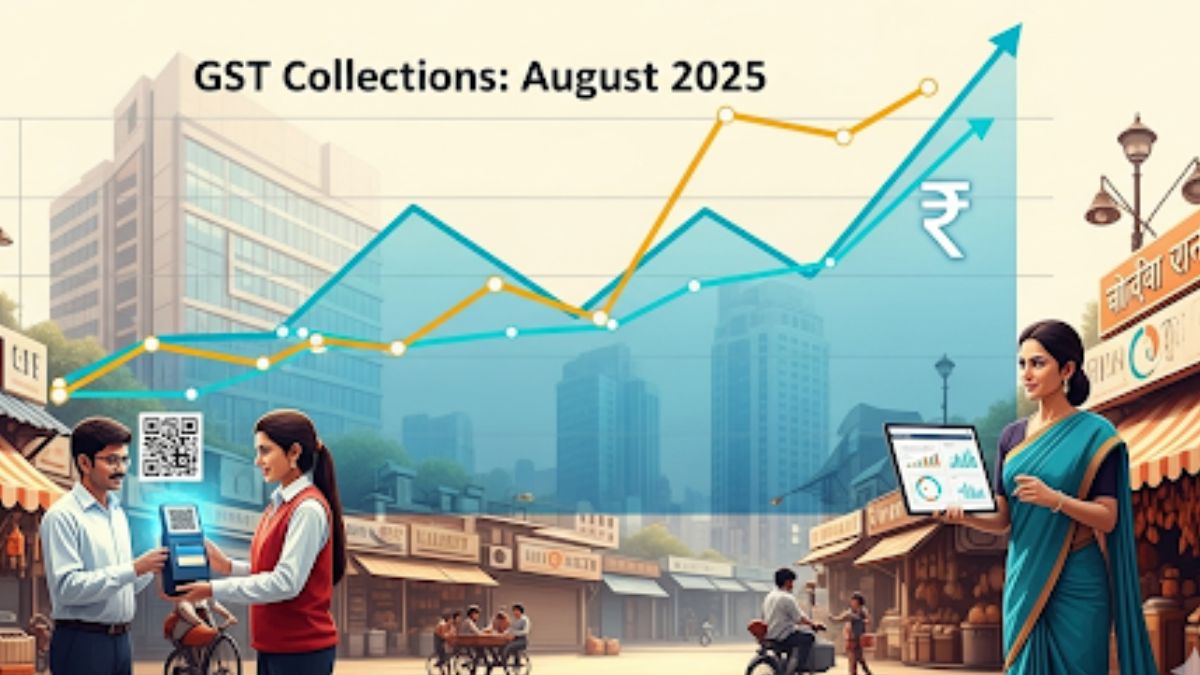
India recorded a GST collection of ₹1.86 trillion in August 2025, reflecting a 6.5% year-on-year increase despite seasonal and global trade challenges. While this indicates economic resilience, a noticeable 20% drop in refunds and moderating growth pace have prompted calls for a simplified GST structure. A key meeting of the GST Council is scheduled to explore these reform measures.
Breakdown of August GST Revenue
The August GST collections consist of multiple tax components contributing to the overall ₹1.86 trillion figure,
- Central GST (CGST): ₹31,474 crore
- State GST (SGST): ₹39,736 crore
- Integrated GST (IGST): ₹83,964 crore
- Compensation Cess: ₹11,792 crore
After processing refunds worth ₹19,359 crore—which is 20% lower than last year’s figure—the net revenue stood at ₹1.67 trillion, reflecting a 10.7% rise from August 2024.
Signs of Strength and Weakness
Economic Resilience Holds
The monthly average GST revenue for FY25 so far is ₹2 trillion, indicating that overall collections remain strong. The August data, though showing the second slowest growth this fiscal, suggests that domestic consumption is still stable amid weak monsoon-season demand.
Exports Facing Strain
The sharp drop in refunds—especially export-related—points to pressures in the global trade environment. Experts attribute this to geopolitical tensions and new US tariffs, which may have disrupted outbound shipments and affected refund eligibility.
Why GST Reform Is Gaining Urgency
India’s current GST structure includes multiple tax slabs, which businesses often find complex and difficult to comply with. To address this, the GST Council is considering several proposals,
- Merging tax rates to create fewer, broader slabs
- Simplifying compliance procedures for small businesses
- Offering targeted tax relief to consumers
Experts warn that delays in implementing these reforms may trigger a cautious approach among consumers and businesses, potentially affecting future collections.
Diverging State-Centre Priorities
While the central government is optimistic about long-term benefits from reform, several states are pushing for rate cuts to be tied to guaranteed compensation to avoid fiscal shortfalls. This reflects the delicate balance between revenue needs and economic stimulus.
Important Takeaways For Exams
- Introduced by: 101st Constitutional Amendment Act, 2016
- Type: Value-Added Tax (VAT) on the supply of goods and services
- Purpose: To create a unified indirect tax system across India


 World Bank Projects India to Drive South...
 RBI MPC Meeting 2026, Kept Repo Rates Un...
 India's Major Ports Handle Record 915.17...











