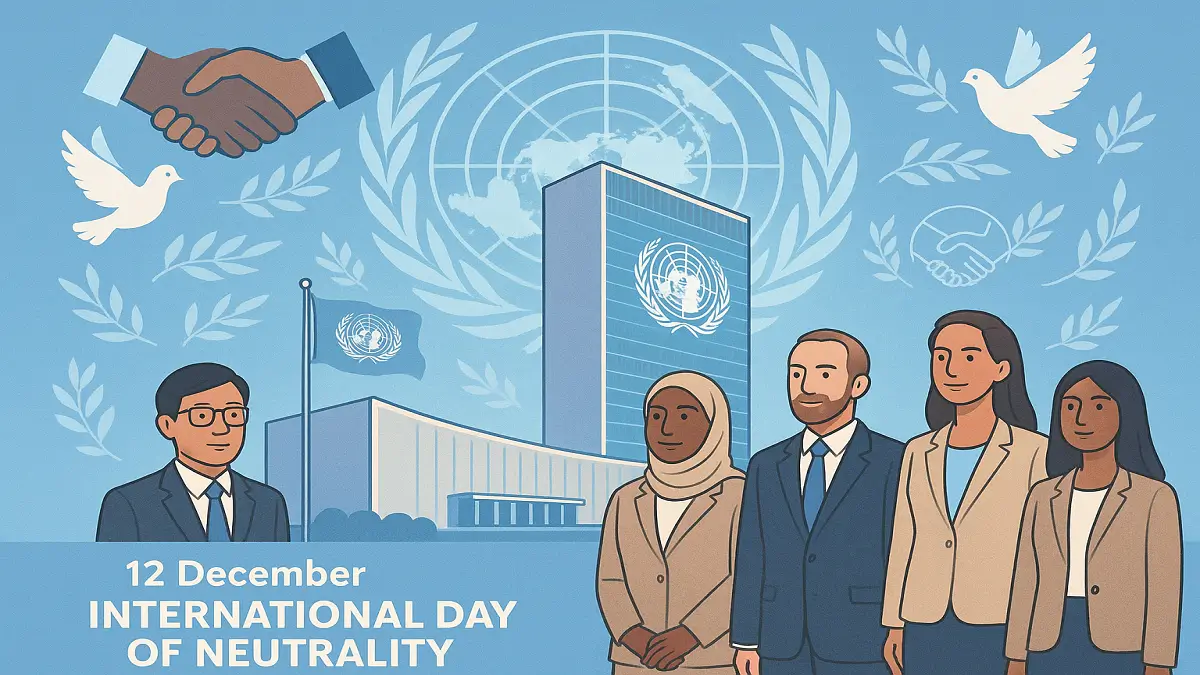
Every year on 12 December, the world observes the International Day of Neutrality, a significant day declared by the United Nations General Assembly (UNGA). This day highlights the importance of neutrality, a principle that helps countries stay impartial in conflicts and encourages peaceful solutions.
For students preparing for government exams and general readers, this day is important because it connects directly to international peace efforts, UN initiatives, and global diplomacy.
What Does Neutrality Mean?
Neutrality refers to a country’s decision to:
- Stay away from any participation in war,
- Remain impartial toward all parties involved, and
- Be recognized by other states as neutral.
This impartial attitude helps build trust and ensures that a country can support peace efforts, negotiations, and humanitarian assistance without taking sides.
Why the UN Supports Neutrality
Article 2 of the UN Charter requires nations to settle disputes peacefully and avoid threatening or using force. To reinforce these principles, the UNGA adopted Resolution 71/275, which recognizes that neutrality can play a major role in maintaining international peace and security.
Neutrality helps:
- Reduce political tension
- Create safe space for dialogue
- Strengthen peaceful global relations
- Support countries in resolving conflicts without violence
History of the International Day of Neutrality
The day was officially declared on 2 February 2017, when the UNGA adopted Resolution 71/275 without a vote.
The resolution was introduced by Turkmenistan, a country recognized as permanently neutral since 12 December 1995.
The UN also highlighted the link between neutrality and the 2030 Agenda for Sustainable Development, noting that peaceful societies are essential for achieving global development goals.
Thus, 12 December was marked as the International Day of Neutrality to raise awareness about its value in world peace.
Why Neutrality Is Important Today
In a world facing frequent political tensions and conflicts, neutrality helps uphold important principles like:
- Sovereignty and equality of states
- Territorial integrity
- Non-intervention
- Right to self-determination
Neutral states play an essential role in:
- Preventive diplomacy (early action to stop conflicts)
- Mediation and negotiation
- UN peacekeeping and peacebuilding efforts
- Humanitarian relief during crises
They often act as safe platforms where conflicting parties can meet and negotiate peacefully.
Key Concepts Linked to Neutrality
1. Preventive Diplomacy
The UN focuses on preventing conflicts before they start. Preventive diplomacy includes:
- Early warning
- Mediation
- Dialogues and consultations
- Peacebuilding and negotiation
This approach reduces violence and promotes cooperation.
2. Mediation
The UN helps conflicting parties talk, compromise, and reach agreements.
Effective mediation needs:
- Skilled envoys
- Proper logistical and financial support
- Expert advisory teams
3. Peacemaking
The UN supports political solutions to conflicts. After the Cold War, many wars ended through UN-led negotiations. Today, the UN works with regional groups to prevent and resolve crises quickly.


 March 25: International Day of Solidarit...
 International Day of the Unborn Child: M...