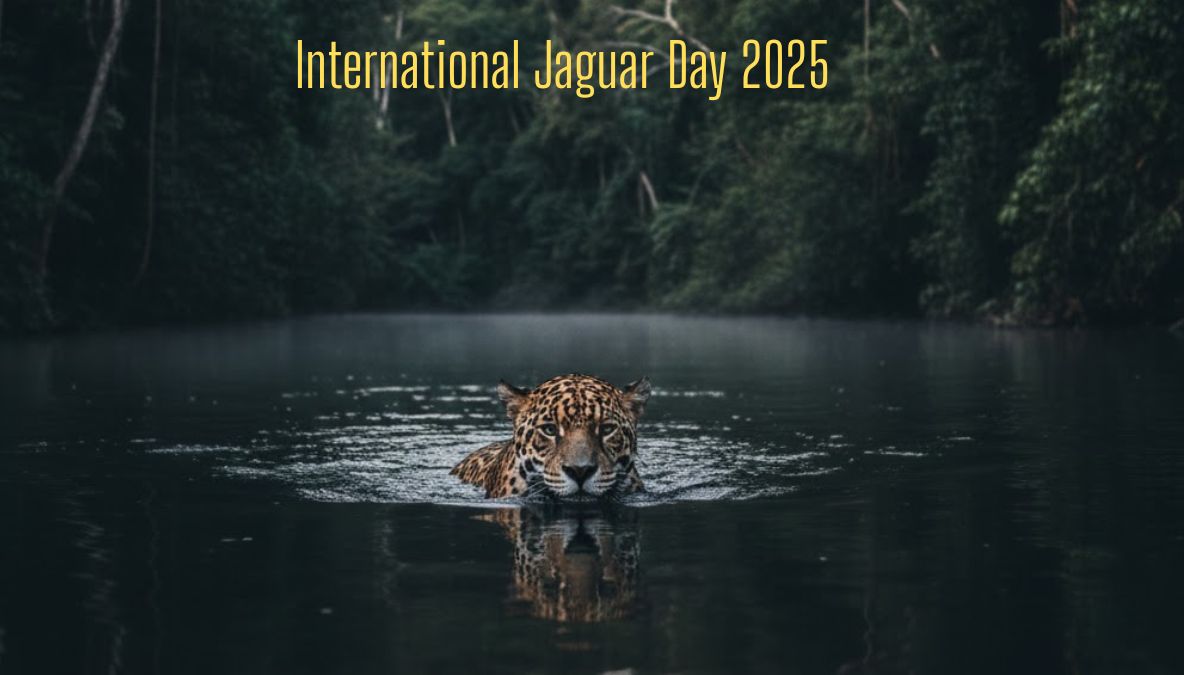
International Jaguar Day, observed annually on November 29, is a global event dedicated to raising awareness about the conservation of one of the world’s most iconic big cats — the jaguar (Panthera onca). Celebrated across nations, the day highlights the importance of jaguars not just as majestic predators, but as umbrella species, vital for maintaining biodiversity and ecological balance in the Americas. With increasing threats such as deforestation, poaching, and habitat fragmentation, this day draws international attention to efforts needed to secure the future of this near-threatened species.
Context: Why Was International Jaguar Day Created?
The idea of International Jaguar Day stems from the urgency to protect jaguars — the largest wild cat in the Americas and third largest predator worldwide, after tigers and lions. Since the 1880s, jaguars have lost over half of their historical range, largely due to,
- Deforestation for agriculture and cattle ranching
- Fires destroying their habitats
- Illegal wildlife trade targeting their skin, bones, and teeth
- Human-wildlife conflict, particularly with farmers
Recognising this, jaguar range countries came together to launch International Jaguar Day as a unified platform to advocate for jaguar conservation, support sustainable development, and preserve indigenous cultural heritage tied to the jaguar.
Key Features and Facts About Jaguars
- Scientific Name: Panthera onca
- Conservation Status: Near-Threatened (IUCN Red List)
- Primary Habitat: Tropical rainforests (especially the Amazon), grasslands, and savannas
- Main Range: Amazon Basin, parts of Central America, and historically from Argentina to the southwestern USA
Distinctive Characteristics
- Jaguars resemble leopards but can be identified by the black spots inside their rosettes.
- Unlike most cats, jaguars are strong swimmers and have even crossed manmade structures like the Panama Canal.
- They hunt a variety of prey including capybaras, deer, tapirs, turtles, and even caimans, and can be both nocturnal and diurnal, hunting by day or night.
Threats to Jaguars and Their Ecosystem
Despite being apex predators, jaguars face multiple man-made threats,
- Habitat Destruction: Expansion of factory farming, soy farming, and urbanisation leads to forest clearance.
- Poaching: Killed for body parts used in traditional Asian medicine and illegal trade.
- Livestock Conflict: Farmers often hunt them in retaliation for attacking cattle.
- Climate Change: Melting patterns, forest fires, and disrupted prey availability weaken ecosystems.
Jaguars are also increasingly losing access to essential wildlife corridors — stretches of land that connect fragmented habitats — critical for genetic diversity and species survival.
Conservation Efforts and Global Coordination
Jaguar conservation is supported through,
- CITES Protection: Trade in jaguar parts is strictly prohibited.
- National Laws: Jaguars are legally protected in nearly all range countries.
- Conservation Corridors: Efforts are underway to restore jaguar corridors across South and Central America.
- International Collaborations: Organizations and governments are aligning conservation goals with UN Sustainable Development Goals (SDGs).
Countries like Brazil, Mexico, and Colombia are at the forefront of on-ground protection, scientific monitoring, and community engagement to ensure coexistence.
Why International Jaguar Day Matters
International Jaguar Day is more than just a wildlife celebration — it stands as a symbol of global environmental responsibility. Jaguars are keystone species; their survival is directly linked to the health of ecosystems that support countless other plants and animals.
It also,
- Promotes environmental education among youth
- Encourages sustainable consumption habits (e.g., avoiding products linked to deforestation)
- Advocates for wildlife-friendly tourism
- Raises awareness about illegal wildlife trade
- What You Can Do to Help
On International Jaguar Day, here’s how you can make a difference,
- Educate others about jaguar conservation, especially the impact of deforestation for cheap meat production
- Avoid products contributing to habitat destruction
- Watch and share educational content like the documentary Jaguar Spirit
- Speak up online against wildlife exploitation in tourism
- Create and share artwork or posters to advocate for jaguar protection in schools or communities
- Support conservation organisations working in the Amazon and Central America
Key Takeaways
- Observed on: November 29 every year
- Species: Jaguar (Panthera onca) — third-largest big cat in the world
- Conservation status: Near-threatened
- Main habitat: Amazon Basin, tropical rainforests
- Major threats: Deforestation, poaching, habitat loss
- Purpose: Raise awareness, promote conservation, align with UN SDGs


 March 25: International Day of Solidarit...
 International Day of the Unborn Child: M...
 International Day for the Right to Truth...