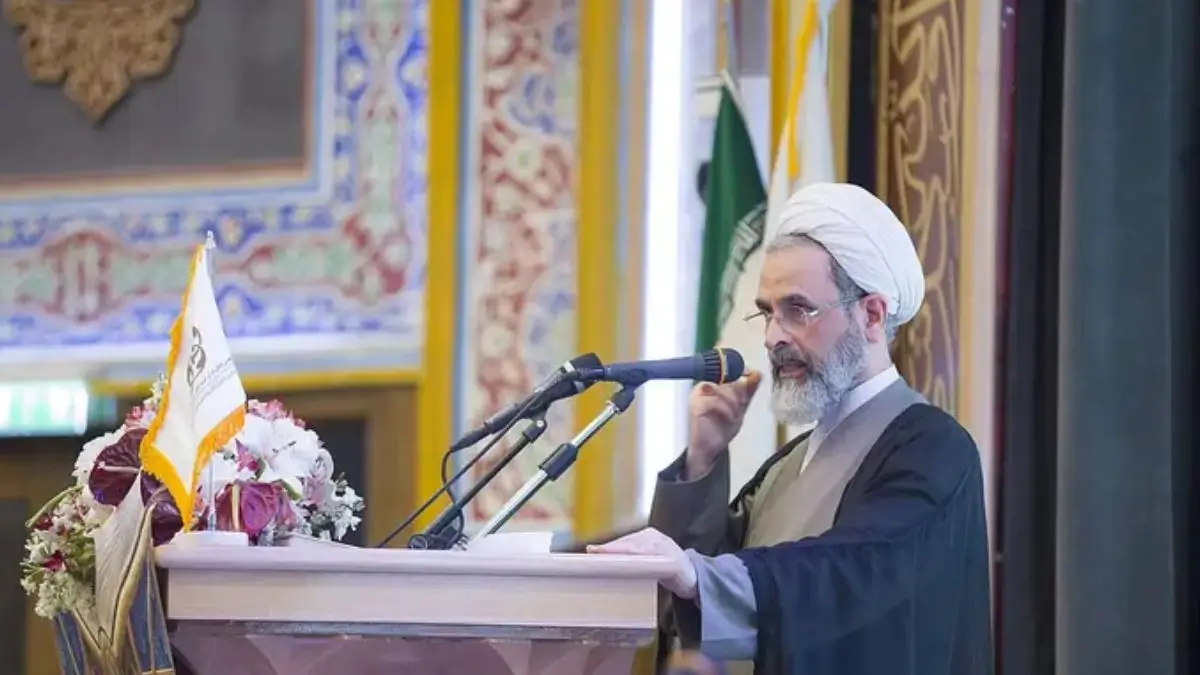
Hours after the death of Iran’s Supreme Leader Ayatollah Ali Khamenei was confirmed the senior cleric Alireza Arafi was appointed to temporarily lead the country. According to Iranian media reports, Arafi has been named the jurist member of a three-member Leadership Council, which will temporarily perform the duties of the Supreme Leader. His appointment places him at the centre of Iran’s political and religious transition during a highly sensitive period.
Who Is Alireza Arafi? Profile of Iran’s Interim Leader
Alireza Arafi is a 67 year old senior Shia cleric.
- He currently serves as Deputy Chairman of the Assembly of Experts.
- Previously, he was a member of the Guardian Council.
- He also heads Iran’s influential seminary system in Qom.
- Arafi has been regarded as a possible contender to succeed Khamenei permanently.
- Although religiously influential, he is not widely known as a dominant political powerbroker.
Iran Leadership Council 2026: Who Else Is Involved?
The temporary Leadership Council has three members.
- It includes President Masoud Pezeshkian.
- It also includes Chief Justice Gholamhossein Mohseni Ejei.
- Arafi serves as the jurist representative within the council.
- The council will function until a new Supreme Leader is formally chosen.
This arrangement ensures continuity in governance during the transition.
Why the Supreme Leader’s Role Is So Powerful in Iran
The Supreme Leader is the highest authority in Iran’s political system.
- He is commander in chief of the armed forces.
- Oversees the powerful Islamic Revolutionary Guard Corps (IRGC).
- Holds final say over foreign policy, judiciary, and state broadcasting.
- Influences Iran’s “Axis of Resistance” strategy in West Asia.
The position combines religious authority with sweeping political and military control.
How Iran Selects a New Supreme Leader
The Assembly of Experts, consisting of 88 clerics, elects the Supreme Leader.
- Members are elected every eight years by popular vote.
- Candidates are vetted by the Guardian Council.
- The Assembly can also remove a Supreme Leader, though this has never happened.
- Until a successor is chosen, the Leadership Council assumes interim duties.
- The process is constitutionally guided but politically complex.
History: Only Two Supreme Leaders Before
- Since the 1979 Islamic Revolution, Iran has had only two Supreme Leaders.
- The first was Ruhollah Khomeini, who led the revolution and ruled until his death in 1989.
- He was succeeded by Ali Khamenei, who served for decades and significantly expanded the role’s influence.
- The transition following Khamenei’s death marks only the third leadership shift in the Islamic Republic’s history, making it a pivotal moment for Iran and the wider region.
Question
Q. Who has been appointed to temporarily fulfill the role of Iran’s Supreme Leader?
A. Masoud Pezeshkian
B. Gholamhossein Mohseni Ejei
C. Alireza Arafi
D. Hassan Rouhani


 Preeti Saran Re-Elected as UN Committee ...
 Global Trade Hits New High in 2025: Key ...
 Iran–US Ceasefire: Iran’s 10 Conditions ...