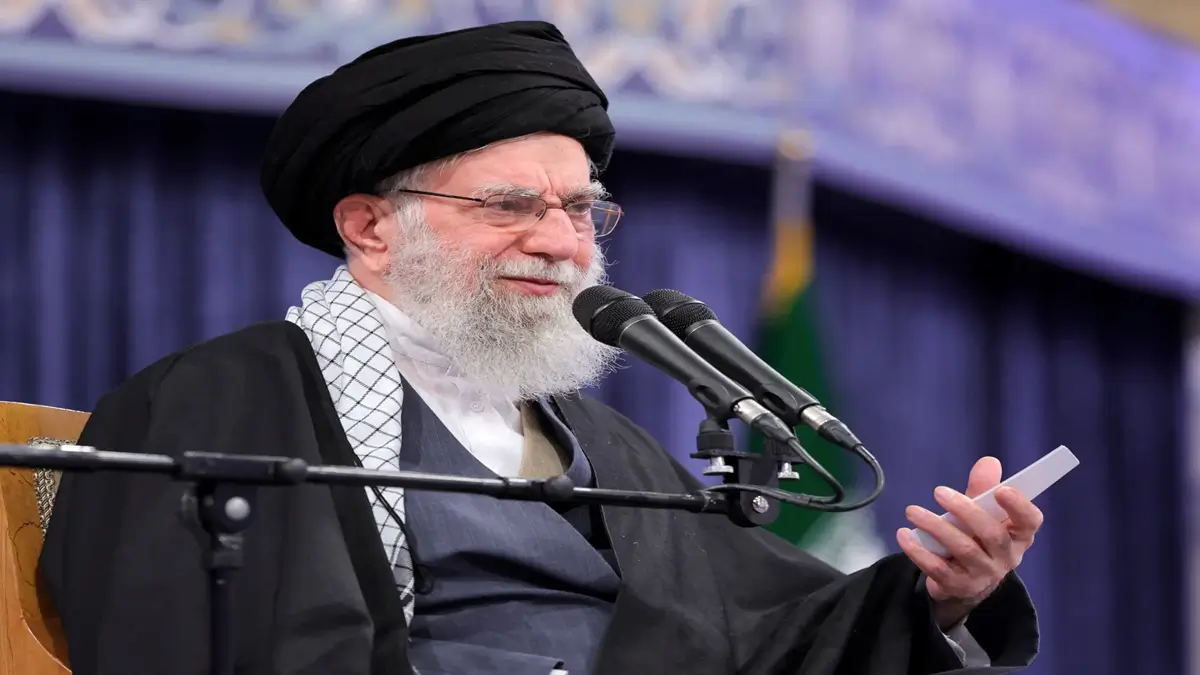
Iranian state media has confirmed that Supreme Leader Ayatollah Ali Khamenei, Iran’s most powerful political and religious figure, has been killed in coordinated military strikes by the United States and Israel. The development marks one of the most dramatic escalations in Middle East tensions in decades and could significantly reshape the region’s political landscape.
US–Israel Military Offensive and Khamenei’s Death
According to Iranian and international reports, a large-scale military operation involving U.S. and Israeli air and missile forces targeted key Iranian military and government facilities, including locations linked to the Supreme Leader in Tehran. Iranian officials confirmed his death early Sunday.
U.S. President Donald Trump publicly acknowledged the operation and indicated that military action would continue throughout the week. He described the campaign as aimed at weakening Iran’s leadership and military infrastructure.
Civilian Casualties and Controversial Strikes
Iranian state media reported that one of the strikes hit a girls’ elementary school in southern Iran, killing more than 100 children and injuring many others. Iranian authorities have condemned the attack as a war crime. Independent verification of casualty figures remains limited amid ongoing conflict.
Emergency services inside Iran have reported hundreds of civilian deaths and injuries across multiple cities following waves of airstrikes.
Iran’s Retaliation Across the Region
In response to Khamenei’s death, Iran has launched widespread missile and drone attacks targeting U.S. military bases, Israeli territory, and strategic sites across the Middle East. Strikes have reportedly damaged infrastructure, disrupted oil shipments, and forced temporary airspace closures in several countries.
The Islamic Revolutionary Guard Corps (IRGC) has vowed severe retaliation, signaling that further military action is likely.
Domestic and International Reactions
Reactions have been sharply divided:
- In Tehran, reports suggest mixed scenes of mourning and street gatherings, reflecting internal political divisions.
- In the United States, some citizens expressed support for the strikes, while others protested against military escalation and civilian casualties.
- Globally, leaders have called for restraint and immediate diplomatic engagement to prevent the conflict from spiraling into a broader regional war.
Leadership Crisis in Iran
With Khamenei’s death, Iran faces a major leadership transition. The Assembly of Experts is expected to convene to select a new Supreme Leader. In the interim, senior political and judicial officials are managing state affairs.
Analysts warn of potential internal power struggles between clerical authorities, military leaders, and political factions, raising uncertainty about Iran’s future direction.
Regional and Global Impact
The unfolding crisis has triggered:
- Heightened military alerts across the Middle East
- Volatility in global oil markets
- Disruptions to international air travel
- Growing diplomatic pressure for de-escalation
As the situation continues to evolve, the international community remains on alert, closely monitoring developments that could redefine the balance of power in the region.


 Preeti Saran Re-Elected as UN Committee ...
 Global Trade Hits New High in 2025: Key ...
 Iran–US Ceasefire: Iran’s 10 Conditions ...