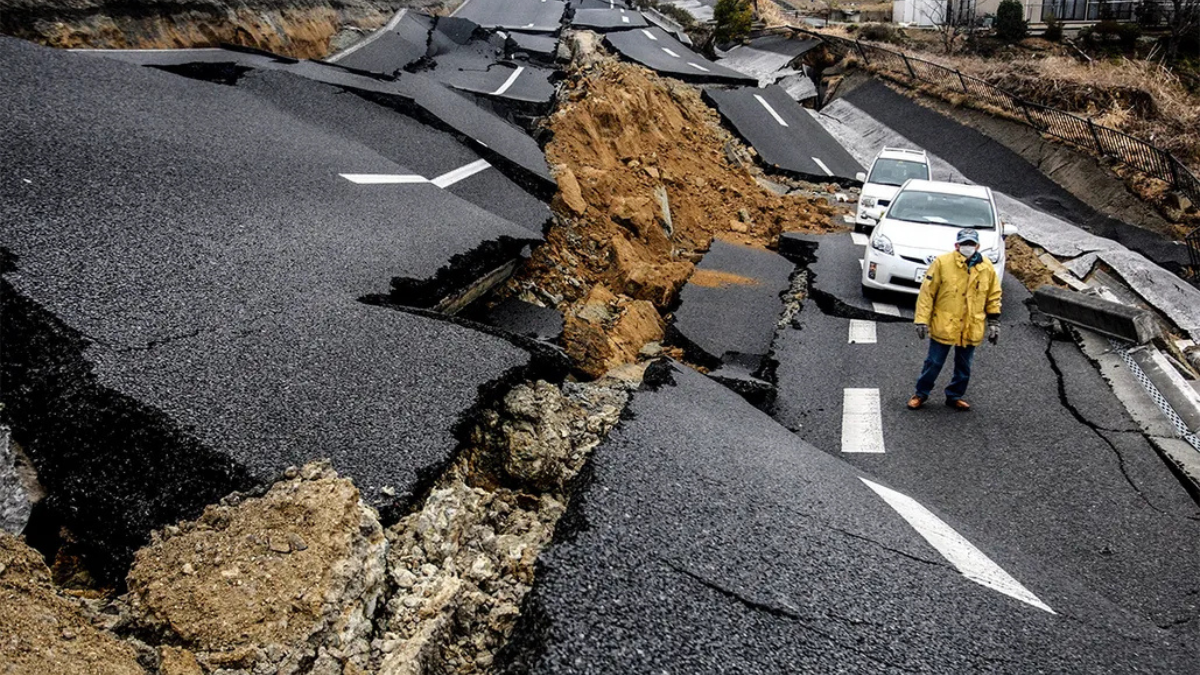
Earthquakes are among the most powerful natural disasters on Earth, capable of shaking the ground, destroying cities and changing landscapes within seconds. Throughout history, some earthquakes have been so strong that they left lasting marks on the world. These massive quakes have caused widespread damage, tsunamis and loss of life, reminding us of nature’s incredible force. Here’s a look at the strongest earthquakes ever recorded.
What is an Earthquake?
An earthquake occurs when the Earths’ crust shakes due to a sudden release of energy. This energy travels as seismic waves. It usually occurs along a fault, which is a crack in the Earth’s crust where large blocks of rock shift or slide past each other, causing the ground to move.
List of Strongest Earthquakes in the World
Earthquakes are powerful natural events that can shake the ground, damage cities and trigger tsunamis. Some earthquakes in history have been so strong that they are recorded as the largest by magnitude. Here’s look at the strongest earthquakes every recorded:
| Rank | Event | Location | Magnitude | Date |
| 1. | 2004 Indian Ocean earthquake | Indonesia, Sumatra, Indian Ocean | 9.2 – 9.3 | December 26, 2004 |
| 2. | 2011 Tōhoku earthquake | Japan, Tōhoku, Pacific Ocean | 9.0-9.1 | March 11, 2011 |
| 3. | 2010 Chile Earthquake | Chile, Maule | 8.8 | February 27, 2010 |
| 4. | 2025 Kamchatka Peninsula earthquake | Russia, Kamchatka | 8.8 | July 30, 2025 |
| 5. | 2005 Nias – Simeulue earthquake | Indonesia, Sumatra | 8.6 | March 28, 2005 |
| 6. | 2012 Indian Ocean earthquakes | Indonesia, Sumatra | 8.6 | April 11, 2012 |
| 7. | 2007 Bengkulu Earthquake | Indonesia, Sumatra | 8.5 | September 12, 2007 |
2004 Indian Ocean earthquake
On 26 December 2004, at 07:58 local time, a massive 9.2 – 9.3 magnitude earthquake struck off the west coast of Aceh, northern Sumatra, Indonesia. Known as the Sumatra-Andaman earthquake, it occurred along the fault between the Burma and Indian plates. This undersea megathrust quake reached a Mercalli intensity of IX in some areas and triggered one of the deadliest tsunamis in recorded history.
2011 Tōhoku earthquake
On 11 March 2011, a massive 9.0 – 9.1 magnitude undersea megathrust earthquake struck off Japan’s Tōhoku coast, lasting about six minutes. Known as the Great Japan Earthquake (3.11), it triggered a devastating tsunami with waves up to 40.5 meters high, reaching 10 km inland. The disaster caused nearly 20,000 deaths, thousands injured or missing and massive displacement. Freezing weather and snowfall worsened rescue efforts, making it Japan’s strongest recorded quake and one of the world’s most powerful in modern history.
2010 Chile Earthquake
On 27 February 2010, an 8.8 magnitude earthquake struck off central Chile’s coast at 03:34 local time, lasting about three minutes. Known as the 27F earthquake, it triggered a tsunami and caused severe shaking across six Chilean regions, affecting nearly 80% of the population. Cities like Concepción, Arauco, and Coronel experienced the most violent tremors, with impacts felt as far as Argentina and even southern Peru. It was Chile’s largest quake since 1960, caused by water pressure buildup between tectonic plates.
2025 Kamchatka Peninsula earthquake
On 29 July 2025, at 23:24 UTC (30 July local time), a massive Mw 8.8 megathrust earthquake struck off the eastern coast of Russia’s Kamchatka Peninsula. It is the strongest earthquake recorded since the 2011 Tōhoku disaster and ranks among the sixth most powerful ever, tying with the 1906 Ecuador – Colombia and 2010 Chile quakes. The powerful tremor, caused by a major tectonic plate shift, posed significant tsunami risks and impacted coastal regions with severe shaking and potential infrastructure damage.
2005 Nias – Simeulue earthquake
On 28 March 2005, at 23:09 local time, the Nias-Simeulue earthquake struck off the west coast of northern Sumatra, Indonesia, with a magnitude of 8.6 Centered in the Sunda megathrust subduction zone, it was one of the strongest quakes since 1900. At least 915 people died, mostly on Nias Island, and hundreds of buildings were destroyed. The quake caused a small tsunami, widespread power outages, and was felt as far as Bangkok, Thailand. Several strong aftershocks followed, adding to the region’s devastation.
2012 Indian Ocean earthquakes
On 11 April 2012, two powerful undersea earthquakes, measuring 8.6 and 8.2 in magnitude, struck near Aceh, Indonesia. Occurring within minutes of each other, they were the largest strike-slip earthquakes ever recorded and unusual for occurring within a tectonic plate. Tsunami warnings were issued across the Indian Ocean, causing widespread concern, but were later cancelled. Despite their strength, the quakes caused relatively limited damage compared to other major events, though they were felt in several countries around the region.
2007 Bengkulu Earthquake
The 2007 Bengkulu earthquakes were a series of powerful megathrust quakes that struck off the coast of Sumatra, Indonesia, along the Sunda Trench. Three quakes measured around magnitude 7 or higher, with the strongest reaching 8.4, ranking among the top 20 largest earthquakes ever recorded. Tsunami bulletins were issued for the affected areas, prompting coastal evacuations. While significant damage occurred in Bengkulu and surrounding regions, the impact was less catastrophic than feared, though many communities were left dealing with destruction and disruption.


 Health Ministry Grants Lifetime Validity...
 José Antonio Kast Rist Takes Oath as the...
 Government Launched National Initiative ...