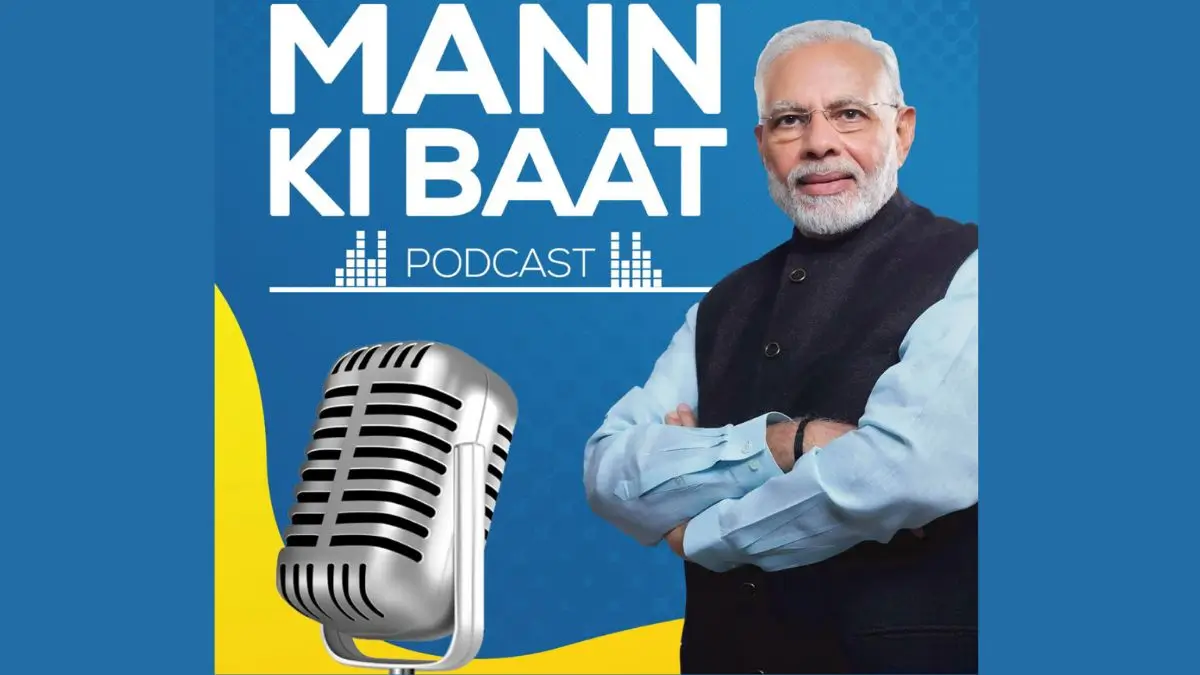
In the 129th episode of ‘Mann Ki Baat‘ aired on 28 December 2025, Narendra Modi delivered a wide ranging address reflecting on India’s achievements in 2025 and outlining the aspirations, responsibilities, and collective resolve for the year ahead. As the final Mann Ki Baat episode of 2025, the address blended national security, youth participation, science and technology, culture, health, environment, and grassroots success stories, reinforcing the vision of a ‘Viksit Bharat’ (Developed India).
2025: A Year of National Pride and Global Impact
- The Prime Minister highlighted that 2025 was a year that filled every Indian with pride, as India left a strong imprint across domains like national security, sports, science, space and culture.
- A key moment cited was Operation Sindoor, which emerged as a symbol of India’s uncompromising stance on national security and the deep emotional connect of citizens with Maa Bharati.
- The year also marked 150 years of ‘Vande Mataram’ celebrated enthusiastically through public participation using the hashtag #VandeMataram150.
Historic Sporting Achievements
PM Modi described 2025 as a golden year for Indian sports, highlighting multiple historic victories,
- Men’s Cricket Team winning the ICC Champions Trophy
- Women’s Cricket Team lifting the World Cup for the first time
- Indian women winning the Women’s Blind T20 World Cup
- Strong performances in Asia Cup T20 and Para-sports World Championships
These achievements he said, reflect India’s growing confidence and inclusive sporting ecosystem.
Breakthroughs in Science, Space, and Environment
- India’s progress in science and space was another highlight. The Prime Minister noted that Shubhanshu Shukla became the first Indian to reach the International Space Station, marking a major milestone in India’s space journey.
- On the environmental front, he shared that India’s cheetah population has crossed 30, reflecting success in wildlife conservation efforts. Environmental protection and sustainability continued to be defining themes of the year.
Culture, Faith, and Heritage
PM Modi underlined how faith, culture, and heritage came together in 2025,
- The Prayagraj Mahakumbh at the beginning of the year drew global attention
- The Dhwajarohan ceremony at the Ram Mandir in Ayodhya at year-end filled the nation with pride
- Growing enthusiasm for Swadeshi, with people consciously choosing products made by Indians
These developments, he said, strengthened India’s cultural self-confidence.
Youth Power and Viksit Bharat
- Calling youth the biggest strength of India, the Prime Minister spoke extensively about platforms enabling young people to contribute ideas and innovation.
- He highlighted the ‘Viksit Bharat Young Leaders Dialogue’ whose second edition is scheduled around National Youth Day (12 January) on Swami Vivekananda’s birth anniversary. Youth will share ideas on innovation, startups, agriculture, and fitness.
- The Smart India Hackathon 2025 also received special mention.
- Over 13 lakh students from 6,000+ institutions have participated in the Hackathon over the years, offering solutions to real-life challenges such as traffic management, cyber security, digital frauds, banking in villages and agriculture.
Connecting Modernity with Cultural Roots
PM Modi stressed that while technology is transforming lives rapidly, staying rooted in culture is essential. He cited inspiring examples,
- ‘Geetanjali IISc’ a music initiative at the Indian Institute of Science that evolved into a cultural hub
- ‘Kannada Pathshale’ in Dubai, helping children of the Indian diaspora stay connected to their language
- Renewed interest in Tamil through initiatives like the Kashi Tamil Sangamam, where even Hindi speaking children in Varanasi are learning Tamil
These examples showcased India’s cultural unity in diversity.
Grassroots Change Makers and Solar Power
- The Prime Minister shared the story of Moirangthem Seth from Manipur, who used solar power to address electricity shortages in remote areas, benefiting healthcare, livelihoods, women, fishermen, and artisans.
- He linked this to the PM Surya Ghar Muft Bijli Yojana, under which families receive ₹75,000–₹80,000 for rooftop solar installations, reinforcing India’s push towards renewable energy and self-reliance.
Heritage, Unsung Heroes, and Freedom Struggle
- PM Modi spoke about archaeological discoveries in Jehanpora, Baramulla (Jammu & Kashmir) where ancient Buddhist stupas revealed Kashmir’s 2,000-year-old heritage.
- He also paid tribute to Parvati Giri of Odisha, whose birth centenary will be celebrated in January 2026.
- A freedom fighter and social worker, she exemplified the contribution of unsung heroes to India’s independence and social upliftment.
Health Advisory: Antibiotic Resistance
- Citing a report by the Indian Council of Medical Research, the Prime Minister warned against the indiscriminate use of antibiotics, which is making diseases like pneumonia and UTIs harder to treat.
- He urged citizens to use antibiotics only on medical advice stressing: ‘Medicines need guidance, antibiotics need doctors.’
Traditional Arts, GI Tags, and Women Empowerment
- The address highlighted how traditional arts are driving economic empowerment:
- Narasapuram Lace (Andhra Pradesh) received a GI Tag, supporting 1 lakh women across 250 villages
- Entrepreneurs like Margaret Ramtharsiem (Manipur) and Chokhone Krichena (Senapati district) are transforming handicrafts and floriculture into sustainable livelihoods
- These stories illustrated how traditional knowledge combined with modern vision can fuel local development.
Festivals, Tourism, and India’s Diversity
The Prime Minister encouraged people to explore India’s diversity through festivals like the Kutch Rannotsav running from 23 November to 20 February, which has already attracted over 2 lakh visitors this season.

 Supreme Court Rules on SC Status: Conver...
 Lok Sabha Passes Transgender Amendment B...
 Indian Railways New Ticket Cancellation ...