
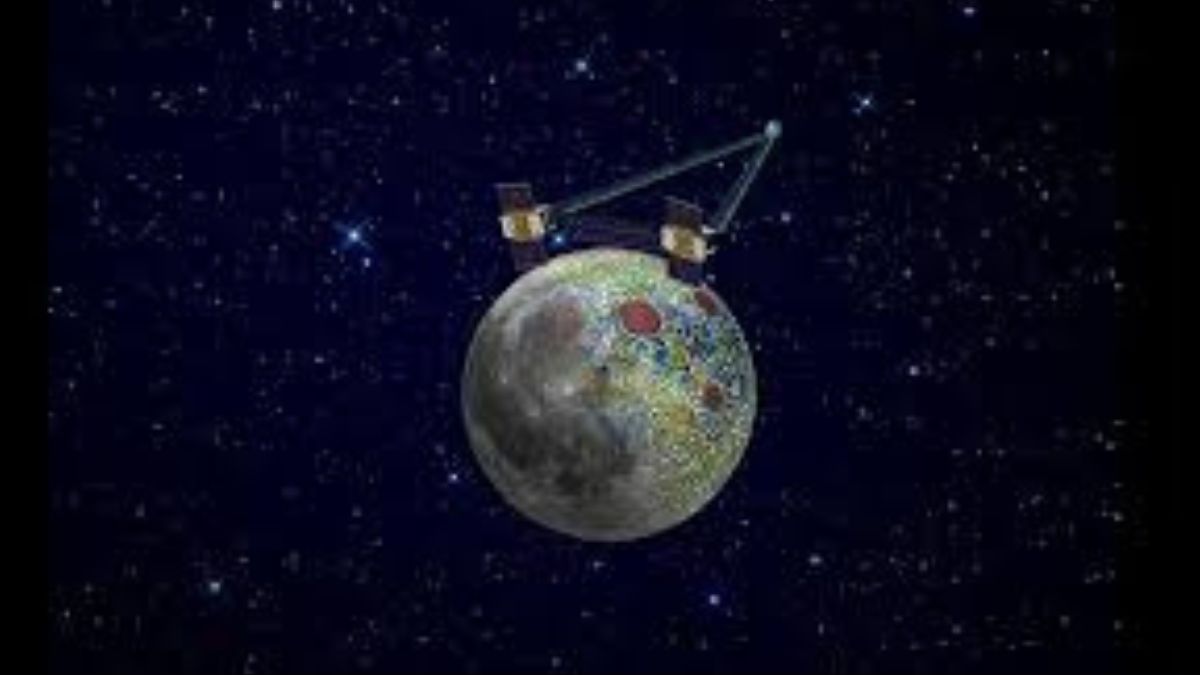
In a major breakthrough, a new NASA study based on data from the GRAIL (Gravity Recovery and Interior Laboratory) mission has finally resolved a decades-old mystery about why the Moon’s nearside looks dramatically different from its farside. The findings provide crucial insights into the Moon’s internal structure, volcanic history, and thermal evolution.
Why in News?
NASA researchers, using GRAIL mission data, have revealed that gravitational and thermal differences caused by Earth’s pull and internal heat sources are responsible for the asymmetrical appearance of the Moon’s two hemispheres. The study sheds light on the contrasting features of the Moon’s volcanically active nearside and the crater-rich farside.
About GRAIL Mission
- Full Form: Gravity Recovery and Interior Laboratory
- Launched by: NASA in 2011 from Cape Canaveral via Delta II rocket
- Managed by: Jet Propulsion Laboratory (JPL), with MIT as scientific lead
- Components: Two spacecraft — Ebb and Flow, flew in tandem
- Objective: To map the Moon’s gravity field with high precision
Key Objectives and Discoveries
Gravitational Field Mapping
Detected minute changes in lunar gravity to infer internal composition
Crustal Differences
- Nearside: Thinner crust; allowed lava eruptions forming basaltic plains (mare)
- Farside: Thicker crust; rugged and heavily cratered due to less volcanic activity
Heat Flow and Radioactive Elements
- Nearside has higher levels of thorium and titanium
- Mantle temperature up to 200°C warmer than farside
Tidal Effects
- Nearside experiences greater tidal flexing due to Earth’s gravity
- Confirms internal asymmetry between the hemispheres
Significance
- Solves a long-standing lunar geological puzzle
- Enhances our understanding of planetary formation and evolution
- Supports future lunar exploration missions and landing site selections
| Summary/Static | Details |
| Why in the news? | NASA’s GRAIL Mission Solves Lunar Mystery of Moon’s Asymmetry |
| Mission Name | GRAIL (Gravity Recovery and Interior Laboratory) |
| Launched | 2011 by NASA using Delta II rocket |
| Managed by | NASA’s JPL in collaboration with MIT |
| Key Spacecraft | Ebb and Flow (dual satellites) |
| Objective | Map Moon’s gravity and study internal structure |
| Major Discovery | Asymmetry due to gravitational and thermal differences |
| Scientific Impact | Solved mystery of different appearances of nearside and farside |
| Mission Status | Successfully completed with controlled impact on lunar surface |


 Meet MAI-Transcribe-1: Microsoft’s Fast,...
 What is Outer Space Treaty 1967? Princip...
 What Is Mission Mitra? ISRO’s New Experi...











