
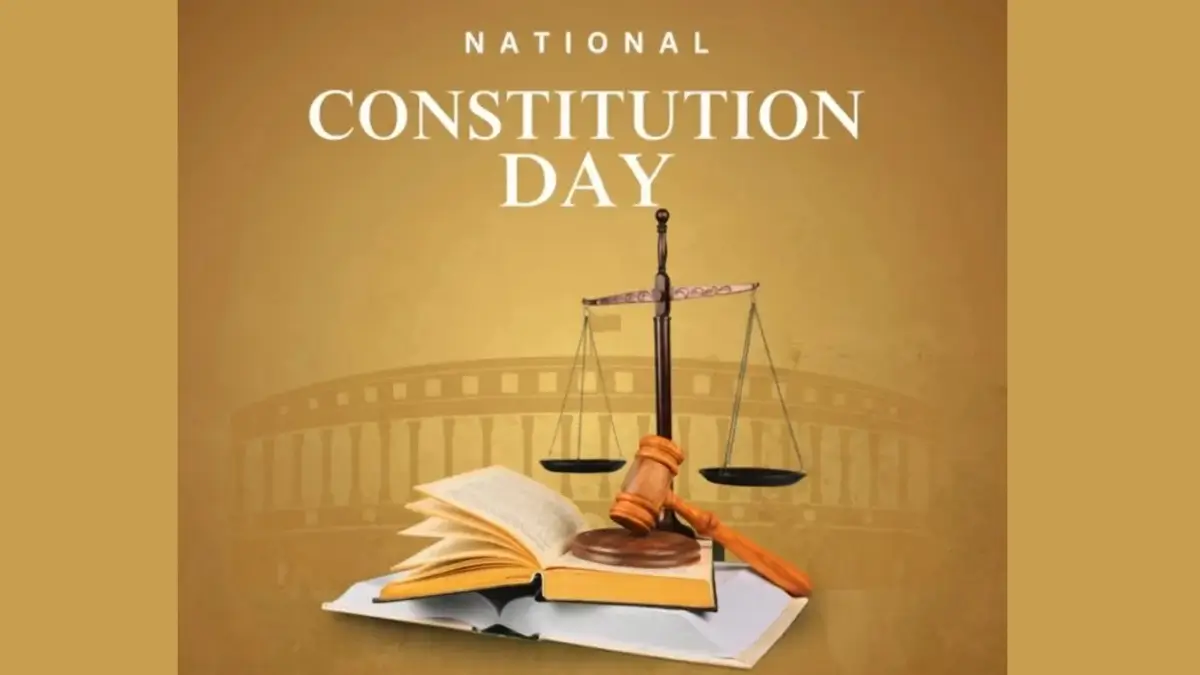
National Constitution Day, or Samvidhan Divas, is celebrated every year on 26 November to commemorate the historic day when the Constituent Assembly adopted the Constitution of India in 1949. The observance reminds citizens of the monumental work undertaken by the framers of the Constitution and reinforces the importance of constitutional values that guide India’s democratic and governance framework. The day is also aimed at deepening constitutional literacy, especially among students, public servants, and citizens, by encouraging them to engage with the ideals of justice, liberty, equality, and fraternity. On Constitution Day 2025, India honours 75 years since the adoption of the Constitution, reflecting on its legacy and relevance in contemporary democracy.
National Constitution Day: Meaning and Purpose
National Constitution Day pays tribute to the tireless efforts of the Constituent Assembly, which debated, drafted, and shaped a governance blueprint for an independent nation emerging from colonial rule. The drafting process lasted 2 years, 11 months, and 18 days, making it one of the most exhaustive constitution-making efforts in the world.
The day highlights the contributions of Dr. B.R. Ambedkar, Chairman of the Drafting Committee, whose vision played a central role in designing India’s constitutional principles. Constitution Day encourages citizens to revisit fundamental rights, duties, and the moral foundations of democratic life.
History of Constitution Day in India
Although the Constitution was adopted in 1949, Constitution Day as a formal observance was declared much later—in 2015.
Key Historical Milestones
- Constitution Day officially designated on 19 November 2015 by the Government of India.
- Date chosen to mark 26 November 1949, when the Constitution was adopted.
- Introduced during the 125th birth anniversary celebrations of Dr. B.R. Ambedkar.
- Before 2015, the day was observed informally as Law Day by legal communities.
The renaming underscored the need to acknowledge the Constitution’s transformative impact on India’s social and political structure and to honour Ambedkar’s pioneering role.
Why Constitution Day Matters
Constitution Day holds enormous relevance in strengthening India’s democratic functioning. It serves as a civic reminder that the Constitution is not merely a legal document but a living instrument that shapes governance, rights, and responsibilities.
Key Importance of Constitution Day
Constitution Day,
- Promotes awareness of Fundamental Rights, Duties, and Directive Principles.
- Reinforces constitutional supremacy over arbitrary decision-making.
- Honours Dr. B.R. Ambedkar and the Founding Fathers of the Constitution.
- Encourages public engagement with values such as secularism, federalism, democracy, and the rule of law.
- Motivates citizens to safeguard democratic ideals and strengthen national unity.
Drafting Timeline of the Indian Constitution
The drafting of India’s Constitution was a landmark exercise involving rigorous debate, compromise, and visionary thinking.
Chronological Timeline
| Event | Date |
| Formation of Constituent Assembly | 9 December 1946 |
| First meeting of the Constituent Assembly | 9 December 1946 |
| Election of Dr. Rajendra Prasad as President | 11 December 1946 |
| Formation of Drafting Committee under Dr. B.R. Ambedkar | 29 August 1947 |
| Presentation of Draft Constitution to the Assembly | 4 November 1948 |
| Adoption of Constitution | 26 November 1949 |
| Constitution comes into force (Republic Day) | 26 January 1950 |
Over 165 days were spent in open session debates, showcasing the diverse voices and opinions that shaped modern India’s democratic structure.
Constitutional Values Celebrated on Constitution Day
The Indian Constitution is anchored in a set of core ethical principles expressed through the Preamble. These values define India’s political and social philosophy.
Key Constitutional Values
- Justice: Social, economic, and political fairness for all.
- Liberty: Freedom of thought, expression, belief, faith, and worship.
- Equality: Equal opportunity, dignity, and rights without discrimination.
- Fraternity: National unity, integrity, and mutual respect.
- Secularism: State neutrality towards all religions.
- Democracy: Participation, representation, and accountability.
- Rule of Law: Supremacy of laws over arbitrary authority.
These values form the backbone of India’s democratic and inclusive governance framework.
Constitution Day and Republic Day: Key Differences
Though closely connected, Constitution Day and Republic Day highlight different historical moments.
| Feature | Constitution Day (26 Nov) | Republic Day (26 Jan) |
| Significance | Adoption of the Constitution | Enforcement of the Constitution |
| Declared as | Constitution Day (2015) | National Festival |
| Holiday Status | Not a public holiday | National public holiday |
| Focus | Constitutional awareness | Celebration of India as a Republic |
| Activities | Preamble reading, debates, lectures | Parade, awards, cultural ceremonies |
Static Facts
- Adoption Date: 26 November 1949
- Enforcement Date: 26 January 1950
- Official Declaration as Constitution Day: 19 November 2015
- Drafting Duration: 2 years, 11 months, 18 days
- Drafting Committee Chairperson: Dr. B.R. Ambedkar
- Total Articles at Adoption: 395
- Current Articles (2025): 448
- Constitution Length: Longest written constitution in the world
- Number of Schedules: 12


 National Safe Motherhood Day 2026: Why M...
 Jyotirao Phule Jayanti 2026: India Begin...
 World Homoeopathy Day 2026: Advancing Ho...











