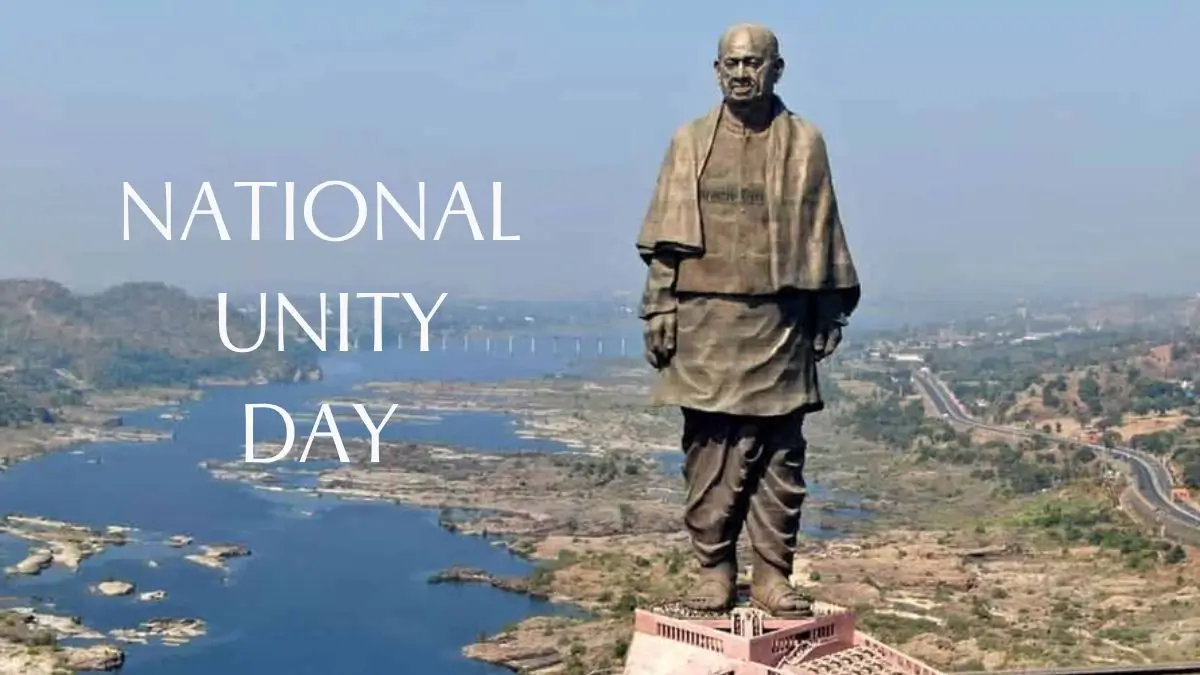
National Unity Day 2025, also known as Rashtriya Ekta Diwas, is a landmark occasion as India marks the 150th birth anniversary of Sardar Vallabhbhai Patel, the “Iron Man of India.” Celebrated every year on October 31, this day honors Patel’s monumental role in politically integrating more than 560 princely states into the Indian Union after independence.
In 2025, the relevance of Patel’s legacy becomes even more significant as the nation continues to grapple with modern-day challenges to unity amid its diverse social, cultural, and linguistic fabric.
Why in News?
In 2025, India is commemorating Sardar Patel’s 150th birth anniversary on a national scale. From the Run for Unity to cultural events and school programs, tributes are being paid to Patel’s contribution in laying the foundation for a united and integrated India. Events are centered around the Statue of Unity in Gujarat — the world’s tallest statue — symbolising his towering legacy.
The celebrations aim not only to remember Patel’s achievements but also to foster patriotism, brotherhood, and tolerance in present and future generations.
Sardar Vallabhbhai Patel: Early Life and Rise
Born on October 31, 1875, in Nadiad, Gujarat, into a Patidar family, Vallabhbhai Patel overcame humble beginnings to become one of India’s foremost freedom fighters and administrators.
Despite being seen as unambitious in his youth — he matriculated at 22 — Patel pursued law in London’s Middle Temple and returned to practice in Ahmedabad. His political journey took a turn in 1917 when he met Mahatma Gandhi and was inspired to join India’s independence movement.
Role in India’s Freedom Struggle
Patel’s contributions spanned multiple landmark movements.
| Name | Year | Description |
| Kheda Satyagraha | 1918 | Advocated for tax relief during a famine. |
| Non-Cooperation Movement | 1920–22 | Mobilized thousands and promoted boycott of British goods. |
| Bardoli Satyagraha | 1928 | Earned the title “Sardar” for successfully resisting unfair tax hikes. |
| Salt March & Civil Disobedience | 1930 | Actively involved in anti-British campaigns. |
| Quit India Movement | 1942 | Arrested for inciting mass protests against British rule. |
As President of the Indian National Congress in 1931, he also ratified the Gandhi-Irwin Pact and pushed for fundamental rights.
Role in India’s Unification After Independence
Following independence in 1947, India faced a daunting challenge: integrating over 560 princely states that were not under direct British rule.
As the first Deputy Prime Minister and Home Minister, Patel worked with his secretary V.P. Menon to formulate the Instrument of Accession — a legal tool that enabled the peaceful accession of princely states.
Key Integration Highlights,
- Junagadh: A Muslim Nawab ruling a Hindu-majority state wanted to join Pakistan. Patel’s diplomacy and a public referendum ensured its accession to India.
- Hyderabad: The Nizam sought independence, but Patel ordered Operation Polo in 1948, leading to its peaceful annexation.
- Kashmir: Patel provided military support and political counsel during the state’s accession amid conflict.
Patel’s unwavering resolve prevented the balkanization of India and helped craft a unified administrative and territorial framework.
Patel’s Vision and Ideology
Sardar Patel’s governance was a blend of Gandhian principles and pragmatic statecraft.
- Self-Reliance (Poorna Swaraj): Advocated complete independence and self-governance.
- Satyagraha: Used non-violence as a political tool.
- Equality and Secularism: Opposed caste discrimination and worked for communal harmony.
- Strong Institutions: Promoted constitutional democracy and was instrumental in creating the Indian Administrative Service (IAS) — calling it the “steel frame” of India.
Legacy and Modern-Day Tributes
Honours and Memorials
- Iron Man of India: Celebrated for his uncompromising vision of unity.
- Bharat Ratna (1991): Posthumously awarded India’s highest civilian honour.
- Statue of Unity (2018): World’s tallest statue in Gujarat, symbolising national integration.
- Sardar Vallabhbhai Patel National Police Academy: Premier police training institute named in his honor.
Government Schemes Named After Him
- Sardar Patel Urban Housing Mission
- Sardar Patel Agricultural Research Award
- Sardar Patel District Economic Region
- Sardar Patel Housing Scheme (Gujarat)
National Unity Day: Observances in 2025
- Run for Unity: A nationwide marathon promoting unity and fitness.
- Pledge Ceremonies: Citizens reaffirm commitment to the nation’s unity.
- Cultural and Educational Programs: Debates, exhibitions, and student activities held in schools and universities.
- Tributes at Statue of Unity: Wreath-laying ceremonies and patriotic events.
- The day draws attention to the importance of tolerance, integrity, and collective identity in today’s socio-political climate.
Relevance in Contemporary India
National Unity Day 2025 is especially relevant given current debates over communalism, separatism, and regionalism. As these challenges test the nation’s fabric, Patel’s legacy offers a guiding light. His belief in inclusive governance, pluralism, and national discipline continues to shape the nation’s path.
This day not only honors history but also calls for renewed commitment to India’s unity — transcending language, caste, religion, or region.

 March 25: International Day of Solidarit...
 International Day of the Unborn Child: M...
 International Day for the Right to Truth...