
India’s rich archaeological heritage has gained fresh momentum with new discoveries from Karnataka. Recent excavations at Lakkundi have revealed relics from the Neolithic period, pushing the site’s history far beyond its famed medieval temples. These findings are now expected to significantly strengthen the long-pending proposal to secure global recognition for this historic settlement.
Why in News?
Neolithic relics discovered at Lakkundi village in Karnataka have reinforced efforts to include the site in UNESCO’s World Heritage list, highlighting its prehistoric origins and multi-layered cultural history.
Excavation at Kote Veerabhadreshwar Temple
- The latest excavation began on January 16, 2026, at the Kote Veerabhadreshwar Temple premises in Lakkundi.
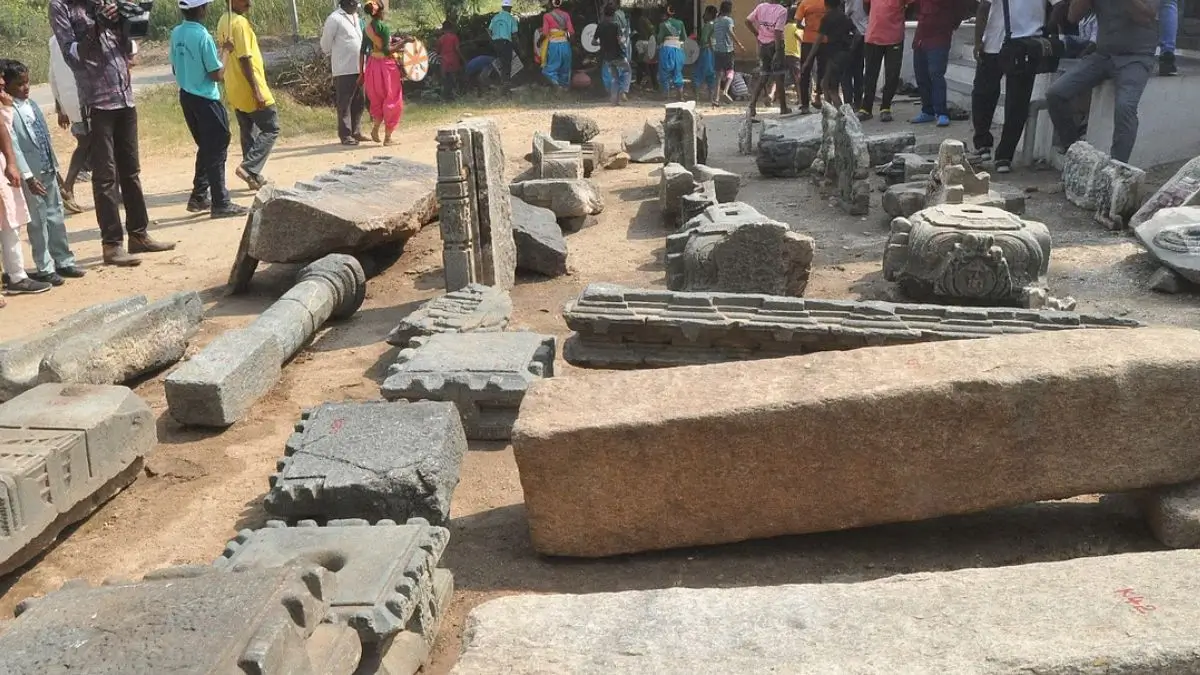
- Archaeological attention intensified after villagers accidentally uncovered ancient artefacts while digging a house foundation.
- Situated around 12 km from Gadag, Lakkundi was once famed as the “village of a hundred wells and temples”, many of which are believed to remain buried beneath modern habitations.
From Neolithic Settlement to Medieval Hub
- The discovery of Neolithic tools and relics confirms that human habitation at Lakkundi dates back thousands of years, long before its medieval prominence.
- Earlier known as Lokkigundi, the settlement appears in 11th–12th century inscriptions, where it was likened to Amaravati, the mythical city of Indra, for its prosperity.
- This continuity from prehistoric to historic times adds exceptional archaeological value to the site.
Political and Economic Importance in the Deccan
- Lakkundi flourished under major Deccan dynasties such as the Chalukyas, Yadavas, and Hoysalas.
- It housed a tankashale (mint), indicating its economic importance.
- In 1192 AD, it even served as the capital of Hoysala ruler Eradane Ballala, reflecting its strategic and administrative significance during the medieval period.
Religious Diversity and Cultural Legacy
- The village was closely associated with Queen Attimabbe, a renowned Jain philanthropist of the 11th century, who commissioned temples, Jain basadis, and wells. Alongside Jainism, Lakkundi was also home to 12th-century sharanas linked to the Bhakti movement of Basaveshwara, such as Shivasharana Ajaganna and Sharane Muktayakka.
- This coexistence highlights the site’s religious tolerance and cultural plurality.
Architectural Heritage of Lakkundi
- Though many monuments have disappeared over time, records indicate at least 13 surviving temples built in the Kalyana Chalukya architectural style, along with exquisitely carved stepwells (kalyanis).
- These structures showcase advanced engineering, water management, and artistic excellence, making Lakkundi a key architectural site in Karnataka.
UNESCO Push and Heritage Revival
- The Karnataka government, under Tourism Minister H.K. Patil, has revived long-pending excavation and conservation plans.
- Over 1,050 artefacts collected from local households are now displayed in an open museum.
- The State is working with the Indian National Trust for Art and Cultural Heritage to finalise a proposal to place Lakkundi and nearby temple clusters on UNESCO’s tentative list, with further surveys expected to expand protected monuments.
Key Summary at a Glance
| Aspect | Details |
| Why in News? | Neolithic relics discovered |
| Location | Lakkundi, Gadag district, Karnataka |
| Historical Span | Neolithic to medieval period |
| Major Dynasties | Chalukya, Yadava, Hoysala |
| Cultural Icons | Queen Attimabbe, Bhakti sharanas |
Question
Q. Lakkundi, recently in news for Neolithic relics, is located in which district?
A. Hampi
B. Belagavi
C. Gadag
D. Ballari

 Sikkim Police Receives President’s Polic...
 Punjab Government Introduces Mukhya Mant...
 Gujarat Witnesses Launch of India’s Firs...










