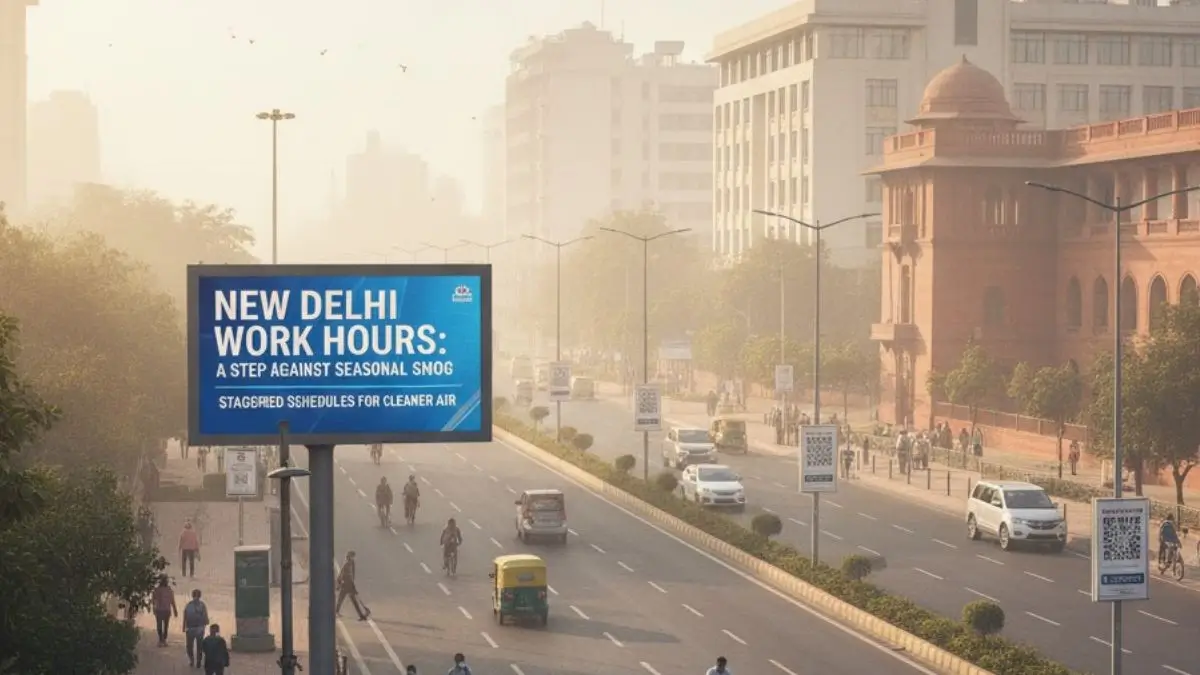
In a proactive step to tackle worsening air pollution during the winter season, Delhi Chief Minister Rekha Gupta has announced staggered working hours for government and MCD offices. The new schedule will be in effect from November 15, 2025, to February 15, 2026, a period typically marked by hazardous air quality levels in the national capital. This move is aimed at reducing vehicular traffic congestion, which significantly contributes to Delhi’s rising pollution levels in winter.
Revised Office Timings: A Strategic Move
As per the latest announcement,
- Delhi Government offices will now function from 10:00 AM to 6:30 PM
- Municipal Corporation of Delhi (MCD) offices will operate from 8:30 AM to 5:00 PM
- Currently, Delhi government offices run from 9:30 AM to 6:00 PM, and MCD offices from 9:00 AM to 5:30 PM. The earlier 30-minute gap between office timings often resulted in peak-hour traffic congestion, especially during morning and evening commutes.
By increasing this gap, the government aims to distribute vehicular movement more evenly throughout the day, thereby easing road congestion and helping reduce air pollution.
Why Staggered Timings Matter
The decision was taken following a high-level review meeting with senior scientific officers from the Department of Environment,
- The key concern: sharp increases in PM 2.5 and PM 10 levels during Delhi’s winter months, which pose significant health risks.
- PM 2.5 and PM 10 refer to particulate matter in the air with diameters of 2.5 microns and 10 microns respectively.
- These particles are harmful as they carry toxic chemicals, penetrate deep into the lungs, and are known to cause respiratory and cardiovascular issues.
Vehicular emissions are among the largest contributors to Delhi’s winter pollution, especially when trapped by temperature inversions and stagnant air. The staggered office hours are expected to reduce simultaneous vehicle movements and the resulting pollution spikes during rush hours.
Pollution Crisis in Delhi Winters
Every year, Delhi witnesses a severe spike in pollution levels from mid-November to February. Several factors contribute to this seasonal deterioration,
- Stubble burning in nearby states
- Lower wind speeds
- Temperature inversion that traps pollutants near the ground
- Increased usage of vehicles and heating appliances
During this period, Delhi frequently records “very poor” to “severe” air quality levels on the Air Quality Index (AQI), prompting health advisories and emergency pollution-control measures.


 Lok Sabha Passed Resolution For Amravati...
 How Many Seats Are There in Bihar Legisl...
 Nitish Kumar Resigns as Legislative Coun...