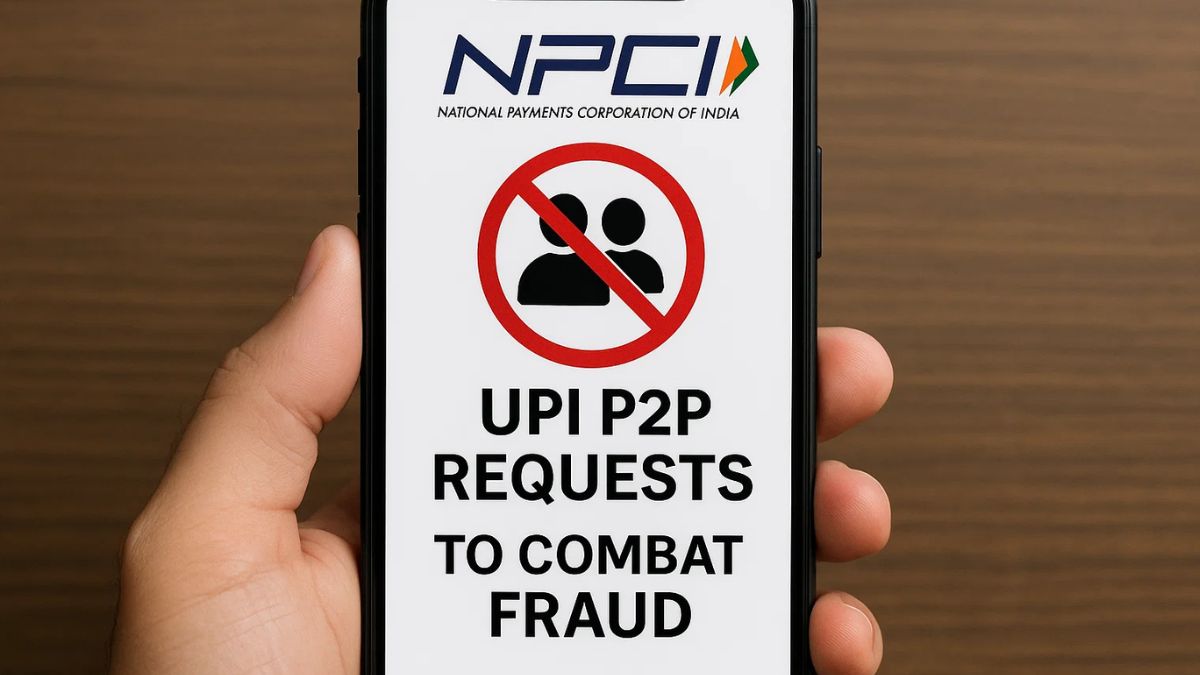
In a major move aimed at strengthening the security of digital payments, the National Payments Corporation of India (NPCI) has announced that peer-to-peer (P2P) ‘collect requests’ on UPI will be discontinued from October 1, 2025. The decision affects all member banks and leading UPI apps like PhonePe, Google Pay, and Paytm, and is expected to drastically reduce fraud incidents on the Unified Payments Interface (UPI) network.
What Are ‘Collect Requests’ in UPI?
A ‘collect request’ is a feature on UPI that allows users to send a payment request to another user, who then approves the transaction. These are also referred to as pull transactions, unlike standard push transactions where the payer initiates and completes the transfer themselves.
Currently, P2P collect requests on UPI
- Are limited to ₹2,000 per transaction
- Have a cap of 50 successful transactions per day
- Despite these restrictions, fraudsters have exploited this feature to trick users into unknowingly approving payment requests, leading to financial losses.
What Will Change from October 1, 2025?
According to NPCI’s circular dated July 29, 2025,
- All member banks, Payment Service Providers (PSPs), and UPI apps must discontinue P2P collect requests
- The feature will be disabled across platforms like PhonePe, Google Pay, and Paytm
- Only payer-initiated (push) transactions will be permitted for P2P payments
- This means users will now have to manually scan a QR code or enter recipient details to send money—enhancing control and eliminating accidental approvals of fraudulent requests.
Why NPCI Made This Move
The change comes in response to growing concerns over UPI fraud via collect request misuse. Experts and industry stakeholders praised the decision, noting,
- Rahul Jain (CFO, NTT DATA Payment Services India): “By eliminating this high-risk feature, UPI will be more secure and reliable.”
- Reeju Datta (Co-founder, Cashfree Payments): “This change closes a long-exploited loophole and empowers users by reinforcing trust and transparency.”
Even though NPCI had capped collect transactions in 2019, frauds persisted. The complete removal is now seen as a decisive safeguard in India’s journey toward a safer digital economy.
Broader Implications for Digital Payments
This update reflects NPCI’s broader commitment to,
- User protection through strict control on transaction initiation
- Simplifying UPI’s interface while maintaining its popularity and efficiency
- Boosting confidence in digital payment systems ahead of further innovations in UPI and CBDC integration
- It aligns with India’s mission to lead in secure, inclusive, and scalable fintech infrastructure globally.


 RBI Tightens Forex Market Controls With ...
 RBI Payments Vision 2028: Big Shift Towa...
 Now Get Home Loan From Anywhere: NHB Lau...