Hyderabad is one of India’s most vibrant cities, known for its rich culture, mouth-watering biryani and monuments, and bustling markets. It has a long and fascinating history that goes back hundreds of years. But did you know that the city was not always called Hyderabad? In the past, it was known by a completely different name that carries a beautiful story and deep historical meaning.
An Overview of Hyderabad
Hyderabad is the capital and largest city of Telangana, located in southern India on the Deccan Plateau. It covers about 650 square kilometers and lies along the Musi River. The city is known for its hilly terrain and artificial lakes like Hussain Sagar. As per the 2011 Census, Hyderabad has a city population of 6.9 million and around 9.7 million in its metro area, making it one of India’s most populous cities.
Old Name of Hyderabad
The city we know today as Hyderabad was once called Bhagyanagar. As per popular stories, this name came from Bhagmati, a woman loved by Muhammad Quli Qutb Shah, the fifth ruler of the Qutb Shahi dynasty. To honor her, the king is believed to have named the city after her. This tale of love between the ruler and Bhagmati is still one of the most famous legends in Hyderabad’s history.
Why the Name Changed to Hyderabad?
The city’s name change is too rooted in this love story. Historical accounts suggest that Bhagmati married the king and later converted to Islam. After her conversion, she was given the royal title Hyder Mahal. To honour her newly identity, the city was renamed Hyderabad, which means ”City of Hyder.”
Some historians also believe that the new name was chosen for its Islamic significance, reflecting the cultural and religious atmosphere of that time.
A City Built on Rich History and Culture
Hyderabad was officially founded in 1591 and soon became a centre of art, architecture, poetry and trade under the Qutb Shahi dynasty. Later, it rose to even greater prominence under the Nizams, who made it the capital of the Hyderabad State. The city’s strategic location in the Deccan region made it an important hub for politics, culture and commerce.
Interesting Historical Insights About Hyderabad
- Planned to Overcome Water Shortages: Before Hyderabad was founded, the capital of the Qutb Shahi dynasty was Golconda. However, Golconda faced severe water shortages. Muhammad Quli Qutb Shah planned a new city along the Musi River – a location that ensured a steady water supply for its residents.
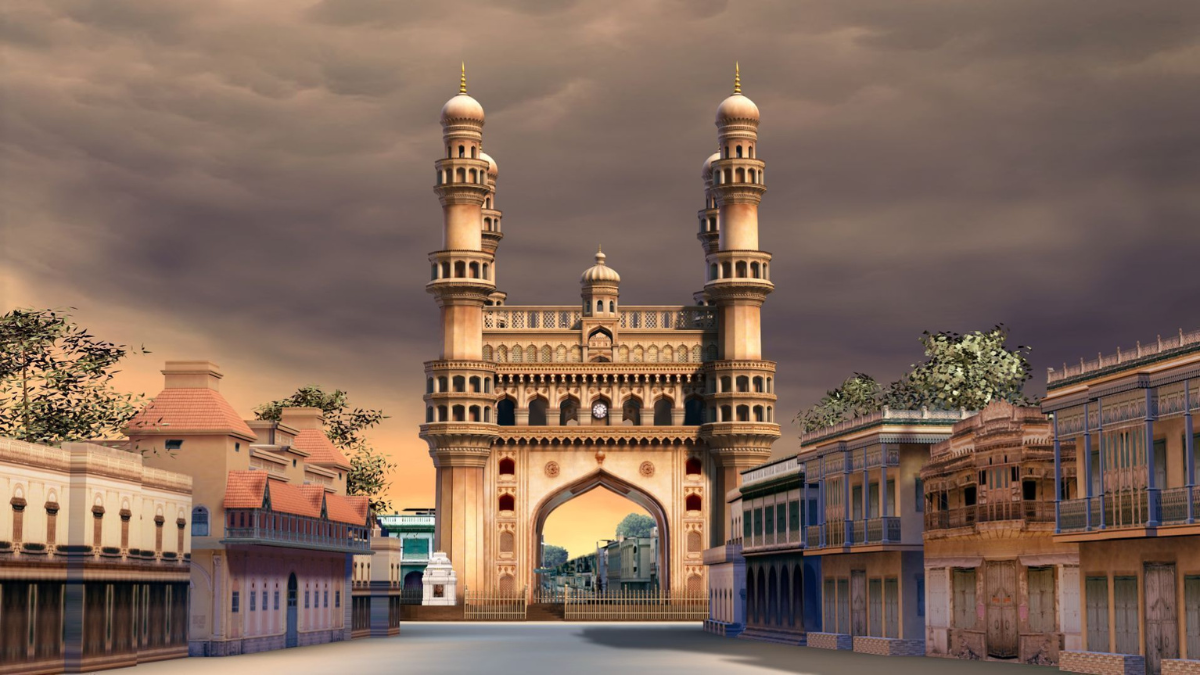
- The Charminar and the End of a Plague: One of Hyderabad’s most famous landmarks, the Charminar, has a symbolic origin. It was constructed to commemorate the end of a deadly plague that had devastated the region. It also marks the exact spot where the city’s layout was first planned.
- Home to the World’s Largest Film Studio: Modern Hyderabad is not just about history – it is also home to Ramoji Film City, recognized as the largest film studio complex in the world. This entertainment hub attracts filmmakers from across India and beyond.
- The Royal Origins of Hyderabadi Biryani: The world-famous Hyderabadi Biryani traces its roots to the royal kitchens of the Nizams. This special dish blends Mughal and South Indian flavours, creating a unique taste loved globally.
- A Princely State Larger than France: Before Hyderabad merged with India in 1948, it was one of the largest and richest princely states in the country. In fact, Hyderabad State was larger in area than many European countries, including France.


 Which Chemical is known as the King of C...
 CNG vs LPG Explained: Differences, Benef...
 What is LPG Gas? Uses, Benefits, and Int...