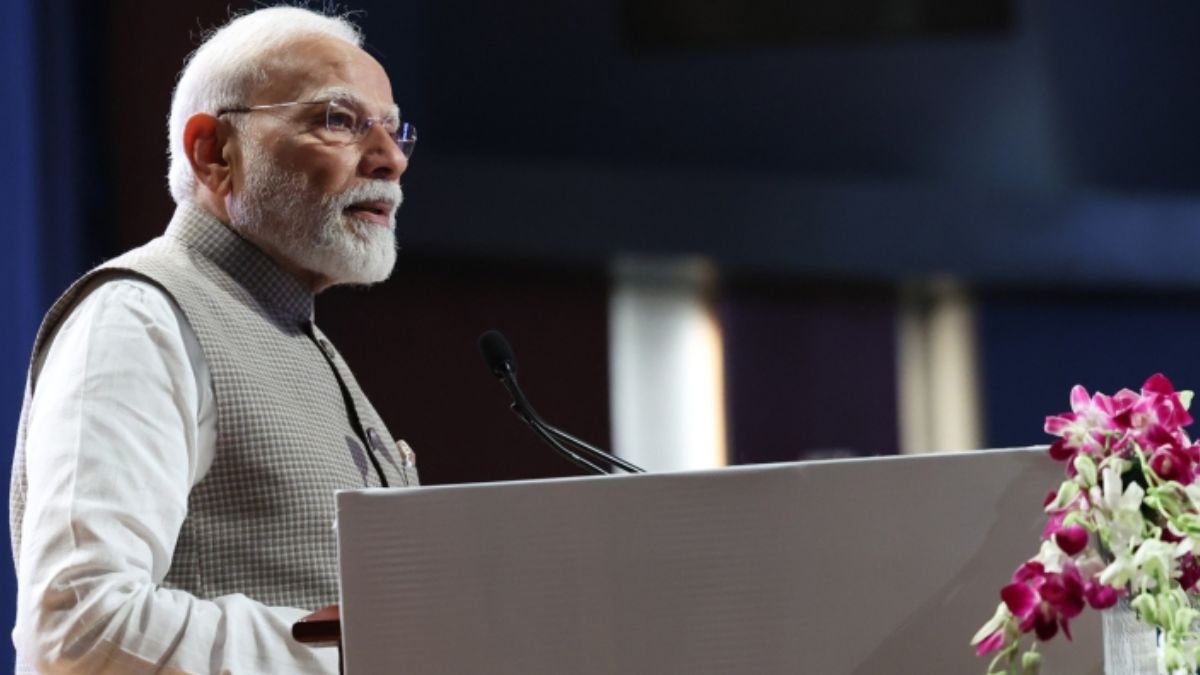
Prime Minister Narendra Modi today inaugurated the Bharat Ratna Dr. M.S. Swaminathan Centenary International Conference at Pusa, New Delhi, honoring the legacy of the visionary agricultural scientist who led India’s Green Revolution. The three-day event, held from August 7 to 9, celebrates Dr. Swaminathan’s centenary with the theme: “Evergreen Revolution – The Path to Bio-Happiness.”
The conference is jointly organized by the M.S. Swaminathan Research Foundation, Ministry of Agriculture and Farmers’ Welfare, ICAR, and the National Academy of Agricultural Sciences.
Remembering the Father of India’s Green Revolution
Union Minister for Agriculture & Farmers’ Welfare Shri Shivraj Singh Chouhan, who chaired the ceremony, paid heartfelt tribute to Dr. Swaminathan, highlighting his lifelong mission to eradicate hunger and empower farmers.
“Living for others is the essence of life, and Dr. Swaminathan lived for the nation. By following his path, we can ensure no one suffers from hunger or deprivation,”.
Recounted how the 1942–43 Bengal famine inspired Swaminathan’s dedication to agricultural research, leading to the development of hybrid wheat varieties that transformed Indian agriculture in the 1960s.
From importing 18,000 tonnes of Mexican wheat in 1966, India surged from 5 to 17 million tonnes in wheat production within a year—thanks to cross-breeding efforts guided by Swaminathan’s vision.
PM Modi’s Vision: Lab to Land
Prime Minister Modi for championing the integration of agriculture and science, especially through the “Lab to Land” campaign. Following the PM’s advice, several initiatives have been launched, including,
- Lab to Land initiative
- Krishi Chaupal
- Viksit Krishi Sankalp Abhiyan, where 2,170 scientific teams reached 64,000+ villages and directly engaged with over 1 crore farmers
Food Security and Agricultural Growth
Highlighting India’s achievements,
- India has surplus rice and is self-sufficient in wheat
- Robust grain storage systems are being developed
- 80 crore people receive free ration under food security schemes
- The need to boost productivity in pulses and oilseeds, particularly in crops like soybean, groundnut, mustard, sesame, chickpea, urad, arhar, and lentils.


 India Pharma 2026 Conference: Advancing ...
 WTO MC14 2026 Explained: Agenda, Issues,...
 International Rail Coach Expo 2026 Inaug...