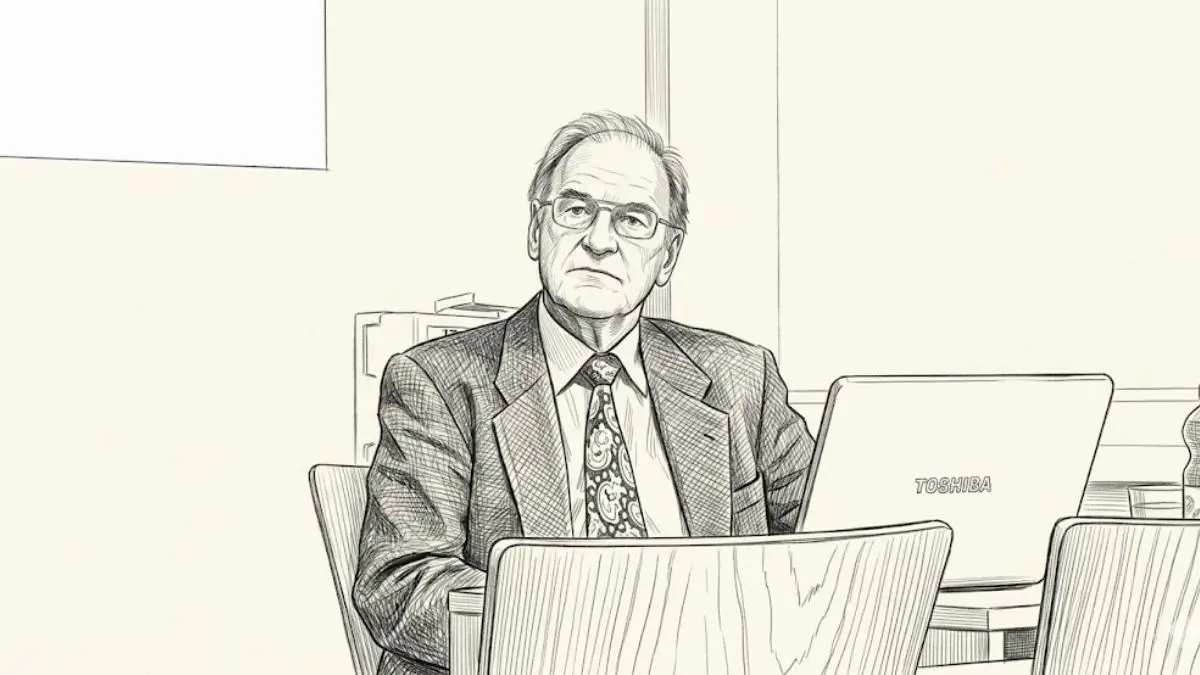
Eminent historian and Indologist Prof Hermann Kulke has widely recognized as one of the most influential scholars of Odisha’s cultural and history passed away at the age of 87. He was the German born scholar devoted decades of research to understanding the religious, political and cultural traditions of Odisha. And making him the globally respected voice in the field of Indian history. His work was significantly contributed to global scholarship on Indian civilization, temple traditions.
Early Life and Academic Journey of Hermann Kulke
Hermann Kulke was born in Berlin in Germany in 1938. After later years he emerged as one of the leading experts in South Asian history and Indology.
His academic career focused extensively on the relationship between religion, politics and state formation in medieval India.
He completed his Doctorate or PHD in Indology in 1967 at Freiburg University. And where he started to researched the temple city of Chidambaram in Tamil Nadu.
Later he earned his Doctor of Letters (D.Litt.) from Heidelberg University in 1975.
And focusing on the political and religious traditions of medieval Odisha.
Research Contributions to Odisha History
A large portion of Hermann Kulke’s research focused on the historical evolution of Odisha’s political and religious institutions.
His work explored how religion played a central role in legitimize the authority of regional rulers.
In his famous 1975 thesis “Jagannatha Cult and Gajapati Kingship” Kulke analyzed how the Jagannath temple tradition was used by the Gajapati rulers of Odisha to strengthen their political authority.
His work demonstrated how religious institutions could act as instruments of state legitimacy and governance in medieval India.
Comparative Studies on Indian Temple Traditions
Apart from the Odisha Hermann Kulke also studied temple traditions and kingship systems in other parts of India.
He examined how monumental temples often symbolized political authority and cultural identity.
For example Kulke compared Odisha’s Jagannath tradition with the Chola dynasty’s temple ideology in South India.
He also highlighted how the Brihadisvara Temple at Thanjavur was built by Rajaraja I in the early 11th century.
And that erved as a political and religious centre for the Chola empire and similar to the role played by Jagannath worship in Odisha.
Role in the Odisha Research Project
Prof Hermann Kulke played an important role in establishing international academic research on Odisha.
He was a founding member and coordinator of the first two Odisha Research Projects which was supported by the German Research Council.
These projects encouraged the collaborative research between Indian and European scholars and significantly expanded the global understanding of Odisha’s history, archaeology and religious traditions.
Teaching Career and Global Academic Influence
During his academic career Hermann Kulke served as a Professor of South and Southeast Asian History at Kiel University Which is in Germany.
He also taught for 21 years at the South Asia Institute of Heidelberg University and where he trained numerous students in Indian history and Indology.
Through his teaching and publications Kulke helped establish Odisha studies as a significant area within South Asian historical research.
Recognition and Padma Shri Award
To recognizw his contributions to the study of Indian history the Government of India honoured Hermann Kulke with the Padma Shri in 2010.
This award acknowledged his decades of work in documenting and analyzing the historical traditions of Odisha.
Kulke spent several years conducting research in Odisha and maintained strong academic ties with Indian institutions.
His work remains a key reference point for scholars studying Jagannath culture, medieval kingship and regional political systems in India.
Background: What is Indology
Indology is the academic study of India’s history, culture, languages, religion and civilization.
Various Scholars in this field examine ancient texts, archaeological records, social traditions and political systems to understand the development of Indian society.
This discipline gained prominence in Europe during the 19th and 20th centuries. At that time when scholars began studying Sanskrit literature, Hindu philosophy and Indian historical traditions.
Question
Q. German Indologist Hermann Kulke was awarded the Padma Shri in which year?
A. 2005
B. 2010
C. 2015
D. 2018


 Bengali Actor Rahul Arunoday Banerjee Di...
 Who Was Vijaypat Singhania? Raymond’s Fo...
 E A Rajendran Passed Away at 71: Remembe...