
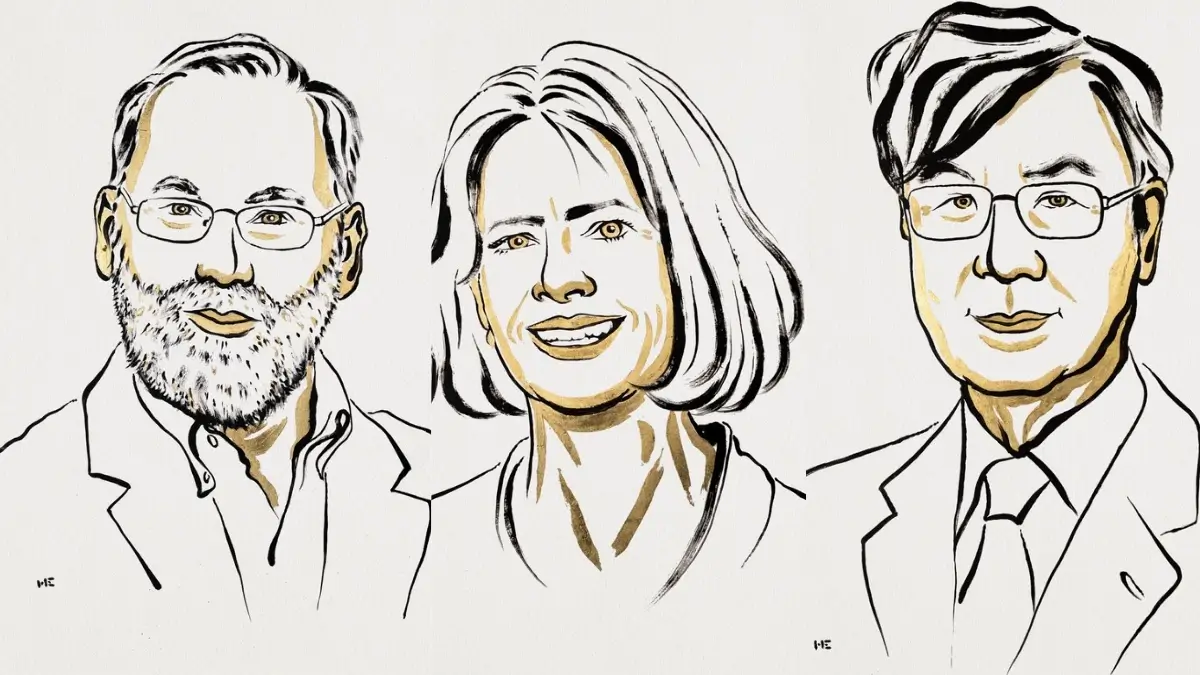
The 2025 Nobel Prize in Physiology or Medicine has been awarded to Mary E. Brunkow, Fred Ramsdell, and Shimon Sakaguchi for their pioneering discoveries on peripheral immune tolerance — a fundamental mechanism that keeps the human immune system from attacking its own tissues. Their work has not only transformed our understanding of how the immune system is regulated but also opened up new avenues for the treatment of autoimmune diseases, cancer, and transplant rejection.
Nobel Laureates Winner In Physiology Or Medicine 2025
- Mary E. Brunkow – Senior Program Manager, Institute for Systems Biology, Seattle, USA.
- Fred Ramsdell – Scientific Advisor, Sonoma Biotherapeutics, San Francisco, USA.
- Shimon Sakaguchi – Distinguished Professor, Immunology Frontier Research Center, Osaka University, Japan.
Award Citation: “For their discoveries concerning peripheral immune tolerance.”
Their collaborative research identified regulatory T cells (Tregs) — specialized immune cells that act as “security guards” to prevent immune cells from mistakenly attacking the body’s own tissues. This discovery has revolutionized immunology and disease treatment strategies.
Groundbreaking Discoveries in Immune Tolerance
Understanding Peripheral Immune Tolerance
- Our immune system defends the body against countless microbes daily.
- However, it must also distinguish between foreign invaders and the body’s own cells.
- If this balance is disturbed, it can lead to autoimmune diseases, where the immune system mistakenly attacks healthy tissues.
- The laureates’ research focused on how this balance is maintained outside the thymus, a mechanism now known as peripheral tolerance.
Shimon Sakaguchi’s Pioneering Discovery (1995)
- In 1995, Shimon Sakaguchi challenged the prevailing belief that immune tolerance was solely controlled by eliminating harmful immune cells in the thymus (central tolerance).
- He discovered a new class of immune cells, later known as regulatory T cells (Tregs), which suppress harmful immune responses and prevent autoimmune diseases.
Brunkow and Ramsdell’s Breakthrough (2001)
- In 2001, Mary E. Brunkow and Fred Ramsdell identified the Foxp3 gene, which plays a critical role in immune regulation.
- They discovered that mutations in this gene caused severe autoimmune disorders in mice and humans, such as IPEX syndrome.
- Their research explained why some immune systems fail to regulate themselves, leading to devastating autoimmune conditions.
Linking the Discoveries – The Role of Foxp3 in Treg Cells
- In 2003, Sakaguchi connected the discoveries by showing that the Foxp3 gene is essential for the development of regulatory T cells.
- Tregs act as immune system “monitors”, ensuring that immune responses target harmful pathogens and not the body’s own tissues.
Impact on Medicine and Future Prospects
The laureates’ discoveries have laid the foundation for,
- Autoimmune Disease Therapies: Targeting Treg cells to treat diseases like Type 1 diabetes, rheumatoid arthritis, and lupus.
- Cancer Treatments: Modulating immune tolerance to enhance the body’s ability to attack cancer cells.
- Organ Transplantation: Reducing transplant rejection by promoting immune tolerance.
- Many clinical trials are now underway, exploring how manipulating Treg cells can revolutionize medical treatment.
Nobel Prize Facts 2025
- Prize amount: 11 million Swedish kronor (shared equally).
- Awarding institution: The Nobel Assembly at Karolinska Institutet.
- Significance: The findings have reshaped modern immunology and opened pathways for next-generation therapies.


 International Booker Prize 2026 Shortlis...
 19-Year-Old Sheetal Devi Honoured as Wor...
 Ramnath Goenka Awards 2026 Winners List:...











